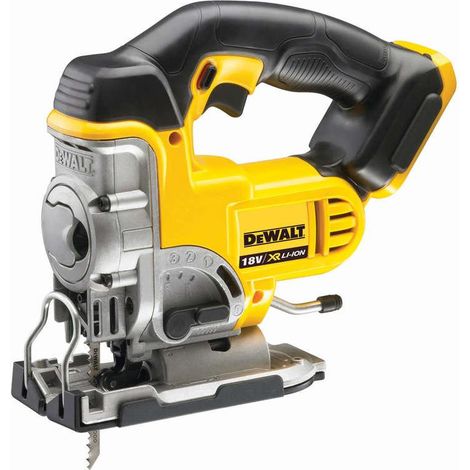
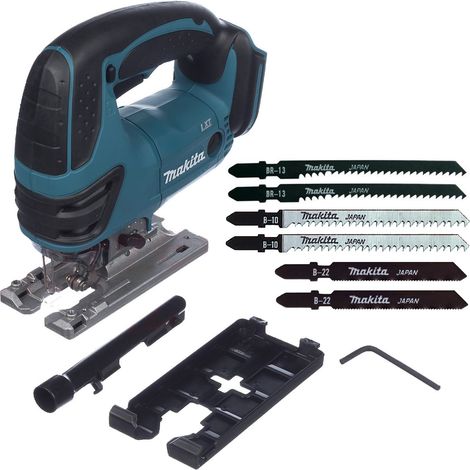
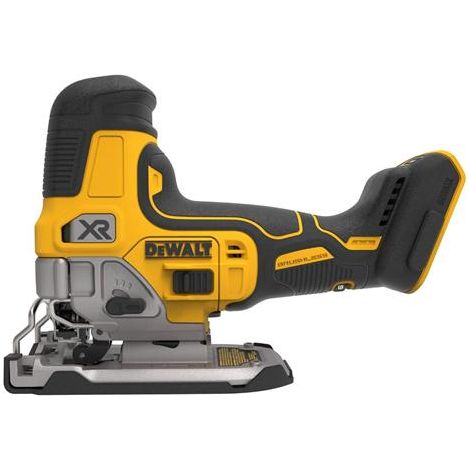
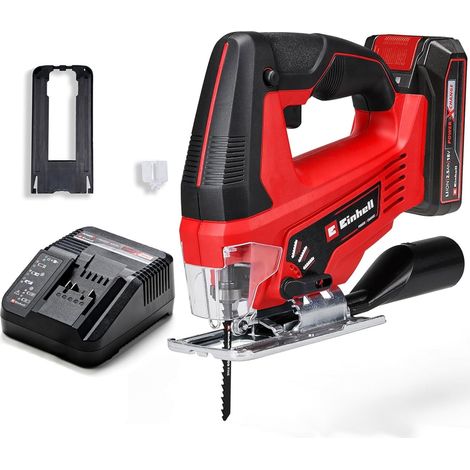
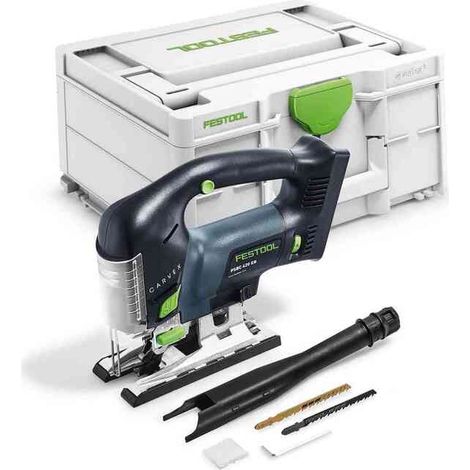
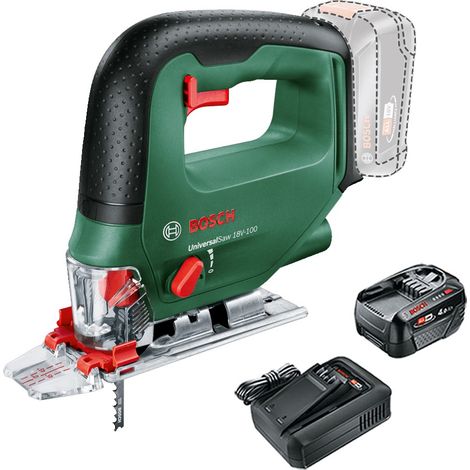
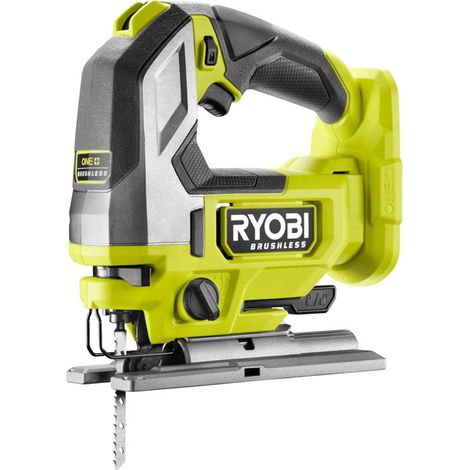
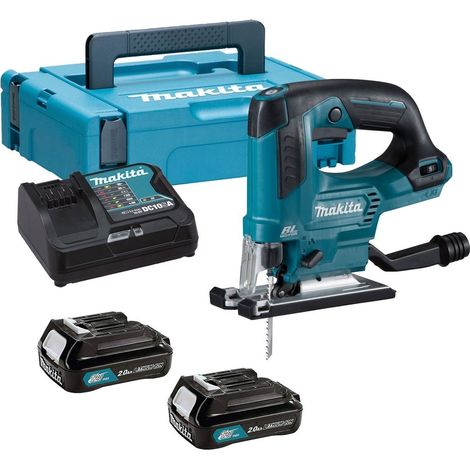
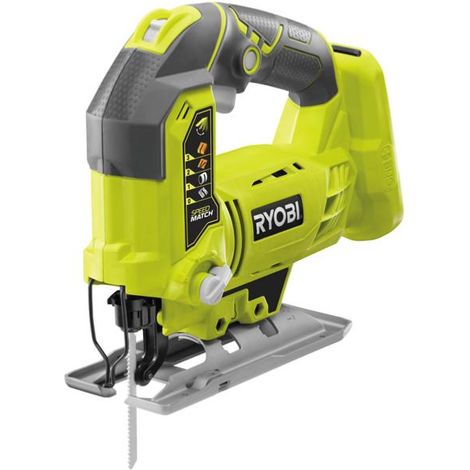
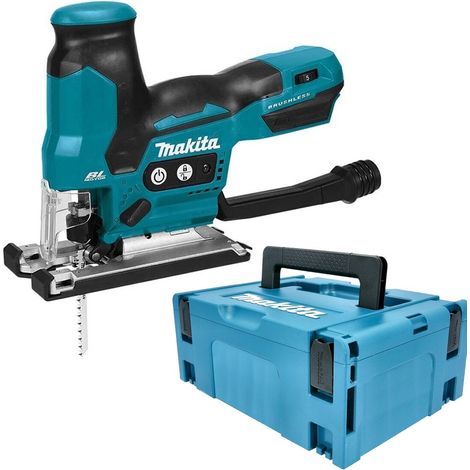
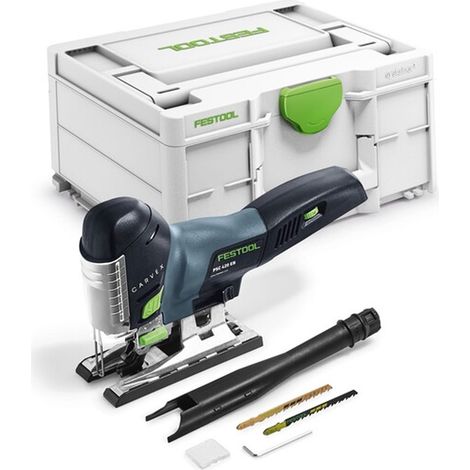
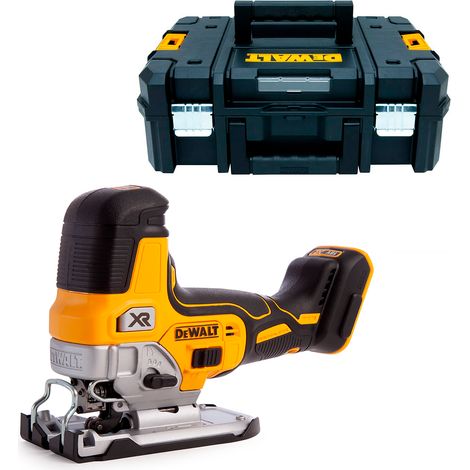
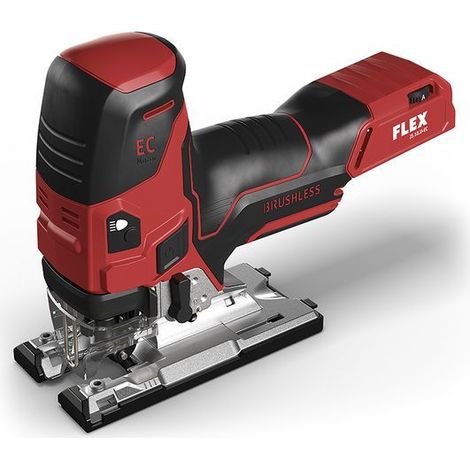
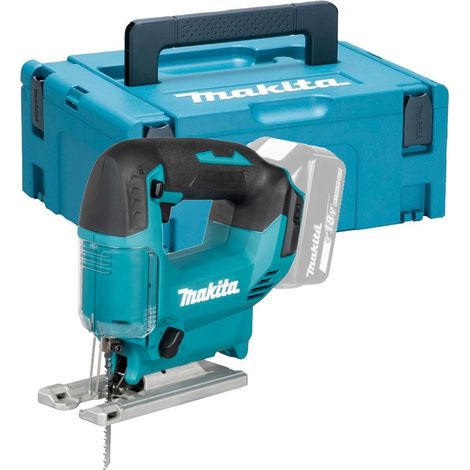
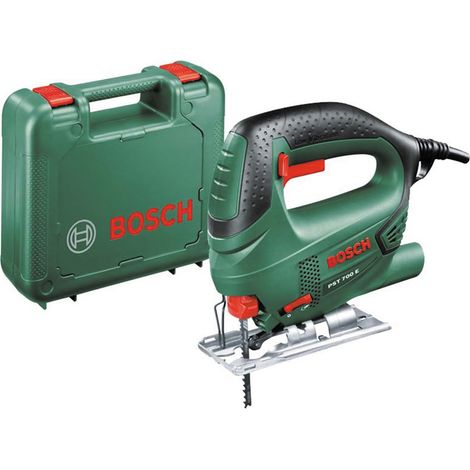
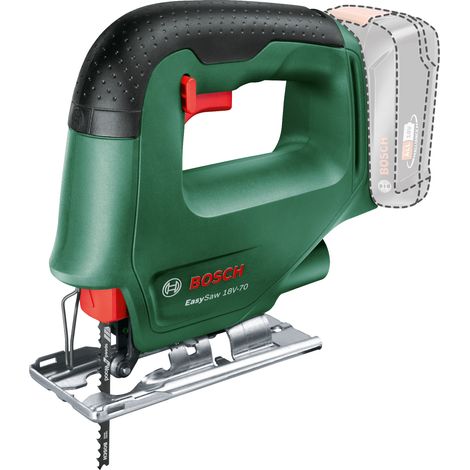
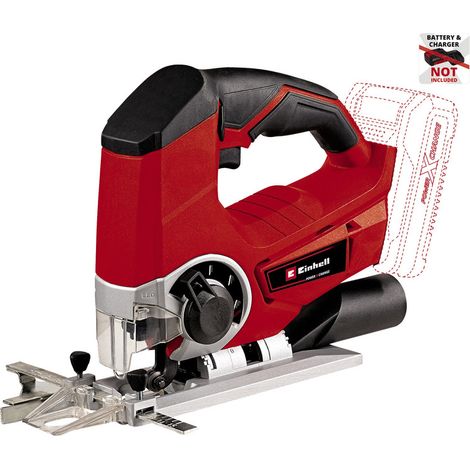
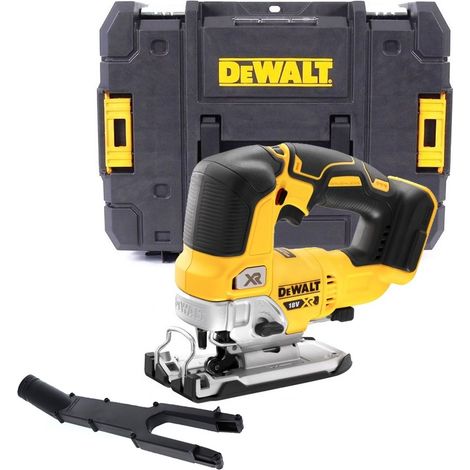
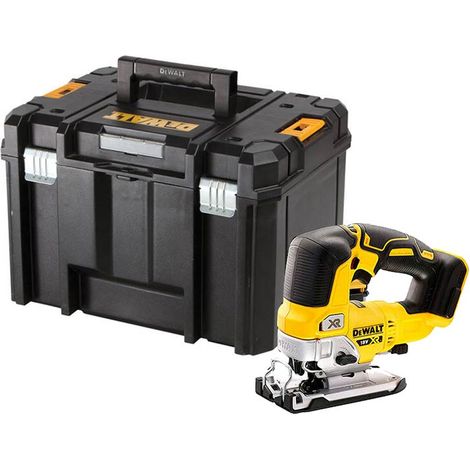
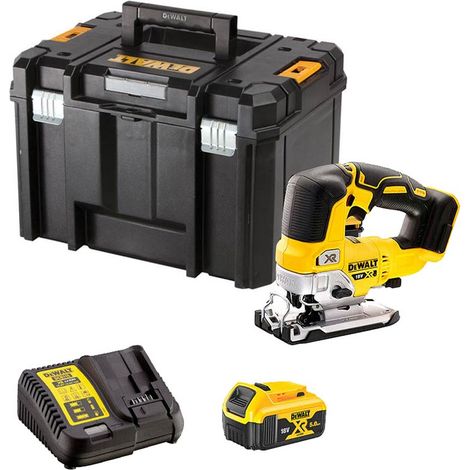
Used for cutting wood, particle boards, or composite materials, the jigsaw is a great help for professionals and DIY enthusiasts alike. Its lightness and ease of handling are definite advantages, as well as the ability to make curved cuts.
This portable power tool has characteristics to be aware of:
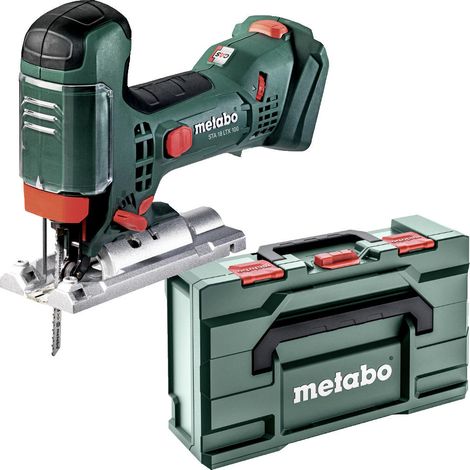
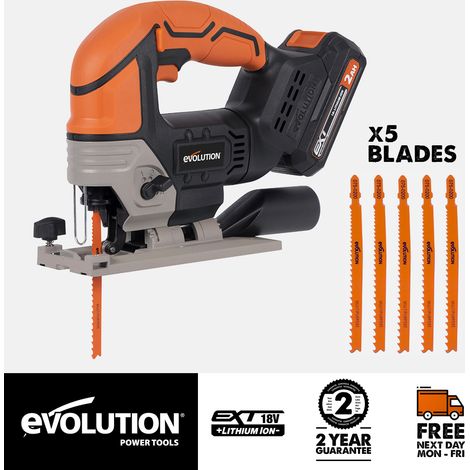
- some models are corded while others are equipped with a battery;
- its weight varies from 1.5 to more than 3 kg depending on its power;
- this device is more effective for cutting materials of low thickness;
- it can be used to make straight or curved cuts;
- the pendulum motion offers great cutting precision.
The power of the device must be adapted to the materials to be cut and the frequency of use:
- a 350 W model is sufficient for small DIY projects requiring shallow cutting depths;
- a jigsaw of 500 W is recommended for cutting wood of 60 to 70 mm, aluminum of 10 mm, or steel of 5 mm thickness;
- a 700 W model is suitable for a cutting depth of 100 mm in wood, 30 mm in aluminum, and 10 mm in steel;
- an 850 W tool offers the same performance as a 700 W device, but with optimal comfort.
A device with a speed control can be adjusted according to the material being worked on:
- a slow speed of 500 to 1,000 strokes/min is recommended for cutting glass, tiles, or ceramics;
- a steady speed of 1,500 to 2,000 strokes/min is advised for easily cutting plastic or non-ferrous metals;
- a fast speed of more than 2,000 strokes/min is required for working on wood.
Different options facilitate the user's work:
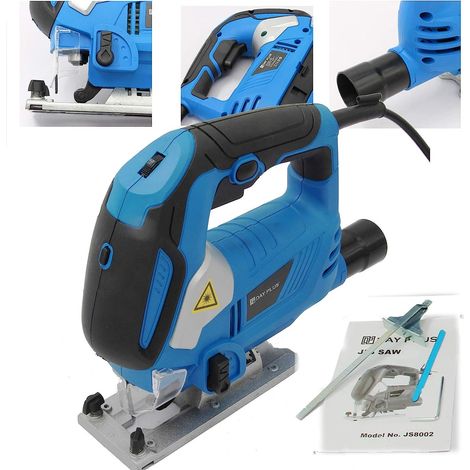
- the tool-free blade clamp system allows for quick blade replacements;
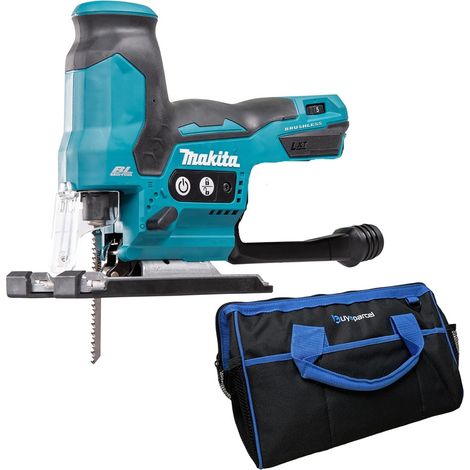
- the dust extraction system is useful for working cleanly without dust or chips;
- the integrated blowing system clears dust to facilitate tracking the cut line;
- an LED light can be useful in case of reduced brightness;
- an adjustable base facilitates angled cuts;
- a splinter guard is useful for cutting laminate.
Thus, the choice of a jigsaw largely depends on the frequency of use and the materials to be cut.



































'/%3E%3C/svg%3E) team
team'/%3E%3C/svg%3E)
'/%3E%3C/svg%3E)
'/%3E%3C/svg%3E)
'/%3E%3C/svg%3E)