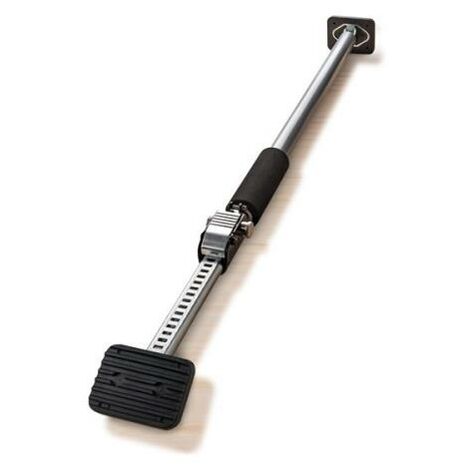
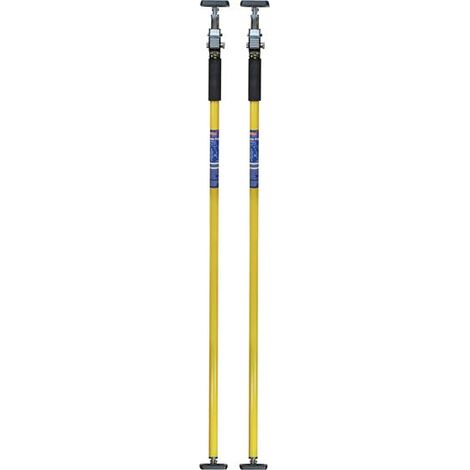
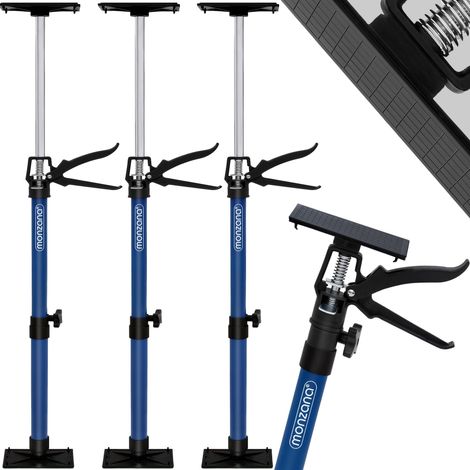
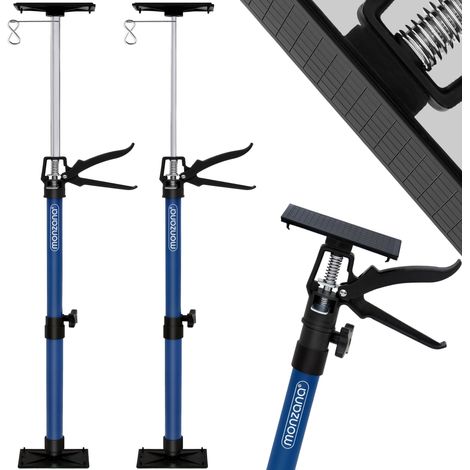
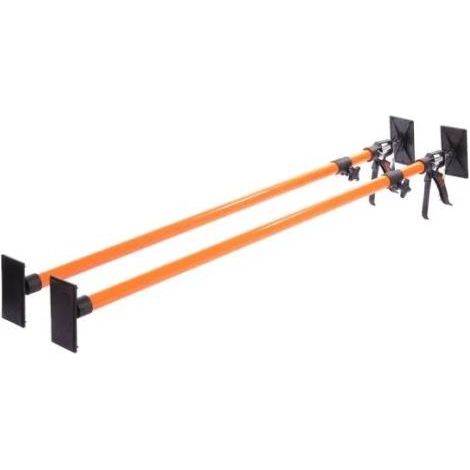
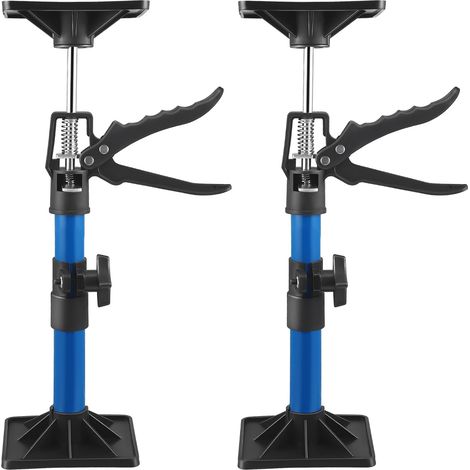
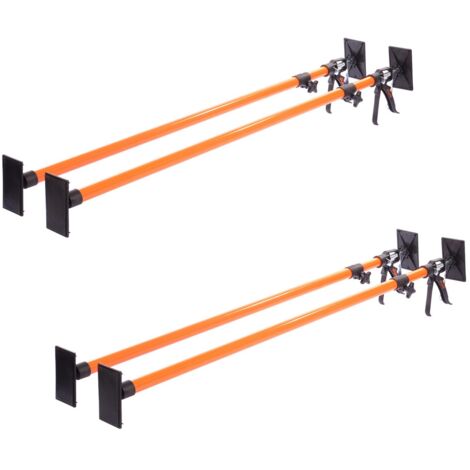
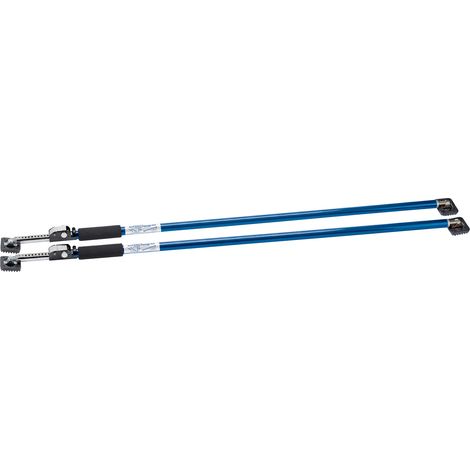
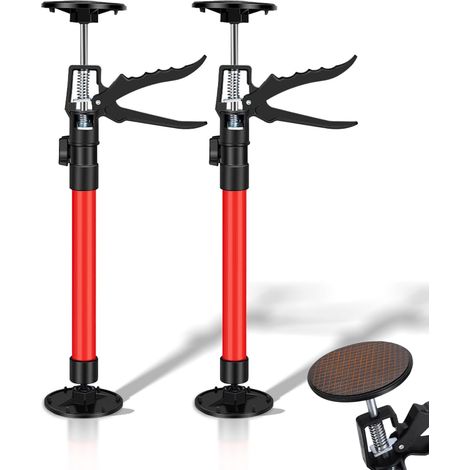
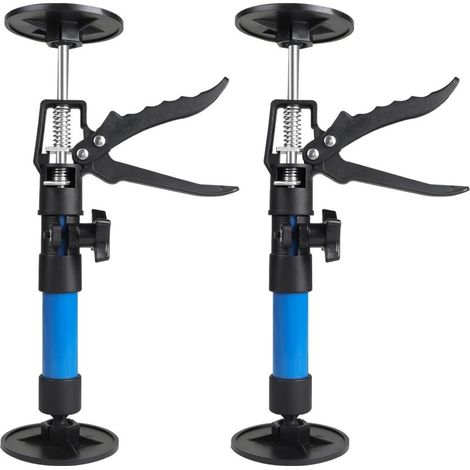
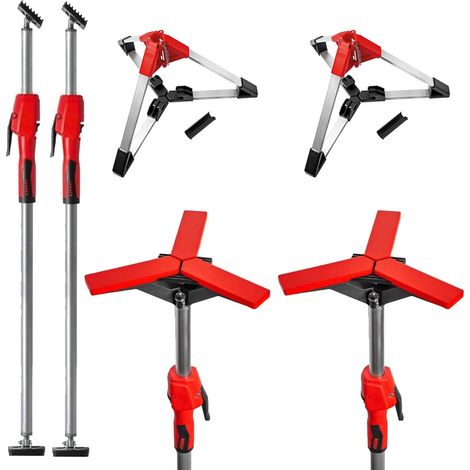
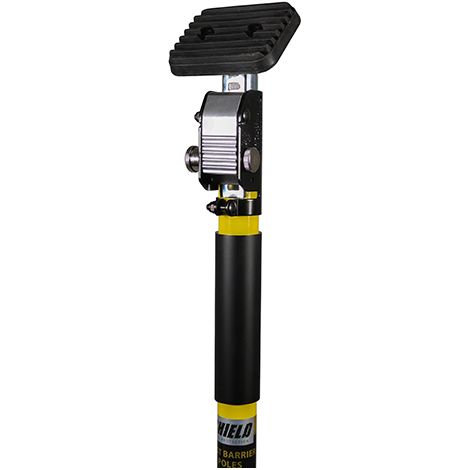
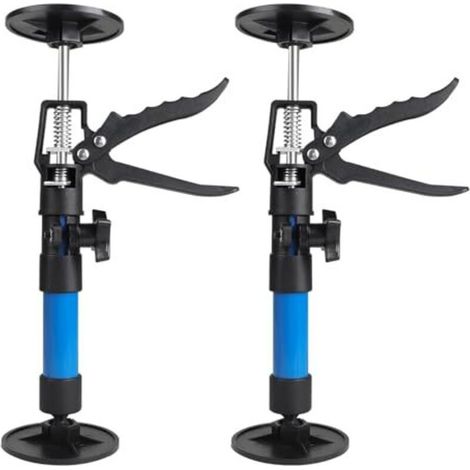
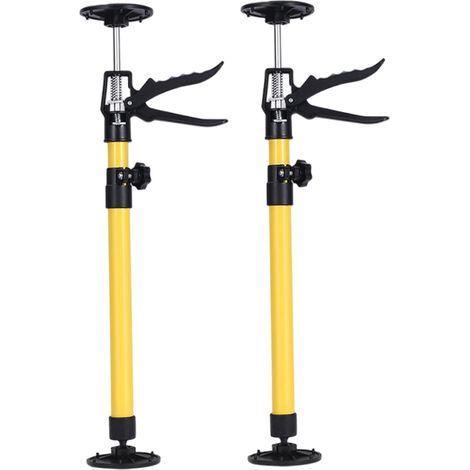
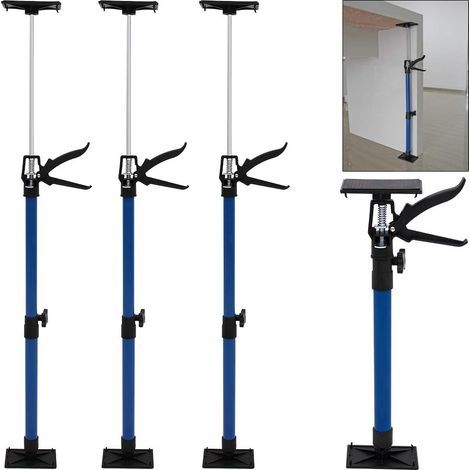
A prop is an accessory used by masons to temporarily support a building, such as a ceiling under construction. Simple, telescopic, push-pull, or heavy versions are available to meet different needs on the construction site.
Some essential information about props is important to know.
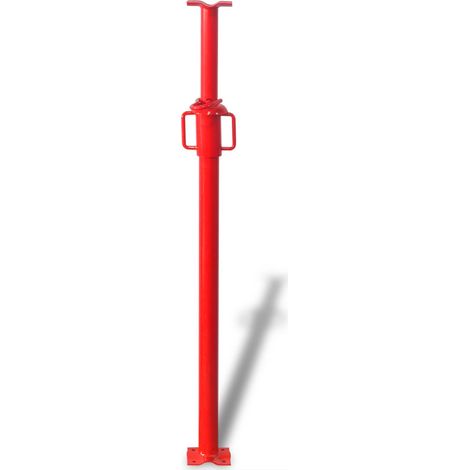
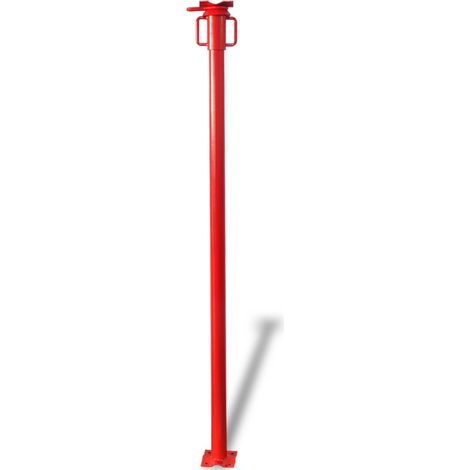
- They consist of two tubes sliding one (the inner tube) inside the other (the outer tube).
- A pin is used to lock the movements of the inner tube. This part transmits the tensile and compressive forces exerted by the weight of the supported structure.
- A sleeve connects the inner tube to the outer tube.
- Base plates or shoes located at the ends are used to attach them to the base support and to the structure to be stabilized.
- Plates placed at the ends prevent users from getting injured.
A simple prop is used during the construction of a wall or a roof. It resists compressive forces along its axis. It must have certain features to comply with the standard NF EN 1065:
- a anti-dislodgement system that prevents the inner tube from coming out of the outer tube;
- a pin of at least 13 mm in diameter that must extend beyond the body of the sleeve by at least 20 mm;
- a minimum overlap of 10 cm when the two tubes are nested;
- a coverage of the inner tube of at least 30 cm in length when the equipment is fully deployed;
- a possibility of adjustment of at least 1 m.
A push-pull prop is recommended when tensile movements are added to the compression:
- they are used when installing prefabricated elements, columns, beams, or lintels;
- the minimum load must be more than 20 kN;
- the maximum angle of inclination is 45° relative to the horizontal;
- its length can reach 10 m.
Some parameters are to be considered in the choice of equipment:
- heavy models (up to 110 kg) are preferable for supporting a large structure;
- the use of a shoring tower is recommended if the work assumes handling materials over 10 kg with a shoring height of 170 cm to 290 cm;
- the selected equipment must be suitable for the load to be supported in order to avoid any risk of collapse.
Thus, the choice of a prop depends on the shoring height, the load to be supported, but also on the nature of the structure to be supported (beams, ceiling, wall, etc.).













'/%3E%3C/svg%3E)