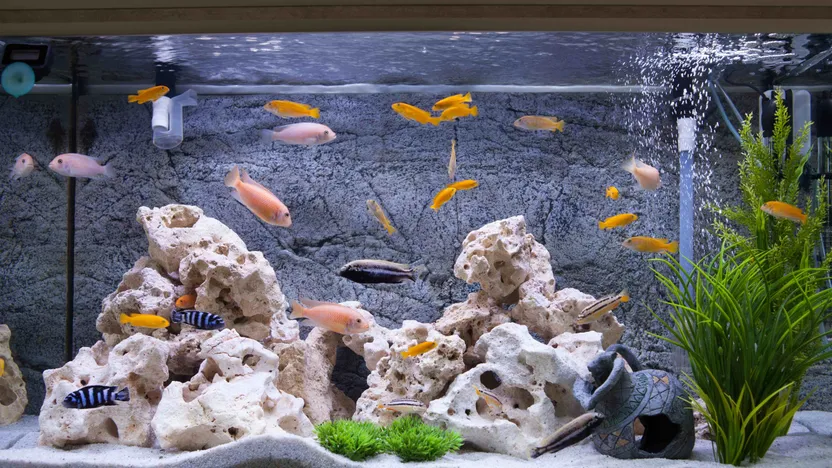
Aquarium pump buying guide
'/%3E%3C/svg%3E)
Guide written on 6 February 2024 by:
Albert, Manager of a gardening service
Important features
- Pump types
- Operation
- Flow rate
- Power
- Materials
- Features
Best sellers in this category
Why does an aquarium need a pump?
Aquarium pumps are essential pieces of equipment for most fish tanks. They are designed to increase oxygen levels by creating movement in the water and help to improve water quality by creating a constant current that aids filtration. In broader terms, they help to create a healthier environment for your fish.
Moving water helps to limit algae growth and prevents the build-up of nitrates and other toxic substances. If you don't have a pump, your fish tank will quickly get overrun with algae and other harmful matter that can have a negative impact on the health of your fish.
The current created by the pump encourages your fish to stay active which in turn helps to boost their overall well-being and energy levels.
Shop our aquarium air pumps
Different types of fish tank pumps
All aquariums, whether you have a freshwater, saltwater or reef tank, should be fitted with a pump to increase surface agitation which is essential for a healthy water environment.
There are two main categories of aquarium pump: air pumps and water pumps. Wave makers and filter pumps are the two main types of pumps within these categories.
All types of pumps come in various shapes and sizes and have different power ratings and flow rates. To make the best choice, it is important to be fully aware of your aquarium specifications including the type, volume and features of your tank.
Aquarium kits
Best sellers in this category
Wave makers
As the name suggests, wave makers, or circulation pumps, are designed to create wave-like movements in the water. This type of pump is essential for saltwater and reef aquariums.
Some models feature two 360° rotating heads for optimum performance. If you have a reef tank, you should ideally install two wave makers on opposite sides of the tank to create waves in all directions. This type of movement is necessary to keep coral open and healthy.
A wave maker is also important for the fish themselves as the motion created helps to recreate their natural environment.
Filter pumps
Some aquarium pumps are coupled with a filter system. In this case, they are called filter pumps. This type of pump not only helps to aerate the water, it will also filter it before sending the clean water back around the tank.
A wide range of filters is available. To make the right choice, it's important to know about the various types of filtration in terms of how they are used and how they work.
Internal aquarium filters
These small aquarium filters are designed for fish tanks of up to 120 litres in volume. A range of models is available with different flow rates and filter media. Internal filters are usually fitted with suction pads so that they can be attached to the side of the tank under the water.
The advantage of these filters is that they are compact and easy to clean. However, they are not suitable for large fish tanks. An internal filter is ideal if you're just getting started in fishkeeping.
It's worth noting that many manufacturers provide this type of filter as part of aquarium kits designed for beginners.
Box filters
This type of filter is fairly common. It consists of a box divided into several compartments. The water is drawn through each of the compartments by the pump.
This helps to improve filtration. You can choose from various types of filters including mechanical and biological. In some exceptional cases – when your fish are unwell, for example – you can use a chemical filter.
Easy to maintain, box filters are designed for medium-sized to large aquariums. These filters require a powerful pump and therefore not suited to small tanks.
External filters
External filters offer the same features and benefits as box and smaller internal filters but don't take up any room in the tank.
The only downside of these filters is that they can be expensive. It's also important to ensure you have enough space around the tank for installation. Other than that, these pumps offer a lot of advantages.
You can save a lot of space by using an external filter. These filters also make the tank much easier to access for cleaning.
Aquarium filters
How to choose an aquarium pump
Before you invest in an aquarium pump, you need to consider a few different criteria to ensure you are picking the best model for your needs.
Pump flow rate
Flow rate is indicated in litres per hour (or gallons per hour) and should be chosen to match the volume of water your fish tank is designed to hold. In other words, you need to find the right size of pump to match the size of your aquarium. Some pumps are only able to process a few litres per hour while other can process hundreds or even thousands of litres an hour.
For maximum performance, you should choose a pump with a flow rate at least three times higher than the total volume of your tank. For example, for a 120-litre fish tank, you'll need a pump able to process 360 litres of water an hour.
Aquarium pump materials
Don't forget to think about the material of your aquarium pump, especially if you have a saltwater fish tank. In this case, the pump needs to be resistant to corrosion.
In short, you'll almost always be able to use a saltwater pump in a freshwater tank, but never the other way around.
Generally speaking, the most hardwearing materials are stainless steel or epoxy resins which provide increased protection for a higher price tag. However, these pumps may result in savings over time as they are very durable.
Noise level
Another important factor to consider is noise level. Noisy pumps can be stressful for fish and can even shorten their life expectancy.
Go for a quiet pump to ensure your fish stay healthy and live long lives.
Fish tanks
Aeration
Some pumps are designed to perform other roles including air injection. While this can be a bonus, be sure to check that you actually need this feature. For example, it won't be necessary if you already have an air pump.
Remember to look into the length of the power cable or be prepared to invest in an extension cable.
Shop our aquarium air pumps
You may be also interested in these guides
Guide written by:
Albert, Manager of a gardening service
For several years I have been running a garden service with a clientele of both individuals and companies. I manage a team of gardeners and ensure the creation and maintenance of green spaces. At the same time, I bring my expertise to my clients in terms of the maintenance and improvement of their gardens. In fact, as a trainee and working in the hospitality industry at the beginning of my career, I focused on landscaping in a local community where I acquired solid technical skills through in-house training and the follow-up of major projects in a rapidly changing town. On a personal level, I am equally oriented towards the art of gardening. With my wife, I created our garden from start to finish and I maintain it carefully, the same goes for the vegetable garden. As for DIYing, it’s not to be outdone. Yes, gardening is also tinkering: pergolas, huts, pavements, fences, and so on...There is always something to do in a garden. After working well together, my wife and I are proud of the result and delighted to be able to take full advantage of a friendly and warm environment. So, let us give you advice and help you in your choice of tools, maintenance, or the improvement of your garden, nothing could be simpler.
'/%3E%3C/svg%3E)