Small aquarium buying guide
'/%3E%3C/svg%3E)
Guide written on 6 February 2024 by:
Pauline, Self-taught DIYer, Leeds
Important features
- Aquarium size
- Fish species
- Aquarium environment
Best sellers in this category
Small aquariums: which shape is best?
You may have heard horror stories about major retailers selling so-called decorative household items containing live fish. So, what's the problem? Simple: this type of habitat is not at all suitable for fish for a number of reasons:
An insufficient volume of water will quickly become a source of boredom and distress for the fish.
Less water means filthier water, as ammonia from waste will quickly build up.
Fish living in tiny tanks may suffer from hypoxia, when poorly oxygenated water forces them to the surface to breathe.
Small bowl tanks are prone to extreme temperature fluctuations, yet another source of distress for the fish.
Small bowls are tough to clean and the water will become dirty againin no time.
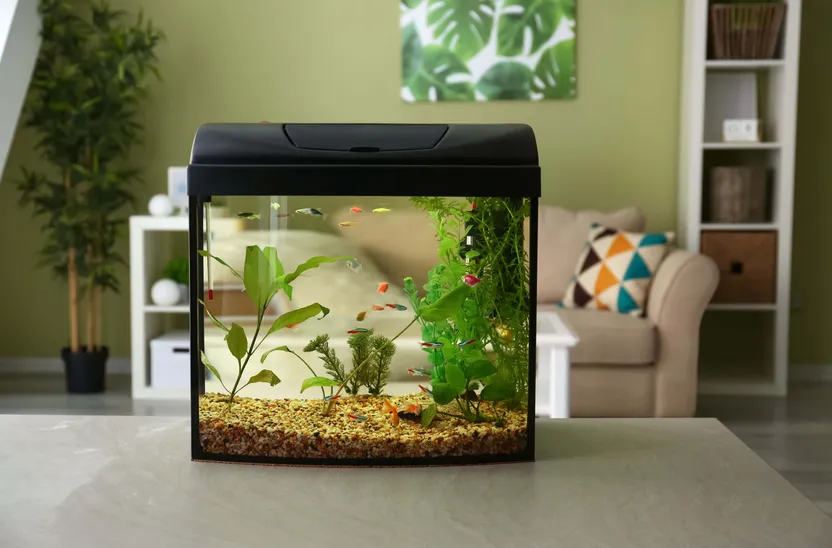
So long as the size and set-up of the aquarium meet the needs of your fish, any shape will do. You can choose from rectangular, square or round models that come with or without a stand or mirror background. You'll also have to select a tank material: glass, plastic or acrylic. Keep in mind that plastic walls streak and that acrylic is less pressure-resistant than glass.
As a decorative element, an aquarium can bring a room to life – just don't forget that it's also a habitat for your fish!
With or without a stand or mirror background
How to choose a reasonably sized small aquarium
Before settling on a model, you'll need to decide which type of fish you're going to put in it.Whilst a betta fish (Siamese fighting fish) can thrive in a 20-litre tank, the same volume of water would be insufficient for certain species of goldfish, which can grow to up to 30 centimetres.
To ensure your fish stay healthy and happy in their new habitat, you'll need to have a clear idea of the species' specific needs and its maximum size.
Young or inexperienced fishkeepers should opt for an all-in-one aquariumwhich includes:
A filter pump.
Lights.
A heater (to maintain an optimum temperature for the species).
For starters, a 50-75-litre model can suffice, since the average goldfish requires a minimum of 50 litres. If you're planning on having two goldfish, you'll need to double the size and opt for a 100-litre aquarium. When calculating the volume of water your fish will require, you'll also want to take into account the weight of the fish: the bigger they are, the more space they'll need!
Note: small tropical fish will do fine in a smaller (50-litre) aquarium.
Shop our aquariums
Best sellers in this category
How to create an environment for your fish to thrive
Miniature aquarium plants are a must for the inside of your tank, as they release oxygen into the water through photosynthesis.
You'll also want to add a substrate, either sand or gravel, which will help anchor aquatic plants. Added bonus: many fish like to forage for food by dredging up the substrate.
Small decorative elements with holes will provide a stimulating environment and a few quiet 'resting nooks'. So don't forget to add a treasure chest, vase, or hollow rock suited to the size of your aquarium!
Aquatic plants
Oxygen and the nitrogen cycle: the two keys to a healthy fish habitat
No matter how large or small the bowl or aquarium, the survival of your fish ultimately comes down to maintaining proper levels of oxygen.
It is essential is to keep a well-cycled aquarium in which the nitrogen cycle process will break down ammonia-based waste into less toxic nitrates. In fact, seasoned fishkeepers recommend running your fully equipped aquarium for a month before putting fish in it. This will allow for the growth of bacteria involved in the nitrogen cycle.
Tanks with larger surface areas allow for greater interaction between air and water. Believe it or not, the smaller the tank, the harder it is to maintain!
Fish raised in an unfiltered bowl have a very short lifespan. So, if you love your fish, give them a healthy, stimulating habitat and then sit back and watch them thrive!
Fish
.
.
You may be also interested in these guides
Guide written by:
Pauline, Self-taught DIYer, Leeds
With a handyman-father, I grew up with the soft sound of the sander and hammer on weekends. I am both manual and cerebral, I learned the basics of DIY and the customisation of furniture because I was passionate. The salvage mentality is a true way of life that allowed me to know how to use all the tools and products needed to give something a second life, from a sander to varnish. I have two favourite activities: the transformation of old furniture and decoration tips. I am always ready to lend a helping hand to revamp a table or to restore a mirror that was intended for the tip that will become a friend’s centrepiece. I’m convinced that it’s possible to reinvent an interior by small, regular modifications and I constantly research low-cost ideas.
'/%3E%3C/svg%3E)