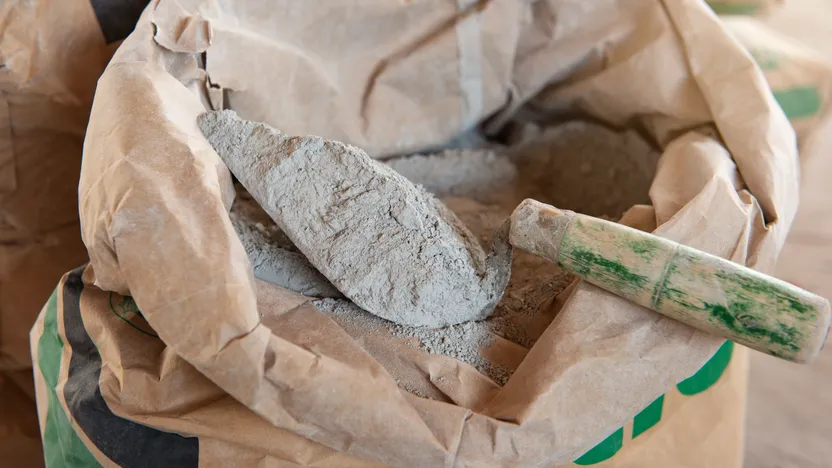
Cement buying guide
'/%3E%3C/svg%3E)
Guide written on 6 February 2024 by:
Michael, Professional and passionate welder, Sheffield
Important features
- Types of cement
- Uses
- Storage
Best sellers in this category
Cement components
Cement acts as the primary hydraulic binder for the manufacture of concrete and mortar. This finely ground mineral powder is a human-made material and is absolutely essential for all kinds of construction work involving concrete or mortar.
The Romans were the first to use a mixture of lime and volcanic rock to make buildings and structures that still stand today. These days, a mixture of limestone, clay and other materials is set in a rotating kiln and cooked at 1450°C before being ground down into clinker. The quantities of raw materials are carefully measured to increase the strength of the cement and make it suitable for various applications.
Cement categories and standards
Cement is split into different categories and goes by different names depending on its intended use. Each type must meet the conformity requirements set out by standard EN 197-1.
Portland or CEM1 cement: the most common type of cement (used for reinforced or prestressed concrete).
Portland hybrids or CEMII A or B for general purposes.
Blast furnace Portland cement or CEM III A or B.
Blast furnace Portland cement or CEM III C.
Pozzolana cement or CEM IV A or B.
Composite cements or CEM V A or B.
Grey cements are used for construction purposes only.
Shop our cement
Different types of cement on the market
Grey cement is used for a wide range of construction purposes.
White cement is used mainly for decorative purposes.
High alumina cement is used for outdoor mouldings and repairs.
Rapid-set cement is quick hardening.
Latex or P5 cements are used to resurface or repair surfaces like balconies, pillars or beams.
Refractory mortar or cement can withstand very high temperatures.
Mortar
Best sellers in this category
Multi-purpose grey cement
Multi-purpose grey cements are known for their impressive mechanical properties. These cements are versatile and used in different types of concrete or mortar for pointing or setting posts, or laying screed. This material does shrink which must be taken into consideration during use.
Ratios
Quick repairs: 1 part water to 3 parts grey cement.
Mortar: 1 part water to 2 parts cement and 8 parts sand.
Concrete: 1 part water to 2 parts cement, 2.5 parts sand and 4 parts aggregates.
Mortar
White cement
White cement is a finely ground cement made up of very pure raw materials including things like limestone and kaolin clay. It is suited to a range of common indoor applications and some outdoor applications such as coating exterior surfaces, pointing or mixing white concrete.
Ratios
Quick repairs: one part water to 3 parts cement.
Mortar: 1 part water to 7 parts white sand and 3 parts cement.
Bonding coat: 1 part water to 2 parts cement.
Sand
High alumina cement
High alumina cement, or aluminous cement, can be used for paving, pillars and pointing. It hardens quickly in around 6 to 24 hours. It is able to withstand temperatures of up to 1250°C so it can also be used to repair fireplaces or stone barbecues.
Ratios
Mortar: 1 part water to 2.5 parts cement and 4 parts sand.
Concrete: 1 part water to 2.5 parts cement, 2.5 parts sand and 5 parts aggregates.
Concrete
Rapid-set cement
Rapid-set cement, as the name suggests, is known for its ultra-fast setting and hardening properties. It is used in construction work and suitable for a range of common indoor and outdoor tasks. However, using this type of cement requires careful planning to prevent it setting before you're ready.
Ratios
Quick repairs: 1 part water to 2 parts rapid-setting cement.
Mortar: 1 part water to 1 part cement and 1 part sand.
Mortar
Latex (P5) cement
Latex or P5 cement is added to mortar and concrete to repair things like pillars, beams and balconies. It can also be used to bond fresh concrete to hardened concrete and in self-levelling compounds. It can be used indoors and outdoors.
Ratios
Bonding coat: 1 part water to 1.5 parts latex cement and 3 parts cement.
Mortar: 2 parts water to 1.5 parts latex cement, 5 parts cement and 10 parts sand.
Shop our concrete and mortar
Refractory mortar or cement
Refractory cement contains calcium aluminate (bauxite + chalk) and withstands temperatures of up to 1800°C. It is ideal for assembling and pointing fireplaces and masonry barbecues. It offers average setting times: it should be dry within 6 hours and usable after around three weeks (for optimal strength).
How to store cement
Cement comes in bags designed for storage. It is recommended to keep cement in its original packaging in a dry environment. It should be kept off the ground and sealed to prevent air from entering.
Cement ageing
Inspect any stored cement carefully before use.
Product | Appearance | Quality |
New cement | Very finely ground | Optimal quality |
Stored cement | Fine, flour-like consistency | High-quality, hardens evenly |
Cement stored for some time | Very soft and lumpy texture, crumbly | Still usable but some strength loss (less than 20%) |
Cement stored for a long time | Hard lumps present | Needs to be sieved and can only be use for minor jobs that don't require a great deal of strength |
Expired cement | Forms a hard block in the bag | To be disposed of |
Cement safety and tips for use
Cement is a harmful product meaning you need to protect yourself adequately when using it. While cement is always improving in terms of quality, you must still wear protective gear when handling this material.
Workwear, safety shoes or boots, dust masks and safety goggles are all essentials when working with cement. You must take great care to protect your skin as frequent use or prolonged contact with cement can lead to conditions like cement eczema which is an all-too-common affliction among construction workers. Remember – prevention is always better than cure!
Shop our cement
More information
You may be also interested in these guides
Guide written by:
Michael, Professional and passionate welder, Sheffield
I was trained as a pipe worker and a pipe-welder and after having travelled for 35 years working around the UK, I became the head of a metal shop, then a designer and in the end the head engineer. I have designed and built a workshop where I make metal sculptures: I managed to find a piece of paradise where I can let my imagination run wild. Auctions and garage sales are no secret to me. I find unusual objects and old tools there that I collect or transform into works of art. I also like decoration, painting on canvas, and gardening. I am developing new technologies concerning tools. To share my passion and advise you in your choice of materials is a real pleasure.
'/%3E%3C/svg%3E)