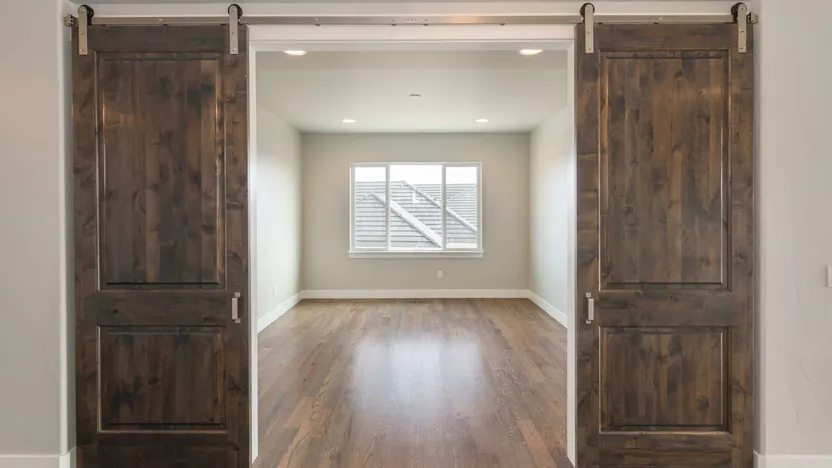
How to install a surface sliding door
'/%3E%3C/svg%3E)
Guide written on 6 February 2024 by:
Jenny, Construction and gardening writer, Oxford
Important features
- Installing the track
- Fitting the sliding door
- Securing the door guide
- Fitting the door brakes
- Installing the track cover
Best sellers in this category
Sliding doors: a stylish and practical option
Sliding doors can provide a number of advantages in the home:
they come in a range of style and colours to blend in perfectly with your interior;
they are highly practical for smaller spaces since you won't be sacrificing any floor space;
they are easier, quicker and less expensive to install than a traditional hinged door.
Steps
Install the track
Fit the sliding door
Secure the door guides
Fit the door brakes
Install the track cover
This guide sets out all the steps required to install a surface sliding door from the French brand Optimum. This door comes with a wall mounted track and fixing plates which are designed to fit to the top of the door. While there will be design differences from one door to another, the basic steps will be similar.
Shop our sliding doors
Sliding doors: a stylish and practical option
The first step – installing the sliding door track – can be divided into two stages: preparation and installation.
Preparing to install the track
Check that you have all the components required to fit your sliding door including the track, wall plugs and so on.
The first step will be to define where your track fixings will be installed. To do so, you can set the door on two wedges and place the door into its closed position. Alternatively, you can simply use a tape measure.
The installation instructions should generally indicate the height of the track from the door. The track must measure at least twice the length of the door opening. If your track is too long, you can use a hacksaw to cut it down to size. Once your track is in position, check that it is level using a spirit level and mark out the position of the fixings using a pencil.
Installing the door track
After adjusting your marks as required, proceed to drilling your holes and securing your wall plugs. Be sure to check that your wall plugs are suitable for the wall surface. There are specific wall plugs for both hollow and solid materials. If you have a concrete wall, a classic wall plug will do. If you are installing in a hollow material (e.g. brick or plasterboard), use hollow wall anchors or Molly bolts.
Insert your plugs and set your track into position before screwing. If your track is not pre drilled, drill holes in it yourself.
Be sure to check that the track is level one last time before tightening the screws. Please note that if you have a plasterboard surface, it is recommended to install reinforcements between the surface and the track for greater security.
Best sellers in this category
2. Fit the sliding door
Once the track is in place, it's time to secure the door which involves assembling the door gear before hanging the door.
Fitting the door gear
Place the door sitting upright on the floor to secure the fixing plates or brackets to the top edge of the door. You may want to use a step ladder to keep the door in this position. Alternatively, it can be easier to simply place the door on a table.
Place the plates around 5 cm from each top corner of the door and screw them into place.
Hanging the door
Put your door back into position under the track and assemble the roller guides using the screws and nuts provided. Insert the roller guides into each side of the track with the point of the screw facing outwards. Hang the sliding door by inserting the screw heads into the slots on the fixing plates. Check the door is level using a spirit level then secure the nuts using a spanner.
3. Secure the door guide
If you have selected a model with just one track, you can now proceed to securing the door guide which is designed to ensure the door slides correctly.
Place the door into its fully open position and mark the position of the guide on the floor as indicated by the manufacturer's instructions.
Check that the door guide is plumb using a spirit level and drill the floor using your marks.
Insert a plug and secure the guide to the ground.
Pay special attention if you have underfloor heating. In this case, the guide will have to be glued into place since drilling could damage your heating system.
Underfloor heating
4. Fit the door brake
In addition to ensuring your door opens and closes fluidly, a door brake also ensures that the door won't run off the ends of the track. These brakes are installed in several stages.
Place your door in its closed position. Insert the first door brake next to the edge of the door at the end of the track.
Wedge the brake against the roller guide to secure the door in this position and screw the brake into place.
Repeat the same process at the other end of the track, this time working with the door fully open.
To prevent the door from slamming shut, you might also want to fit soft close door brakes or dampers in the track to slow down the door as it opens and closes. These components should be installed at the same time as the door brakes without affecting the sliding door gear in any way.
5. Install the track cover
The final step to installing a sliding door is largely for aesthetics. You can hide the sliding mechanism by installing a track cover which can then be painted to match your style. These covers can either be clipped into place or screwed following the manufacturer's instructions.
And that's it – your sliding door has been installed!
Final tips for installing a sliding door
There are several different types of sliding door system: ceiling tracks, above-door tracks or even floor mounted tracks. For practical reasons, and to save on space, it is recommended to go for an above-door installation.
Please note that if your door is particularly heavy it is best to go for a two-track system.
When it comes to drilling the wall to install the track, be careful to check for any electrical cables behind the wall first.
How to install a sliding door
Required skills
No building work is required to install a wall-mounted sliding door. However, you do need a few basic DIY skills including being able to take accurate measurements, use a spirit level and drill and potentially cut hard materials (wood or metal) down to size with a saw.
Time and number of people required
Less than 2 hours
1 person
Tools and equipment
Sliding door kit (track and sliding door) with door handle and track cover
Safety and workwear
Head and ear protection
Please note: this is a non-exhaustive list; Be sure to match your personal protective equipment to the job at hand.
Shop our hacksaws
More information
You may be also interested in these guides
Guide written by:
Jenny, Construction and gardening writer, Oxford
'/%3E%3C/svg%3E)