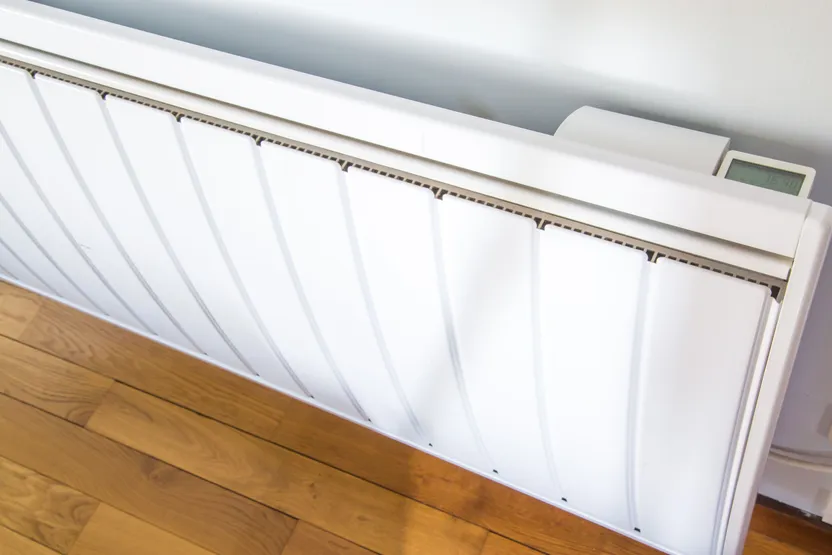
Electric panel heater buying guide
'/%3E%3C/svg%3E)
Guide written on 6 February 2024 by:
Albert, Manager of a gardening service
Important features
- Model
- Sizes and shapes
- Thermostat
- Power rating
- Programmer and timer
Best sellers in this category
Electric panel heaters: an overview
Electric panel heaters combine two different types of heat transfer: radiation and convection. Thermal radiation involves transferring heat directly to objects and people whereas convection heating works to warm up air which is then circulated throughout the room. Using a combination of these two types of heat provides better performance and thermal comfort compared to convection heating alone.
How to use an electric panel heater
Electric panel heaters are recommended for use in corridors, kitchens, spare rooms, bathrooms, or as a back-up heating system. Quiet to operate and energy-efficient, these devices can be a great option.
However, it should be noted that these devices will stop generating heat as soon as they are turned off. With this in mind, electric storage heaters may be a more suitable option for living areas that are used more frequently as they continue to provide heat even after they have been switched off.
Installing an electric panel heater
Like all heaters, the power rating you go for will depend on the size of the room you want to heat and the quality of the building's insulation. The features of an electric panel heater –plus any add-on options – will vary according to the model and range selected.
Electric panel heaters
Types of electric panel heater
There are several types of electric panel heater and various size and shape options available.
Horizontal electric panel heaters
Wider than they are tall, horizontal panel heaters are generally the most popular choice. They are designed to fit easily into most layouts and can be used in any room of the house.
Vertical electric panel heaters
If horizontal space is limited, a vertical panel heater can be easier to slot into any space you have available.
Designer panel heaters
Some electric panel heaters are designed with style in mind. These are often referred to as 'designer panel heaters' and can come in a range of designs from mirror effects to colours or even a printed image!
Portable panel heaters
Portable panel heaters can be moved from one room to another hassle-free. They are usually horizontal and equipped with wheels making them easier to move around. These models don't take up much room and are easy to store when not in use.
Bathroom panel heaters
While less common than central heating versions, specially designed electric panel heaters can be a great solution for heating up a bathroom.
Very convenient to use, these models heat up instantly and offer really comfortable heating. What's more, they'll also keep your towels warm! These systems must be splash-resistant with an IP rating of at least 34.
Radiant ceiling panels
Radiant ceiling panels can be fixed to or hung from the ceiling. These panels send out heat downwards which helps to distribute heat evenly throughout the room.
They are usually made from materials that are good at retaining heat for improved thermal performance.
Panel heater
Best sellers in this category
Electric panel heaters: how do they work?
Electric panel heaters transfer heat through both infrared radiation and convection. Some newer models may also be able to store some heat (although this will not make up a large portion of the overall heat output).
Heat transfer
Electric panel heaters contain an aluminium panel which is heated by a carbon fibre or quartz heating element. These panel heaters function using medium- to far-infrared technology. The radiation emitted by these devices is invisible to the naked eye.
Electric panel heaters heat up instantly from the moment they are turned on and transfer heat in a similar way to the sun – the closer you are to the device, the warmer you will be. The disadvantage of these systems is that they stop providing heat as soon as they are turned off.
Electric panel heaters
Electric panel heater features and extras
The performance of a panel heater largely comes down to its features and any additional accessories it may have. The more equipment on offer, the more expensive the system will be. On the other hand, these additional parts may reduce your bills and give your heater a longer service life leading to savings in the long term.
Thermostats
Thermostats may be controlled by an LED display or a dial depending on the model. Temperature adjustments will vary in accuracy according to the control type:
mechanical: maintains pre-set temperatures with an error margin of 2°C;
electronic: maintains a temperature with an error margin of 0.5°C;
digital: maintains pre-set temperatures with an error margin of 0.1°C.
Programmers
Programming your heater will save you money over time. Programmers can be used to set specific heating times and temperatures. This can be done by means of a built-in unit or via a remote programmer.
Room thermostats
Available with most models, room thermostats adjust your heating power based on the temperature of the room.
Power cable length
While it may not seem like an important decision, choosing the right cable length will allow you to make your panel heater work with the layout of the room without having to use an extension cord.
Indicator light
Indicator lights are particularly useful for electric panel heaters as they do not emit any visible light. A pilot light is a very easy and efficient way to tell when your panel heater is on.
Backlit LCD displays
LCD displays can be used to keep your controls (timers, time and programming settings, etc.) on show. A locking control panel usually comes with LCD displays.
Timers
Timers allow you to schedule your panel heater to shut off quickly and easily. If used as an additional heating source, programmers can be used instead of timers for even more savings.
Remote control
Panel heaters can be controlled individually or as a group via a traditional pilot wire, Bluetooth or Wi-Fi.
Smart control
Smart control allows you to manage your heater directly from your smartphone via an app. This technology provides increased user comfort and convenient setting control.
Designer heaters
These models come in a range of materials, colours and a greater variety of shapes, allowing you to match your heater to your home décor.
Programmers
Electric panel heater power ratings
Electric panel heaters all vary in power. You should choose a model that is a good fit for the space it aims to heat. To do so, think about the room in terms of size and insulation.
Well insulated buildings | Very well insulated buildings | Poorly insulated room or bathroom | |
Required power: watts per m² (ceiling height of 2.5 metres) | 100 W / m² | 60 W / m² | 125 W / m² |
Power required per m3 | 0.04 kW / m3 | 0.024 kW / m3 | 0.05 kW / m3 |
Please note that it is advisable to reduce these estimations by:
20% for a room with a party wall;
5 to 10% for a south-facing room.
Conversely, you should add 5 to 10% for north-facing rooms or those featuring large bay windows.
You may be also interested in these guides
Guide written by:
Albert, Manager of a gardening service
For several years I have been running a garden service with a clientele of both individuals and companies. I manage a team of gardeners and ensure the creation and maintenance of green spaces. At the same time, I bring my expertise to my clients in terms of the maintenance and improvement of their gardens. In fact, as a trainee and working in the hospitality industry at the beginning of my career, I focused on landscaping in a local community where I acquired solid technical skills through in-house training and the follow-up of major projects in a rapidly changing town. On a personal level, I am equally oriented towards the art of gardening. With my wife, I created our garden from start to finish and I maintain it carefully, the same goes for the vegetable garden. As for DIYing, it’s not to be outdone. Yes, gardening is also tinkering: pergolas, huts, pavements, fences, and so on...There is always something to do in a garden. After working well together, my wife and I are proud of the result and delighted to be able to take full advantage of a friendly and warm environment. So, let us give you advice and help you in your choice of tools, maintenance, or the improvement of your garden, nothing could be simpler.
'/%3E%3C/svg%3E)