How to choose the best electric heater for your room
'/%3E%3C/svg%3E)
Guide written on 25 September 2026 by:
Albert, Manager of a gardening service
Important features
- Thermal inertia, convection or radiant heat
- Heat-up time
- Heat output
- Thermal comfort
Best sellers in this category
Electric heaters: a model for every room of the home
Among all the different types of electric heating, modern storage heaters provide the most comfort and consume the least energy. In theory, this type of heater is often the best solution.
However, these heaters are slow to heat up and they are expensive to buy. It's therefore worthwhile looking into other types of electric heaters to see if there isn't a better option for the room you're looking to heat. In order to make the right choice, you should be aware of the technology on offer, the characteristics of different heaters and their suitability for different rooms of the home.
Please note that no matter what type of heater you go for, good insulation and proper usage (i.e. programming, set temperature, etc.) are essential for optimising energy consumption and reducing your electricity bill.
Electric heating: choosing the right heater for your room
Electric heater or radiator | Room type | |||||
Primary living space | Secondary living space | |||||
Living room | Bedroom | Kitchen* | Office* | Guest room | Bathroom | |
Ceramic core radiator | x | x | x | x | x | x |
Oil filled radiator | x | x | x | x | x | x |
Panel heater | x | x | x | x | ||
Halogen heater | x | x | x | |||
Convection heater | x | x | x | x | ||
Heated towel rail | x | |||||
Fan heater | x |
* Home offices or kitchens can be classed as primary or secondary living spaces, depending on how you use them.
Shop our electric heaters and radiators
Convection heat
Convection heating should only really be used for living spaces that aren't in constant use. This technology is used for convector heaters and is generally considered inefficient and outdated.
The main advantage of convector heaters is that they are the least expensive heaters to purchase. They are quick to heat up but be careful to only use these heaters occasionally wherever possible as they use a huge amount of energy and will quickly increase your electricity bill.
Convector heaters
Best sellers in this category
Radiant heat
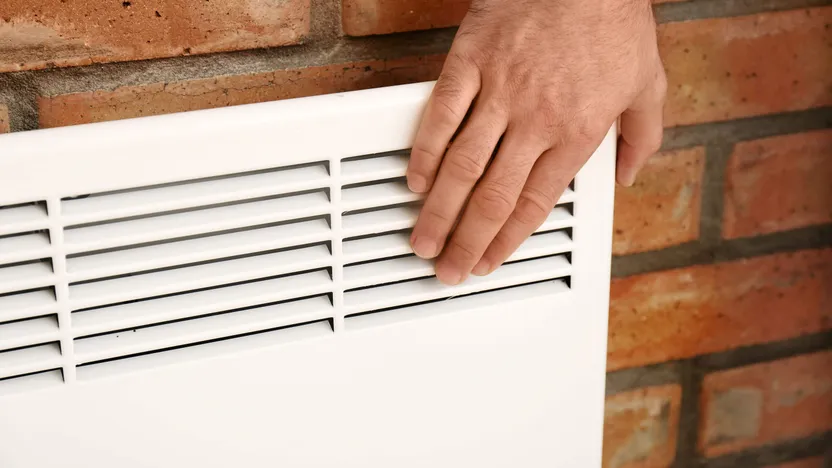
Radiant heat is the heating technology used by panel heaters and halogen or infrared heaters. Less energy intensive than convector heaters, these heaters also heat up quickly and provide a direct form of heat.
These heaters are recommended for secondary living spaces though some panel heaters can be used for primary living spaces. These heaters can be used in poorly insulated rooms or even outdoors as they heat directly items and people rather than heating the air surrounding them.
Panel heater
Modern storage heaters
A step up from the old-fashioned storage heaters of the past, these heaters can be oil filled or feature a solid heating core. These radiators are designed to store heat and release it gradually. While more expensive to purchase, storage radiators are top of the line when it comes to comfort and energy savings. They are recommended for any type of room including living rooms and bedrooms.
It's worth noting that technologies described above can be combined for superior performance.
Electric heaters for living rooms and bedrooms
Living rooms, lounges and main bedrooms are the most used rooms in the home. As a result, radiators and heaters will be used more often in these spaces and you will need an appliance that doesn't consume too much electricity and offers maximum comfort.
Ceramic core heaters fill both of these roles perfectly: they are economical to run and produce a pleasant form of heat. However, they are more expensive to purchase.
Oil filled radiators are more affordable, offer excellent thermal comfort but they are less effective at storing heat and will therefore consume more energy.
Night storage heaters gather heat during off-peak hours to release the stored heat during peak hours. They are expensive to buy but can save you real money in the long term.
Some panel heaters offer a similar level of comfort but will not continue to release heat once they are switched off.
For primary living areas, heat storage and output are the factors to prioritise over features like quick heat-up times.
Oil filled radiators
Electric heaters for secondary living spaces
Secondary living spaces like corridors, guest rooms, toilets, home offices or kitchens are used less than primary living spaces such as lounges. For this reason, it's best to go for a radiator that can bring up the temperature of the room quickly. The types of radiators that perform this function are:
Electric convector heaters which are quick to heat up and inexpensive to buy. The downside: they dry out the air and consume a lot of energy.
Fan heaters: while these heaters do warm up in record time, they are extremely energy intensive and also dry out the air.
Infrared or halogen heaters won't dry out the air and instead work to heat up objects and people directly. These heaters are therefore recommended for people with allergies and asthma sufferers.
Panel heaters offer superior thermal comfort and reasonable energy consumption. However, they are expensive to purchase.
The latest radiant heaters feature a high performing heating core. However, they are expensive to purchase.
Ceiling mounted radiant heaters can be an interesting alternative, especially for kitchens.
Halogen heaters
Electric heaters for bathrooms
Bathrooms require higher temperatures than the rest of the home and therefore a heater that can heat up quickly. Several different types of heaters are designed specifically for bathroom use and it is not possible to choose a standard heater for this application:
Towel radiators can feature radiant panel technology (slow to heat up), convection heating (quick to heat up) or even feature a fan (for even quicker heat-up).
An infrared bar heater can also be installed in the bathroom. These heaters won't dry out the air and heat up quickly.
Bathroom fan heaters use convection heating to increase the temperature of the room quickly but they do consume a lot of electricity.
More information on electric heating
More information on home heating
Infrared bar heater
You may be also interested in these guides
Guide written by:
Albert, Manager of a gardening service
For several years I have been running a garden service with a clientele of both individuals and companies. I manage a team of gardeners and ensure the creation and maintenance of green spaces. At the same time, I bring my expertise to my clients in terms of the maintenance and improvement of their gardens. In fact, as a trainee and working in the hospitality industry at the beginning of my career, I focused on landscaping in a local community where I acquired solid technical skills through in-house training and the follow-up of major projects in a rapidly changing town. On a personal level, I am equally oriented towards the art of gardening. With my wife, I created our garden from start to finish and I maintain it carefully, the same goes for the vegetable garden. As for DIYing, it’s not to be outdone. Yes, gardening is also tinkering: pergolas, huts, pavements, fences, and so on...There is always something to do in a garden. After working well together, my wife and I are proud of the result and delighted to be able to take full advantage of a friendly and warm environment. So, let us give you advice and help you in your choice of tools, maintenance, or the improvement of your garden, nothing could be simpler.
'/%3E%3C/svg%3E)