How to care for your cat's teeth
'/%3E%3C/svg%3E)
Guide written on 6 February 2024 by:
Pauline, Self-taught DIYer, Leeds
Important features
- Bacteria
- Plaque
- Treatment
- Teeth cleaning routine
Best sellers in this category
Promoting good oral hygiene in a cat
A number of effective solutions can be used to fight tartar and plaque. Feeding dry food on a daily basis can help to get shift some plaque through the action of chewing. However, it's still a good idea to offer some wet food as well to encourage hydration and healthy kidney function.
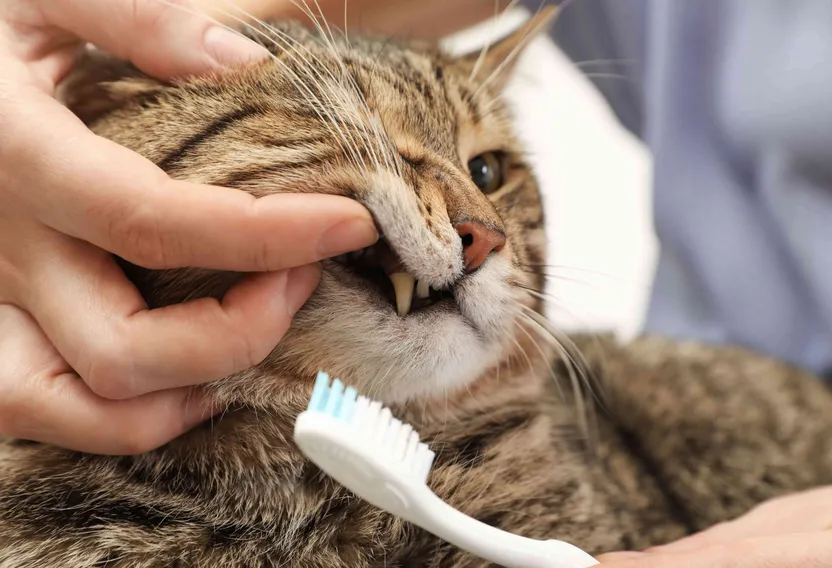
Daily brushing will help to remove plaque deposits and will also allow you to keep a close eye on your cat's gums and check for tartar. If your cat won't let you anywhere near their mouth, a water additive in their drink bowl can be a good substitute.
Finally, it is possible to find special dental treats to fight bad breath and tartar. And what could be better than a healthy treat your cat is sure to enjoy?!
There are a few tell-tale signs that your cat is having issues with their mouth:
they are not eating properly;
they have bad breath;
they have a yellowish deposit on some teeth;
Bad breath in cats
Most of the time, tartar build-up is to blame for bad breath. Plaque is a combination of bacteria, polysaccharides and glycoproteins. As it forms on the teeth it can cause gum inflammation and bad breath.
Looking at the teeth you'll find the base of the teeth are discoloured or appear 'thick'. But beware: this could also be a sign of digestive issues or the effects of a virus or illness such as coryza or feline calicivirus.
So, what should you do? If you notice a lot of tartar, very bad breath or there is redness around the gums, it's essential to make a vet appointment. This is especially important if your pet appears to be having trouble eating.
Diagnosing the problem will help you to form a plan of attack. You may need to do all or some of the following:
a professional teeth clean under anaesthetic;
a course of antibiotics or anti-inflammatories;
adopt a dental hygiene routine (essential).
Quick tip: plaque-fighting powders (especially those derived from seaweed) don't usually contain grain unlike a lot of dental chews.
Best sellers in this category
Cleaning up your cat's teeth: a plan of action
A professional teeth cleaning involves removing tartar from the surface of your cat's teeth using ultrasonic technology.
This operation is carried out under general anaesthetic and will give your cat a clean and healthy mouth. It should also help to reduce gum inflammation.
Your cat won't suffer too much and should recover very quickly so they'll be chomping down on dry food in no time!
However, you will still have to adopt a dental hygiene routine for your cat if you have not already done so as it's not ideal to have to put your cat under anaesthetic on a regular basis.
The best way to deal with dental issues is to stop them before they have a chance to start. This means using preventive treatments and checking your cat's mouth regularly to avoid them suffering unnecessarily.
Shop our cat dental care
You may be also interested in these guides
Guide written by:
Pauline, Self-taught DIYer, Leeds
With a handyman-father, I grew up with the soft sound of the sander and hammer on weekends. I am both manual and cerebral, I learned the basics of DIY and the customisation of furniture because I was passionate. The salvage mentality is a true way of life that allowed me to know how to use all the tools and products needed to give something a second life, from a sander to varnish. I have two favourite activities: the transformation of old furniture and decoration tips. I am always ready to lend a helping hand to revamp a table or to restore a mirror that was intended for the tip that will become a friend’s centrepiece. I’m convinced that it’s possible to reinvent an interior by small, regular modifications and I constantly research low-cost ideas.
'/%3E%3C/svg%3E)