How to fit a basin waste
'/%3E%3C/svg%3E)
Guide written on 6 February 2024 by:
Jérôme
Important features
- Fit the basin waste
- Secure the basin waste to the waste pipe
- Check the basin waste for leaks
Best sellers in this category
What is a basin waste?
A waste is designed to fit inside the hole of a sanitary appliance such as a basin to shut off the plug hole. On the other end of the waste is a male thread which is used to screw onto the basin trap to allow the water to drain away.
A waste also usually incorporates a plug which is used to stop the flow of water and fill up the sanitary appliance, whether this be a basin or a bathtub. The plug may be separate from the waste and linked by a chain or rod. Alternatively, it can form part of the waste as is the case with a pop up waste, which can be closed by simple pressure, or a flip top waste which is designed to be rotated to block the plug hole. Basin wastes can also be slotted or unslotted. If your basin has an overflow, you will need a slotted waste to allow the water to drain away safely if the basin overfills.
Wastes can be fitted to all types of bathroom and kitchen sanitary appliances including:
kitchen sinks;
wash basins;
showers;
bathtubs;
bidets.
Showers are the only appliances that do not feature a waste with a plug since water has to drain away constantly. Kitchen sink wastes will often come with a built-in overflow.
Steps
Fit the basin waste
Secure the basin waste to the waste pipe
Check the basin waste for leaks
Basin wastes
1. Fit the basin waste
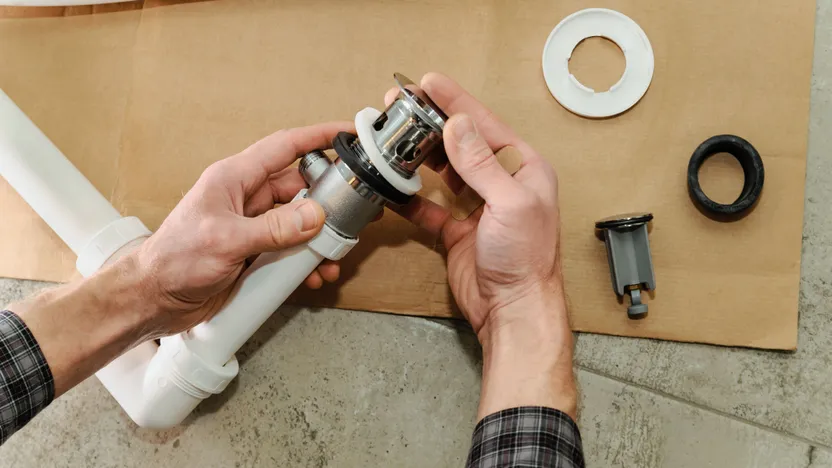
Basin wastes usually come as a kit comprising several components. To fit a basin waste, proceed as follows.
Position the strainer inside the plug hole in your basin (if required).
The fixing screw should be fastened through the middle of the strainer.
Fit the rubber seal on the other side of the basin.
Slot the basin waste into place in the plug hole.
Screw the waste to compress all the components together to create a watertight seal.
Best sellers in this category
2. Secure the basin waste to the waste pipe
The type of tool you use for this next step depends on the type of basin waste you have. Sometimes, a basic Phillips screwdriver will do the job. But more often than not, you'll need a box spanner. You may also need a slotted screwdriver to hold the waste in position while you tighten it.
In some cases, you may even need to use a special tool called a basin wrench or back nut spanner. Otherwise, you can use adjustable pliers to hold the waste in place and tighten the screw from the inside.
Slotted screwdrivers
3. Check the basin waste for leaks
Once the waste is in place and the trap that connects the sink to the waste pipe has been screwed on, it's time to test the waste.
To do so, close the plug and fill up your basin to the top before opening the plug.
This way, you will test the watertightness of the waste at the maximum flow rate. Use your finger to check for any leaks around the waste. If there is any water, you will have to re-tighten the connections.
Shower wastes
Final tips for fitting a basin waste
Choose a high quality waste and bear in mind that there may be several different models to suit your basin at various price points. Ideally, go for a waste with a strainer and metal fixings.
These parts can be made of plastic but they do tend to wear down and break over time which will lead to leaks. It's worth investing a few extra quid to avoid this.
If you really want to ensure the waste is watertight, you can apply silicone in addition to the seal. However, this cannot work as a replacement to the seal provided. Be sure to use both.
How to fit a basin waste
Required skills
No particular skills are required. However, you will have to be able to follow the instructions provided.
Time required
15 minutes
Number of people required
1 person
Tools and equipment
Box spanner
Adjustable pliers
Safety and workwear
Please note: this is a non-exhaustive list; be sure to match your personal protective equipment to the job at hand.
You may be also interested in these guides
Guide written by:
Jérôme
Electrician by trade, I first worked in industrial estates where I installed, wired and fixed a large number of electrical installations. After this, I managed a team of electricians for this type of work. 10 years or so ago, I turned to building and construction. From the modest family home, to gyms and theatres, I have been able to coordinate, audit and organise all sorts of construction sites. For 4 years now, I am restoring and building an extension to a bungalow in the heart of the Welsh countryside. My experience in manual work and my knowledge means I am proud to be of service. Terraces, interior design, roofing, plumbing, electrics, anything goes! My wife, daughter and I, built almost everything we have from scratch! So to answer all of your questions and advise you on choosing your tools? Easy!
'/%3E%3C/svg%3E)