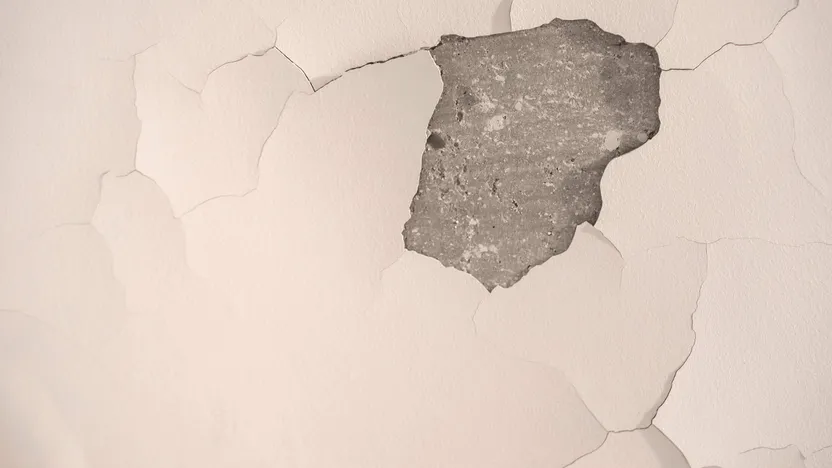
How to fix flaking paint
'/%3E%3C/svg%3E)
Guide written on 25 September 2026 by:
Anne, Painter
Important features
- Causes of flaking paint
- How to fix flaking paint
Best sellers in this category
Why does paint flake?
Matt paint is most commonly affected by flaking. As these paints are more permeable than satin or glossy paints, their main problem tends to be flaking rather than blistering. Often, the problem will occur on a ceiling where a matt paint has been applied.
Below are some of the most common reasons why paint flakes.
1. You've used a cheap paint
Sadly, a lot of cheaper paints have issues adhering to surfaces. If you haven't properly prepared your surface before painting or you've applied a low-end renovation paint, there's a high change the paint will flake quickly.
2. You've applied a water-based paint over an oil-based paint
Water-based paints will not adhere to oil-based paints, especially ones with a glossy finish. When applying, you'll find that the water-based paint kind of 'slides' over the old paint – which is a good thing because you'll quickly realise your mistake! But some water-based paints will adhere slightly to oil-based paints meaning the paint will eventually flake at some point down the line.
3. You haven't prepared your surface properly
Failing to adequately prepare your surface – meaning using a primer or undercoat before your topcoat – means there's a chance your paint won't adhere properly.
4. The paint has dried too quickly
Painting in warm weather will mean the paint dries too quickly and won't adhere as it should. Never attempt to paint in full sun or when the temperature hits 25°C or above.
How to deal with flaking paint
Fixing minor paint flaking
If your paint is only flaking slightly, scrub the surface lightly with a paint scraper or wire brush (depending on the surface type). Next, sand the area to even out the surface, apply an undercoat or primer and then apply your paint.
Fixing major paint flaking
If your paintwork is really flaking, you will have to strip back the surface using a paint stripper or sander. You can then use an undercoat before applying your topcoat.
Best sellers in this category
You may be also interested in these guides
Guide written by:
Anne, Painter
After 8 years of trade, I turned professional: I trained myself to be a painter and carpet fitter, either on my own or with 16 year old comrades. 9 months later, following vocational training, I created my company. I’m a self-taught DIYer and decoration enthusiast, I love to find and restore furniture and to create unique decoration pieces. I completed the renovation of my sister’s house with my niece: electrics, tiling, plasterboard...we did it all. And today, if I can share my experience I'm happy to do it. Good Luck.
'/%3E%3C/svg%3E)