How to grow a green roof
'/%3E%3C/svg%3E)
Guide written on 25 September 2026 by:
John, Passionate gardener, Cambridge
Important features
- Layer composition
- Roof type and plant varieties
- Installation and maintenance
Best sellers in this category
Green roofs: a twist on an ancient tradition
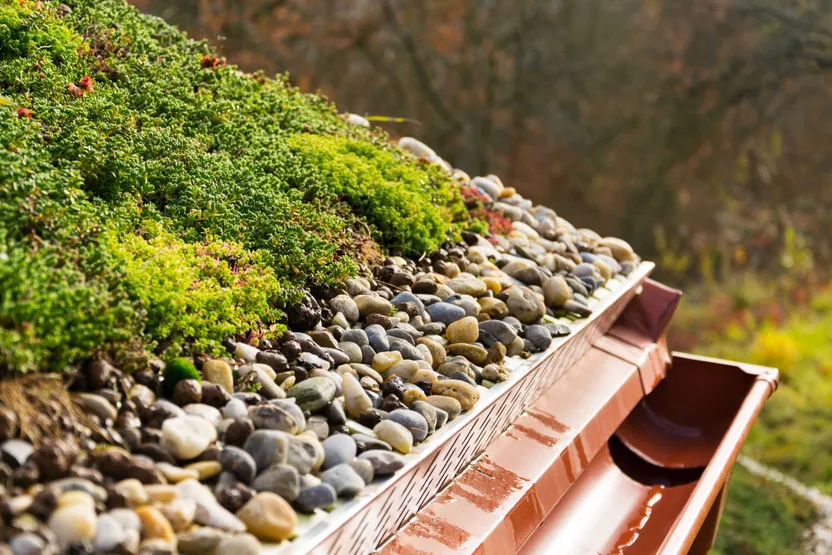
Green roofs, also known as living roofs, are based on ancient techniques that have existed since humans started building shelters and are becoming ever more popular. Any type of structure can be used to accommodate a green roof system including houses, shops, gyms, schools or office buildings.
Green roofs can be used to cover anything from grand buildings to homes and can be installed in old buildings (under certain conditions) or new builds. Enjoying something of a moment, these on-trend roofs are being encouraged by planning authorities thanks to the wide range of advantages they offer. Green roofs are particularly popular in urban areas.
Back in 2017, a report by Living Roofs estimated the green roof market was growing by 17% each year in the UK. It also found that 42% of the market was focused in London alone.
Complex structure of a green roof
Green roof layers
A green roof system is made up of several layers. These layers include (from bottom to top):
structural support;
thermal insulation;
waterproof membrane;
root barrier;
drainage layer;
growing medium;
plants.
Structural support
The structural support can be made of concrete, metal or wood.
Waterproof membrane
The waterproof membrane is often made up of a root barrier and a waterproof layer to separate the green roof from the building underneath.
Drainage and filter layer
The drainage layer is especially important in roofs that do not have a sufficiently steep slope. The excess water will be drained off and carried along the gutter.
Growing medium
The growing medium is generally a little over 30 cm deep. Green roof substrates are lighter than normal soil which can get very heavy when waterlogged. But green roof substrate must still be able to hold water. It is usually made up of a mixture of compost and leaves or bark, and a form of lightweight and absorbent stone, grit or aggregate. The stones can measure up to 1 cm in diameter and should make up around 70% of the overall substrate volume.
Plants
Any plant can grow on a green roof. However, it's important to choose the right types of herbaceous or shrubby plants based on the climatic conditions where you live and the thickness of the growing medium. These plants may take several months, or even years, to reach maturity and cover the full surface of your green roof. The following types of plants are commonly used:
ground cover plants like sedum, creeping thyme, baby's breath or candytuft; these types of plants are popular as they do not require a lot of maintenance;
flowering plants, perennials or bulb plants, such as chives, bloody cranes-bills, dianthus, iris pumula or a mixture of wildflowers.
grasses, such as blue fescue, are often planted.
Your plants can be grown from:
seeds;
cuttings;
plug plants;
ready-grown plants. These can take the form of turf, sedum mats, capillary matting, planters or plant boxes.
Best sellers in this category
Three types of green roof
The types of plants grown on your roof will determine which category it falls into:
extensive green roof;
semi-intensive green roof;
intensive green roof.
Extensive green roofs
This is the most common and least expensive type of green roof, and also requires less upkeep. They require around 5 to 15 cm of growing medium, which should contain a high proportion of stone material (70%) to ensure good drainage and a light weight. Extensive green roofs can home wild ground cover plants but plants should generally be drought-resistant as these roofs do not incorporate an irrigation system. Your plants should eventually form a stable ecosystem that only requires occasional intervention.
Semi-intensive green roofs
These roofs require at least 15 cm of growing medium. Around half of this layer should be made up of porous aggregates. A drip irrigation system is usually incorporated into the roof. These roofs can home flowering plants, green plants, climbing plants and small shrubs.
Intensive green roofs
This type of green roof is essentially a garden roof. The growing medium must be at least 30 cm deep and you will be able to grow all manner or fruit or decorative trees. Wind exposure is the greatest risk to this type of garden.
Green roof types and features
Extensive | Semi-intensive | Intensive | |
Building type | New or old building. | New or old building (roof strength permitting). | New build only. |
Supporting structure | Concrete, steel, wood. | Concrete, steel, wood. | Concrete |
Max. roof slope | 30 % | 20 % | 3 % |
Growing medium thickness | 5 to 15 cm | 15 to 30 cm | Over 30 cm |
Total weight | 60 to 100 kg/m2 | 150 to 300 kg/m2 | Over 500 kg/m2 |
Irrigation system | Non-compulsory. | Recommended (depending on climate and plant type). | Essential. |
Plants | Mostly creeping and ground cover plants | Wider variety of choice: flowering and green plants, small shrubs, climbing plants | All plants including larger shrubs, provided the growing medium is deep enough. |
Maintenance needs | 1 to 2 times a year | Limited (once a month) | Much more frequent, depending on the density of the plants. |
Average installation price per m2 | £45 to £100 | £100 to £200 | Over £200 |
-
6 main environmental benefits of a green roof
A green roof helps to promote biodiversity in urban environments, especially for insects and birds.
These roofs will have a positive impact on air quality. Plants increase oxygen levels while absorbing carbon dioxide. They help to increase humidity which, in turn, can help those with pollen allergies.
They provide more effective thermal insulation than a standard roof. This effect will be more pronounced in the summertime (against the heat) than in winter (against the cold). Plants and substrate work to protect your home against excessive heat which will help you to limit the use of your air conditioning system. Green roofs help you to save on energy by helping to regulate the temperature of your home.
The thickness of the substrate will also help with acoustic insulation. Vegetated soil offers one of the most effective forms of acoustic insulation for the home. Just 12 cm of growing medium is said to reduce surrounding noise by 15 to 20 dB more than an ordinary roof.
Growing medium also retains rainfall which helps to prevent the risk of flooding. Just 10 cm of growing medium can hold around 70% of the precipitation that falls on it whereas roof tile or slate has to rely on a drainage system which can increase the risk of flooding. In urban environments, rooftops occupy around 20 to 30% of the overall land surface.
Green roofs help to make roof coverings last longer (e.g. waterproof membranes) as they help to regulate temperature and protect the roof from UV rays.
Enhanced well-being
A green roof offers a number of advantages to its owner, but it can also be beneficial for the health and well-being of others. Vegetated surfaces help to increase the level of humidity in the air and lower the effects of summer heatwaves. This can be particularly useful for countering the impact of the urban heat island effect.
Little islands of green in areas made primarily of concrete, glass or steel can help to create a sense of harmony that makes the city less stressful and more peaceful to live in. In a commercial area, plant-filled environments aid in relaxation and general well-being to enhance the productivity of those working in the building.
These roofs can also be used to set up vegetable patches, grow flowers, create a roof garden or even home bee hives. They therefore help to create a new living space. This type of construction demonstrates a willingness to engage on a social and environmental level which can help to improve brand image.
Green roofs: a pricey and technical endeavour
A green roof will cost about 4 to 5 times more than a traditional roof. The price per m2 depends on:
where you live;
the type of green roof you want (i.e. extensive, semi-intensive, intensive);
the range of plants you want;
the slope of your roof, and so on.
You will also have to factor in maintenance costs which, for intensive green roofs, can be significant. While an ordinary roof can be installed by someone with the skills and know-how, a green roof can only really be set up by a professional specialising in this type of work.
You may be also interested in these guides
Guide written by:
John, Passionate gardener, Cambridge
When I was young, I was already working in the family garden. Perhaps that is where my interest in plants and gardening came from. So, it was logical for me to study plant biology. At the request of various publishers I have, over twenty-five years, written many books on the subject of plants and mushrooms (a subject that is close to my heart). They were mostly identification guides at first, but shortly after they were about gardening, thus renewing the first passion of my childhood. I have also regularly collaborated with several magazines specialising in the field of gardening or more generally in nature. There is no gardener without a garden, I have cultivated mine in a small corner of Cambridge for the last thirty years and this is where I put into practice the methods of cultivation that will I advise you in as well.
'/%3E%3C/svg%3E)