How to clear snow from a roof
'/%3E%3C/svg%3E)
Guide written on 25 September 2026 by:
Pauline, Self-taught DIYer, Leeds
Important features
- Snow layer
- Shovel and rake
- Height safety equipment
Best sellers in this category
Why clear snow from your roof?
If your home is regularly subject to heavy snowfall or just struck by an unexpected snowstorm, there may be any number of consequences for your roof. These can happen from around 30 cm of snow and can include:
excess weight on the home that can weaken your roof and cause it to sag;
a risk of water infiltration in your attic space and home.
When it rains in winter, the weight of the water on top of the snow can build up even more.
You need to be particularly careful around skylights, sash and Velux windows where any built-up snow can lead to leaks. If you don't clear the snow away, these weak points in the roof can let in water and lead to water running down the walls or water marks elsewhere.
Clearing the snow from different types of roof
Want to clear your roof? Great! This is a great way to prevent damage to the roof and the rest of your home. That said, professionals will recommend leaving around 4 cm of snow on the roof so you don't run the risk of damaging your roof covering with your snow removal tools. This thin layer of snow won't damage your roof covering or the structure itself and will melt whenever the snow or cold weather comes to an end.
It's important to pay attention to certain areas of the roof. This depends on the shape of your roof itself.
Clearing a flat roof: remove excess snow from the roof and clear all snow from your roof drainage system using a shovel.
Clearing a sloped roof: remove excess snow and be sure to pay special attention to all corners and the gutter. Use an ice scraper tool if necessary.
Always start with the highest point and wear appropriate height safety equipment including a safety harness, if required.
Best sellers in this category
Finding a tool to match the thickness of the snow
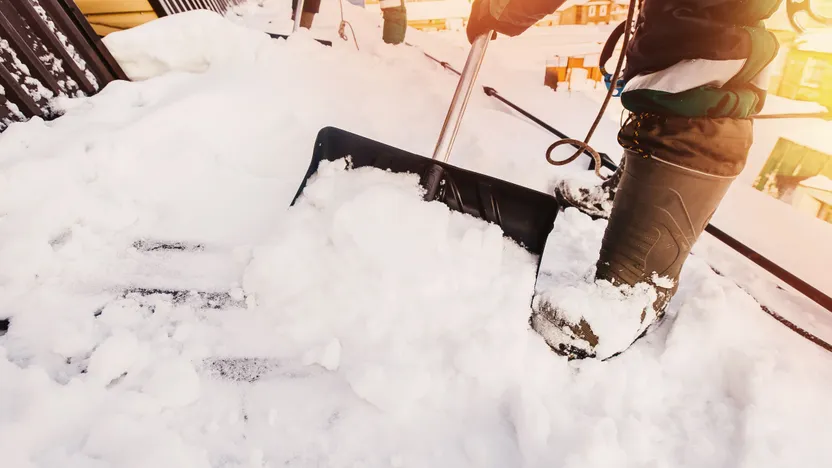
A snow shovel isn't always the best tool for clearing roofs with a lot of snow build-up. A snow roof rake, which is usually equipped with a telescopic handle, is often the most efficient option as they feature a long handle which allows you to reach more of your roof from the ground. A sledge-style snow shovel is mainly used for flat roofs and clearing snow off the ground as the size of the scoop can make these tools tricky to handle.
Whether your roof is made of tiles, slate, zinc or any other material, using a specially designed tool with blunt edges will help to protect the surface as best as possible. As you work on clearing the roof, it's a good idea to cordon off the area where snow may fall using coloured rope and stakes. When you're done, use a snow blower to clear up if you have a large amount of snow on the ground.
Shop our snow shovels
Breaking off icicles from the gutter
If you need to clear snow from the roof, you'll more than likely also need to break off any icicles that have formed along the gutters. As temperatures start to rise again, these icicles will detach from the gutter which poses a risk to anyone who might find themselves beneath the roof at the time! Use a snow brush or roof rake to break the icicles, making sure you are not standing directly underneath.
How to clear a roof safely
Be careful: clearing a roof of snow doesn't come without its risks, the first of which is falling. Only attempt to climb a roof if you are equipped with all the appropriate height safety equipment including a harness and lanyard. You must also ensure someone is with you at all times so they can seek help if you get into trouble.
There is also a very real risk of electric shock due to the proximity of the snow – which, after all, is just frozen water – to your home's electric cables.
For anyone who doesn't feel up to the task of climbing onto the roof – for example, if you are out of shape, don't have the right equipment or are just afraid of heights – it's always best to call upon a professional or snow-clearing company.
The snow that has settled on the ground can be moved using a:
snow shovel;
sleigh-style snow shovel;
ice breaker;
or snow blower.
Snow blowers
You may be also interested in these guides
Guide written by:
Pauline, Self-taught DIYer, Leeds
With a handyman-father, I grew up with the soft sound of the sander and hammer on weekends. I am both manual and cerebral, I learned the basics of DIY and the customisation of furniture because I was passionate. The salvage mentality is a true way of life that allowed me to know how to use all the tools and products needed to give something a second life, from a sander to varnish. I have two favourite activities: the transformation of old furniture and decoration tips. I am always ready to lend a helping hand to revamp a table or to restore a mirror that was intended for the tip that will become a friend’s centrepiece. I’m convinced that it’s possible to reinvent an interior by small, regular modifications and I constantly research low-cost ideas.
'/%3E%3C/svg%3E)