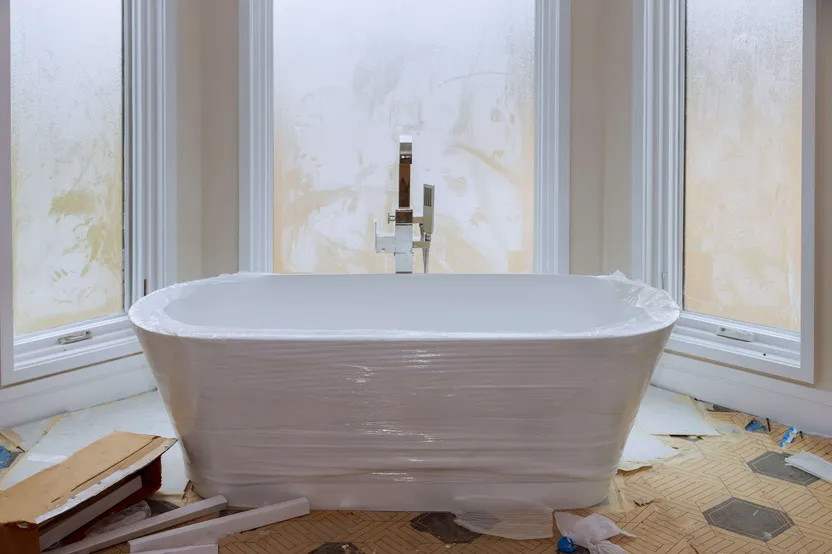
How to install a freestanding bathtub
'/%3E%3C/svg%3E)
Guide written on 6 February 2024 by:
Jérôme, Construction site supervisor, Cardiff
Important features
- Position the bath
- Assemble the overflow and trap
- Connect the waste pipe
- Connect the bath tap
- Connect the water and test for leaks
Best sellers in this category
Freestanding bathtubs: style meets design
Used as a centrepiece in the bathroom, freestanding baths come in a wide range of shapes, sizes, materials and colours. Perfect for adding a modern, streamlined and stylish touch to bathrooms, these tubs continue to grow in popularly.
Bear in mind, however, that a freestanding bath is trickier to install if you are renovating an existing bathroom. This is due to the fact that most water and drain pipes are set up along a wall meaning you will have to reposition your plumbing. The complexity of this task varies depending on the position of the pipes, the type of surfaces you have in the bathroom and the existing installation.
Steps
Position the freestanding bathtub
Connect the overflow and trap
Connect the waste pipe
Connect the bath shower mixer tap
Turn on the water and test for leaks
1. Position the freestanding bathtub
After taking care to determine the exact spot where you want to set up the bath, put the bathtub into your chosen position.
Place cardboard on the floor for protection.
Check that the bathtub is level at several points (lengthways, widthways and diagonally) using a spirit level.
Tip the bathtub on its side on the cardboard and adjust the height of the bath using the adjustable feet if there are any major differences in level.
Put the bath back upright and check the level once more.
Trace around the base of the bathtub using a pencil or chalk. This step is not necessary if you are installing a freestanding bath with feet; in this case, simply trace around the feet once the bath is in position.
Put the bathtub on its side again to continue the installation process.
Shop our freestanding baths
Best sellers in this category
2. Connect the overflow and trap
Take the assembly instructions and all the parts required to install the overflow and trap.
Screw the overflow onto the bathtub taking care to insert the rubber seal on the outside of the tub. Remove all plastic packaging if required. For the moment, let the overflow hose hang in place.
Fit the seal to the base of the bathtub where the waste will be fitted. Check that the seal is flat and that the lips of the seal are sitting firmly against the bathtub on both sides.
Install the trap so that it is facing towards the drain pipe.
Screw the waste onto the trap from the inside of the bath.
Connect the overflow hose to the trap, ensuring that there is a washer between the two components.
Check that all parts are correctly assembled and place the bathtub upright. Make sure that the trap is not touching the ground. If the trap is touching the ground, raise the height of the bathtub using the adjustable feet and check the level of the bath once again.
Once that is done, put the bath back on its side.
Bath waste
3. Connect the waste pipe
When it comes to installing a freestanding bath, the best option will usually be to use a flexible plastic waste pipe. This provides more flexibility for installation and also allows you to tip the bathtub on its side easily if there are any issues or if you need to access the trap.
If the bathtub trap comes with its own drain pipe, be sure to check that it is long enough to reach the waste pipe in your bathroom.
Start by connecting the drain pipe to your trap. Check that the washer is in place.
Check the length of the flexible pipe with the bathtub still on its side. The pipe mustn't be pulled too tight nor bent.
If the pipe isn't long enough, you have a couple of solutions. You can either change the flexible pipe for a longer one of the same diameter or you can extend the existing waste pipe in the bathroom using a rigid plastic pipe.
In either case, ensure that the flexible plastic pipe and the rigid pipe are compatible. If not, use plastic reducers to connect the two pipe sizes. Be careful to connect everything in the right order: the flexible pipe that runs from the trap should be connected to the rigid drain pipe – not the other way around.
Once everything is connected, you can place the bathtub upright again.
Use the mark that you made on the floor to find the exact spot to position the bath.
PVC waste pipes
4. Connect the bath shower mixer tap
Most freestanding bathtubs are fitted with bath shower mixer taps.
Assemble the various components of the tap using the instructions provided. Once again, check that all the washers are fitted.
Turn off the water at the mains and connect the tap to your water inlets. If your tap connectors are long enough to reach the tap in your chosen position, great! Otherwise, you'll have to extend the tap connectors.
Tap extensions usually come with the unions already fitted. They will feature a male connection at one end to attach to the water inlets and a female connection to fit to the base of the bath shower mixer. Don't forget to check that all washers are in place. Apply PTFE tape to your extensions. Bath taps generally have a 3/4" threaded tail (22mm).
You can now secure the bath feet to the ground. Be sure to use the correct plugs for your surfaces.
Assemble the bath shower mixer tap tightening each part by hand.
Next, assemble the shower hose and the shower head ensuring all washers are fitted. There's no need to use tools here – you should be able to tighten all connections by hand.
Shower rails, shower heads and shower fittings
5. Turn on the water and test for leaks
Once everything is in place, don't forget to rub away the marks you made on the floor and to remove the cardboard.
Turn the water back on at the mains. Don't turn the tap on at this point. If nothing is leaking, then your connections should be watertight.
You can then test the flow rate and temperature settings of your tap, ensure the shower head is working and that water is draining properly.
You may want to lift the bathtub slightly to check for leaks around the trap.
How to install a freestanding bathtub
Required skills
You will need basic knowledge of how to plumb in water and waste pipes (copper or plastic pipe, depending on the installation). You will have to know how to assemble parts including the bath tap, shower hose, shower head and bath waste.
The skills required for installation depend largely on the layout of your bathroom. This guide sets out the steps for a straightforward freestanding bath installation where the water supply is set up within reach. However, this is unlikely to be the case if you are renovating as the water and drainage pipes are often set up in a corner or against a wall.
If you are installing a new bathroom and the pipework has been installed for a freestanding bath, you will only need basic plumbing skills to connect the copper or plastic pipes and assemble the various tap components.
On the other hand, if you have to cut tiles, cut chases in the wall or cut through the floor, you'll need different tools and different skills. In this case, you'll need to be able to use a drill (or hammer drill depending on the material), an angle grinder (if you have to cut chases) and a tile cutter. You may also have to mix your own tile adhesive.
Time required
Approx. 2 to 3 hours depending on layout and type of bathtub.
Number of people required
1 or 2 people
Tools and equipment
A freestanding or stand alone bathtub
Overflow, waste and trap (with washers)
40mm minimum plastic drain pipe.
Pipe reducers (if required)
A bath shower mixer tap (with washers)
Pipe fittings (compatible with your tap and water inlet)
PVC adhesive
Wall plugs and screws
Tap connector extenders (if required)
Instructions
A tape measure and pencil / chalk
A spirit level
A set of slotted and/or Phillips screwdrivers
A set of open ended spanners (or adjustable spanner)
A saw (with a blade suitable for cutting plastic)
A hammer drill with drill bits
A hammer / mallet
Safety and workwear
Please note: this is a non-exhaustive list; be sure to match your personal protective equipment to the job at hand.
Shop our safety and workwear
You may be also interested in these guides
Guide written by:
Jérôme, Construction site supervisor, Cardiff
Electrician by trade, I first worked in industrial estates where I installed, wired and fixed a large number of electrical installations. After this, I managed a team of electricians for this type of work. 10 years or so ago, I turned to building and construction. From the modest family home, to gyms and theatres, I have been able to coordinate, audit and organise all sorts of construction sites. For 4 years now, I am restoring and building an extension to a bungalow in the heart of the Welsh countryside. My experience in manual work and my knowledge means I am proud to be of service. Terraces, interior design, roofing, plumbing, electrics, anything goes! My wife, daughter and I, built almost everything we have from scratch! So to answer all of your questions and advise you on choosing your tools? Easy!
'/%3E%3C/svg%3E)