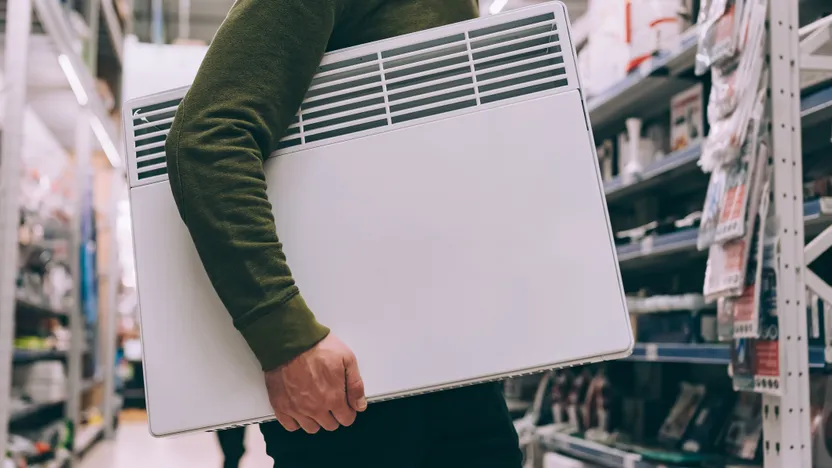
How to install an electric radiator
'/%3E%3C/svg%3E)
Guide written on 25 September 2026 by:
Jérôme, Construction site supervisor, Cardiff
Important features
- Prepare to install the electric radiator
- Drill the wall and secure your wall bracket
- Connect your electric radiator to the power
- Fit the radiator to the wall bracket
- Test out your electric radiator
Best sellers in this category
Electric radiators for 100% efficient heating
Electric radiators have come a long way from the old-fashioned convector heaters of the past. These days, electric radiators and heaters boast a range of different heat technologies and all electric radiators are considered 100% efficient at point of use. For the most part, picking the right model comes down to choosing between a convector heater, a panel heater and a modern storage heater. Modern storage heaters, also known as ceramic radiators, will usually be the most economical option of all but bear in mind that you'll also have to calculate the type of heat output you need.
This installation guide deals with a standard wall-mounted electric radiator. Please note that this guide does not apply to towel radiators. An electric towel rail must be hardwired into the wall by a professional electrician. You must not attempt to install a bathroom heater yourself.
Steps
Prepare to install the electric radiator
Drill the wall and secure your wall bracket
Connect your electric radiator to the power
Fit the radiator to the wall bracket
Test out your electric radiator
Fan heaters
Prepare to install the electric radiator
Once you've completed an inventory of all the parts of your new radiator, start organising your work space.
Place the radiator on the floor on top of its cardboard packaging. Put the bracket (or brackets) to one side and check to see if the radiator comes supplied with an installation template. The template may be found on the packaging itself.
Best sellers in this category
Drill the wall and secure your wall bracket
Measuring, drilling and fitting the wall plugs
Most electric radiators are designed to be mounted to the wall using a bracket. Some radiators may also come with additional radiator clips.
If you have an installation template, place it against the wall at your desired height.
Check that the template is level using a spirit level.
Pierce through all the holes on the template to reach the wall then remove the template. If you do not have a template, place the bracket on the wall at the desired height and ensure it is level before marking out your drill holes with a pencil.
Drill one hole and insert a wall plug.
Securing the wall bracket
Screw the bracket into place using your first hole taking care not to overtighten. Ensure that the bracket is level.
If you have used a template, ensure that your marks line up where you need to drill. Correct any mistakes as required. If you haven't used a template, simply mark out the holes using the bracket.
Remove the bracket.
Drill the remaining holes, insert all the wall plugs then secure the bracket.
Check that the bracket is level before tightening the screws fully.
Shop our fixings and plugs
Connect your electric radiator to the power
Hopefully, you have taken care to ensure your new electric radiator has been installed within reach of a plug socket. If so, simply plug in the radiator and that's it! Alternatively, you might decide to hardwire the radiator into the wall. Bear in mind that you can only complete this job yourself under certain conditions.
While you are technically allowed to hardwire a radiator yourself, it is highly recommended to call in a qualified electrician.
You should not attempt to install multiple radiators yourself. This type of installation is more complicated and you will have to hardwire each radiator into a fused spur to prevent the ring main from overloading. An electrician will be able to help you plan your layout and ensure that your radiators are installed safely with no cables on show.
Be sure to look for a NICEIC-registered installer to ensure your appliance is installed safely.
Please note that you must never attempt to install a bathroom heater by yourself. This is a job that can only be completed by a qualified electrician.
Setting up smart control
If you've invested in smart radiators, you'll need to download the app and pair the heater with your device.
> See our Smart thermostat buying guide <
Flex outlets
Secure the radiator to the wall bracket
Secure your radiator to the wall bracket. Depending on the model, you can either slide the radiator onto the bracket or it may be designed to clip into place. Read the instructions carefully to find out how to fit the radiator correctly.
Once in place, check that the radiator is level using a spirit level.
Ensure that the power cable is not pinched or held taut.
Test out your electric radiator
Check that the radiator is switched off before plugging it in.
Plug in the electric radiator and turn the switch to the 'on' position.
Test out the various modes of the radiator and pair it to a smart device if required.
How to install an electric radiator
Required skills
To install an electric radiator, you'll need to be able to secure brackets to a wall. You'll have to be able to use a drill or even a hammer drill and to choose the right wall plugs for your wall.
When it comes to connecting the electric radiator to the power, simply plug the radiator in or call in a professional electrician. Do not attempt to carry out any electrical work unless you are completely confident in your abilities.
Time required
Approx. 1 hour 30 mins.
Number of people required
1 person
Tools and equipment
Shop our drills
Safety and workwear
Please note: this is a non-exhaustive list; be sure to match your personal protective equipment to the job at hand.
Shop our safety and workwear
More information on electric heating
You may be also interested in these guides
Guide written by:
Jérôme, Construction site supervisor, Cardiff
Electrician by trade, I first worked in industrial estates where I installed, wired and fixed a large number of electrical installations. After this, I managed a team of electricians for this type of work. 10 years or so ago, I turned to building and construction. From the modest family home, to gyms and theatres, I have been able to coordinate, audit and organise all sorts of construction sites. For 4 years now, I am restoring and building an extension to a bungalow in the heart of the Welsh countryside. My experience in manual work and my knowledge means I am proud to be of service. Terraces, interior design, roofing, plumbing, electrics, anything goes! My wife, daughter and I, built almost everything we have from scratch! So to answer all of your questions and advise you on choosing your tools? Easy!
'/%3E%3C/svg%3E)