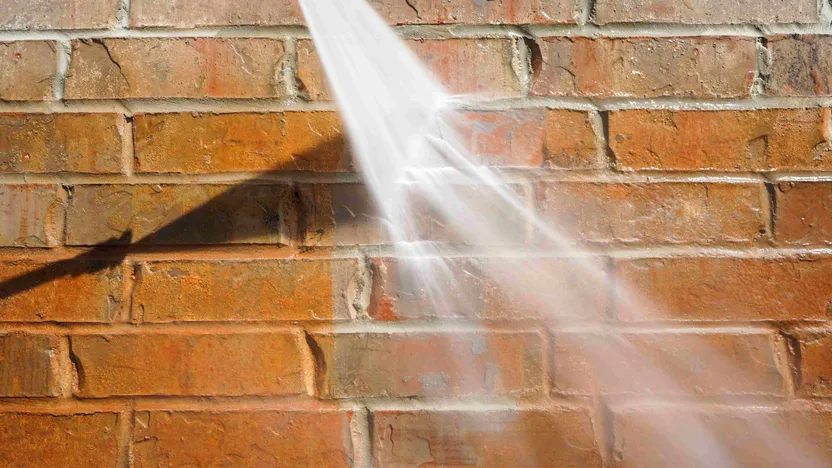
How to pressure wash your exterior walls
'/%3E%3C/svg%3E)
Guide written on 25 September 2026 by:
Christelle, Micro-entrepreneur in the gardening sector
Important features
- Performance
- Power
- Accessories
- Method
Best sellers in this category
How to pressure wash the outside of your home
As the name suggests, pressure washing involves spraying water at high pressure. A pressure washer is a great tool to remove ingrained dirt from the outside of your home and give your exterior walls a new lease of life. This task can be done every year but you should ideally only take out your pressure washer when the weather is warm to prevent thermal shock which may damage your exterior wall covering.
You'll also have to make sure that you have the right tool for the job. Choose between an electric or petrol-powered pressure washer depending on the size of your surface and the amount of built-up dirt. The pressure rating of the machine must be over 140 bar with a flow rate of about 500 to 600 litres per hour (l/h).
You can then think about what accessories you need from telescopic lances to reach the top of your walls to any cleaning or maintenance products you might need. At the same time, you need to be sure that you are taking all the required safety precautions to protect yourself and the integrity of your exterior walls.
Pressure washer
What type of exterior walls can I pressure wash?
Pressure washers can be used to clean concrete, brick and stone façades. It is also possible to pressure wash wood or render but you will have to reduce the pressure of your tool to a maximum of 120 bars. No matter what kind of wall covering you have, it must be in good condition or else you run the risk of water infiltration. You'll need to keep the pressure washer well away from any small cracks or other flaws. Ideally, you should repair the damage before you start cleaning.
It's important to be very careful around fragile parts of the façade such as windows, shutters and balconies. You can clean these parts with the pressure washer but be sure to reduce the pressure and stand far enough away to ensure the water jet is not too strong.
Pressure washer
Best sellers in this category
What type of pressure washer do I need?
Petrol-powered vs. electric pressure washers
If you're looking to clean exterior walls, you'll have the choice between a petrol-powered pressure washer and an electric pressure washer. It all depends on the type of wall covering you have and the amount of dirt, dust and moss on your surface. Petrol models are more powerful and offer higher pressure ratings and flow rates. They can also be used over a larger area as you won't be restricted by a power cable.
Another advantage of petrol-powered pressure washers is that they can spray warm water which increases their cleaning power. This type of pressure washer is particularly useful for cleaning large areas on a regular basis or for professional use. As they can apply more pressure, they are best for tackling surfaces that are particularly dirty where dust, dirt, soot or moss has been allowed to build up over a long period of time. Electric pressure washers are of course less powerful. However, the are also lighter and smaller and less expensive to buy. These models will do perfectly fine for small to medium-scale jobs.
Pressure washer power and flow rate
You'll need about 3000 W from an electric pressure washer with a pressure rating of at least 140 bar to clean exterior walls. Equally, you'll need a minimum flow rate of 500 to 600 litres per hour. However, once again, it all depends on your needs and the type of wall covering you have. It goes without saying that a fragile surface will require less pressure.
Pressure washer accessories to clean exterior walls
Depending on the width and height of your home, you may need to use a long power cable and telescopic lance to tackle every corner; these accessories can stretch up to 5.5 metres! You can alternate between a straight nozzle and a rotary nozzle to remove stubborn dirt from every nook and cranny. Here are the most important pressure washer accessories to get your exterior walls looking as good as new:
a foam cannon designed to be attached to your lance will allow you to apply your cleaning product evenly;
a straight nozzle and rotary nozzle can be used in combination to easily reach every area of the façade – including the trickiest parts;
a soft rotating brush can come in handy for shifting dirt from door, window and shutter frames;
a telescopic lance is able to reach up to 6 metres while your feet stay safely on the ground!
Cleaning products and waterproofing treatments
You'll find a range of cleaning products designed to be applied to the outside of your home using a pressure washer. These products should be chosen to match your particular wall covering as well as the amount of cleaning that needs to be done. Make sure to follow the manufacturer's instructions at all times.
While it might seem counterproductive, it's best to follow up your pressure wash with a waterproofing treatment to protect your home from moisture.
Pressure washer detergents
How to pressure wash your home in four steps
Before you start work, check the weather to ensure that the day is expected to be dry and wind free. Kit yourself out with safety goggles, wellies or waterproof shoes, gloves and a mask if you plan on handling any potentially harmful chemicals.
Fill up the tank or foam cannon with your chosen cleaning product and spray it onto your exterior walls.
Leave the product to work for the time indicated by the manufacturer.
Brush it into the surface before rinsing. Start at the top and work your way towards the ground in side-to-side motions. When using the pressure washer, be sure to keep the nozzle at least 50 cm away from the façade at all times to avoid damaging the material.
If you're cleaning any doors, shutters or other delicate items, reduce the pressure to a maximum of 80 bars and fit your pressure washer with a soft rotary brush. Fill your tank with a suitable cleaning product and proceed as set out above.
Once you're done, be sure to clean off your brushes and store your pressure washer properly.
Shop our pressure washer accessories
You may be also interested in these guides
Guide written by:
Christelle, Micro-entrepreneur in the gardening sector
From a background in waste transportation, I became a farmer specialising in organic gardening. A graduate of Horticultural Production, I tried for several years as a young farmer to settle in the beautiful region of Oxfordshire. After many disappointments, I finally started a small-business in home services, specifically in gardening, assisted by my loving, dear husband. Passionate about nature and wild edible plants, I am very attentive to ecological solutions and respectful of our environment in all aspects of my daily life. From the vegetable garden to the flower beds, from seed to harvest, I have all kinds of advice up my sleeve. Do not hesitate to ask me your questions.
'/%3E%3C/svg%3E)