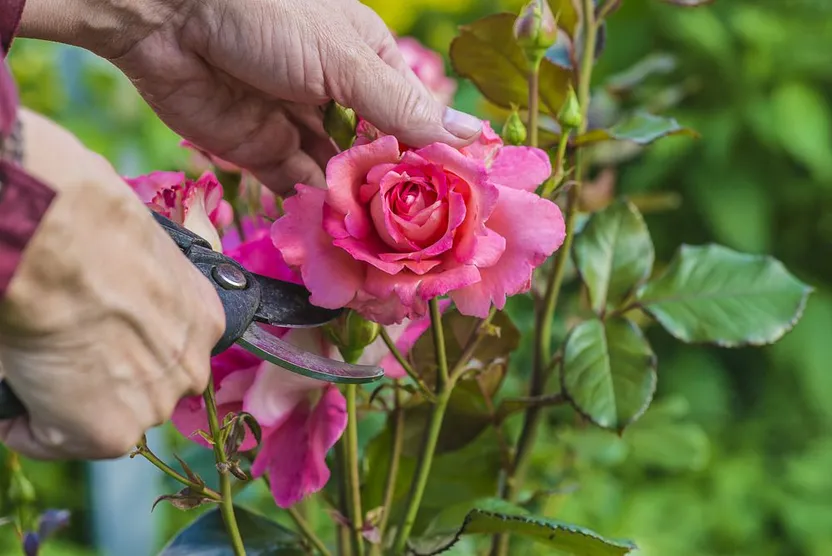
How to prune roses
'/%3E%3C/svg%3E)
Guide written on 6 February 2024 by:
Christelle, Micro-entrepreneur in the gardening sector
Important features
- 4 basic rules for pruning roses
- Pruning hedge roses in 3 steps
- Pruning climbing roses in 6 steps
- Pruning a rose bush in 6 steps
- Pruning ground cover roses
Best sellers in this category
Rose pruning for beautiful blooms
Roses need to be pruned to encourage abundant blooming year after year and to ensure that the structure of the plant is growing into your desired shape. While the pruning technique will vary depending on the type of roses you have, there are a few basic rules to follow and the same tools are required for each method.
Steps
4 basic rules for pruning roses
Pruning hedge roses in 3 steps
Pruning climbing roses in 6 steps
Pruning a rose bush in 6 steps
Pruning ground cover roses
Shop our secateurs
1. Basic rules for pruning roses
Ensure that the final frost has passed and that your roses are still dormant; ideally, pruning should be done in March.
Be sure to systematically clear any overlapping branches.
Always cut an an angle with the slope of the cut facing the opposite way to the node to stop rain pooling over. Nodes are simply the place on the branch where leaves will grow. The new growth will start to appear at the end of winter. They will continue to grow throughout the spring to eventually develop a new stem.
Be sure to clear the centre of the rose bush to reduce the risk of disease.
Best sellers in this category
2. Pruning hedge roses in three steps
Hedge roses can be pruned in March. While hedge roses can often be left to their own devices, they can sometimes use some tidying up. The basic aim is to shorten some branches to encourage new growth. To get the best response from your hedge roses, don't be scared to cut short and to remove a lot of branches. All dead wood should go as well as the weakest parts of the shrub.
Start by selecting about five healthy branches and pruning them back to leave about three or four nodes.
Ensure that the last node you leave on the branch is facing outwards. This way, the bush will grow outwards maintaining a rounded shape.
Remove any old and thin growth.
3. Pruning a climbing rose in six steps
Pruning a climbing rose helps to boost the growth of any young shoots and should also be done in March. The main aim of this type of pruning is to encourage the plant to grow across its support and put out healthy roses.
Start by detaching the branches from their supporting structure.
Separate new growth from the old.
Select the branches that seem the strongest.
Remove any other main branches.
Ensure that the last node is facing outwards to ensure your climbing roses continue growing out the way.
Attach your climbing roses to the support once more taking care to spread the branches as much as possible – without breaking them, of course!
Cut any dry branches back to their base. Take care not to damage any healthy branches and do not cut these branches too short.
It's best not to prune climbing roses that are less than three years old.
Shop our roses
4. Pruning a rose bush in six steps
Just like the two other rose varieties already mentioned, rose bushes should be pruned in March. While this task may be tricky for beginners, it is very important. It helps to boost plant growth and opens up your rose bush for high-quality flowers.
Remove dead branches using secateurs or a pruning saw, depending on the thickness of the branch.
If the weather is still very cold, seal any wounds using a pruning sealer to protect your plant from the frost and chill.
If you rose bush is a bit frail, prune your branches back to about the second or third node starting from the base of the branch.
Stronger branches can be cut back to the fourth or fifth node.
Always cut at an angle to prevent rainwater stagnating on the wound and damaging your rose bush.
Remove the oldest growth and any crossing branches in order to let the sun and air into the plant. This will help to create a disease-free environment.
Pruning saws
5. Pruning ground cover roses
Ground cover roses don't strictly need pruning but it is recommended from time to time to help them keep their shape. This should ideally be done at the end of winter in March. The main aim of pruning in this case is to create a sprawling effect by removing any vertical stems. This will also help your plant to put out healthy growth.
Remove any branches that are sticking upwards to prevent your roses from looking spiky.
A more intensive prune should be performed every three years. In this case, cut your roses back to about 25 cm from the ground.
Use a hedge trimmer or shears for this job.
Remove any dead branches.
Tree lopper
How to trim roses
Required skills
The task of pruning your roses doesn't require many practical skills beyond being able to use secateurs without hurting yourself! That said, you will have to be able to identify the nodes, dead or diseased branches and be able to make angled cuts and handle thorny branches without getting cut.
Time required
Around 30 to 45 minutes for a rose bush measuring 1.5 metres; will vary according to rose type.
Number of people required
1 person
Tools and equipment
Clean and sharp secateurs (you can disinfect your tools using diluted bleach)
Garden waste bags or wheelbarrow
Compost pile to leave cuttings or a garden shredder to make mulch
Safety wear
Gloves to protect your hands from thorns
Gardening overalls
Please note: this is a non-exhaustive list; Be sure to match your personal protective equipment to the job at hand.
Shop our safety and workwear
You may be also interested in these guides
Guide written by:
Christelle, Micro-entrepreneur in the gardening sector
From a background in waste transportation, I became a farmer specialising in organic gardening. A graduate of Horticultural Production, I tried for several years as a young farmer to settle in the beautiful region of Oxfordshire. After many disappointments, I finally started a small-business in home services, specifically in gardening, assisted by my loving, dear husband. Passionate about nature and wild edible plants, I am very attentive to ecological solutions and respectful of our environment in all aspects of my daily life. From the vegetable garden to the flower beds, from seed to harvest, I have all kinds of advice up my sleeve. Do not hesitate to ask me your questions.
'/%3E%3C/svg%3E)