Various accessories such as bridles, bits, and training aids are useful for practicing
horse riding. While the first two allow you to steer the animal, the others facilitate muscle
development.
Here are some important details about the horse bridle.
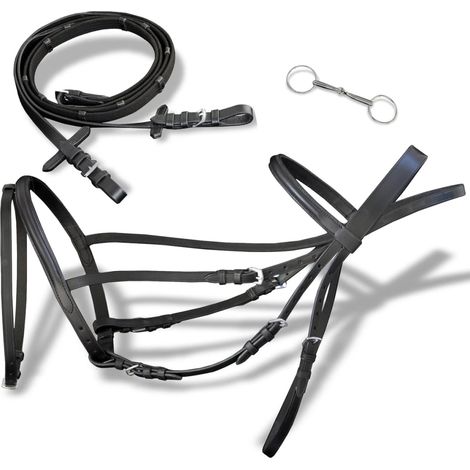
- The bridle or snaffle is made up of leather or synthetic straps placed around
the horse's head
. Its main function is to hold the bit in the animal's mouth
so the rider can steer it.
- This accessory must be the right size. Indeed, a model that is too big risks coming
loose if the rider falls. On the other hand, a version that is too tight can cause
injuries to the horse, particularly to the corners of the mouth, the base of the ears, or the
cheekbones.
- Soft leather models and those padded at the headpiece or noseband are
appreciated for their comfort.
- Some versions have an anatomical cut to reduce pressure areas
on the back of the neck and the head
of the animal.
Bits are essential for steering the horse.
- Simple models like olive, full-cheek, Eggbutt, or D-ring snaffles are the most
common. They are appreciated for their gentleness and allow the rider to vary the effect on
the animal's mouth based on their hand position (low or high).
- Bits with leverage effects like elevator bits, Spanish bits, or Baucher bits are distinguished by
their enhanced effect on the tongue and bars, regardless of the rider's hand position.
- Lever bits are characterized by their curb chain that comes into contact with the tongue when
the reins are tightened.
Training aids, on the other hand, are used to work on the horse's muscles.
- Gogue reins can be used on the lunge to develop the animal's muscles, or
while riding for maintenance
.
- Central-mounted German reins facilitate the development of the back muscles in
young horses. They work at a trot on the lunge. In a lateral setup, these accessories are
used in horses with sufficiently strong back muscles for working on the hindquarters
and the base of the neck
.
- Ring martingales help keep the animal's head down during
jumping exercises.
Ultimately, the choice of bridlework, bits, and training aids depends on the physical
characteristics of the horse, as well as the goals to be achieved (back muscle, neck development, etc.).








'/%3E%3C/svg%3E)