Air to water heat pump buying guide
'/%3E%3C/svg%3E)
Guide written on 6 February 2024 by:
Anne, Painter
Important features
- Thermal performance
- Split heat pumps
- Low or high temperature
- Efficiency and COP
- Inverters
- Standards
Best sellers in this category
Why use an air source heat pump?
Air to water heat pumps: how do they work?
Air to water heat pumps work in five stages to extract heat that naturally occurs in the air outside and capture it to heat water.
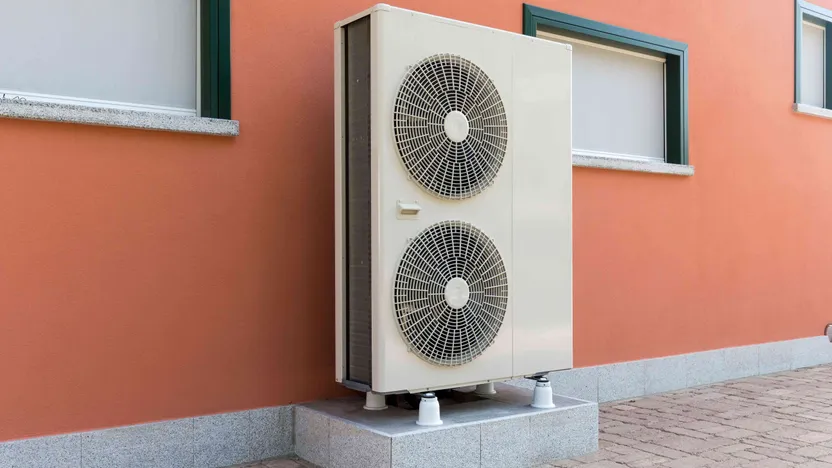
To start, the outdoor fan-fitted unit draws in air from outside.
This air is sent towards an evaporator which contains a liquid refrigerant. The heat from the air is gathered by the refrigerant. This process increases the temperature of the liquid and transforms it into gas.
At this stage, the gas is drawn into a compressor which works to increase the temperature again.
The gas then passes into a heat exchanger where it is condensed so that the heat can be transmitted to the water. The refrigerant gas then condenses back into liquid.
When this happens, the refrigerant passes through an expansion valve which lowers the pressure of the liquid back to its original state before the process starts again.
Air to water heat pumps are on the rise in the UK — and for good reason. An air source heat pump can be used to replace a boiler and you may not even need to change your existing central heating radiators or underfloor heating system though this depends on the type of heat pump you purchase. Heat pumps are relatively straightforward to install and reduce the environmental impact of heating your home. What's more, grants may be available to help cover the costs of installation as part of the Boiler Upgrade Scheme. However, it is important to be aware that heat pumps can have limited performance once temperatures dip below a certain level. This temperature threshold varies between models, as does noise level.
Underfloor heating systems
Two types of air to water heat pumps
There are a couple of different types of air to water heat pumps to choose from: namely, monobloc and split.
Monobloc heat pumps
Monobloc air to water heat pumps form one compact, outdoor unit which houses the hydronic module and the compressor. Pipes are used to connect the heat pump to the heating system.
A monobloc air to water heat pump is less expensive and easier to install than a split model.
Split air to water heat pumps
Split air to water heat pumps feature an outdoor unit that contains the compressor and an indoor unit that holds the hydronic module. The two units are connected by refrigerant line.
Split air to water heat pumps are more efficient than monobloc heat pumps, but are also more expensive and trickier to install.
Monobloc air conditioners
Best sellers in this category
High and low temperature air to water heat pumps
You can also choose between high temperature and low temperature heat pumps.
Low temperature air to water heat pumps
A low temperature air to water heat pump has an outgoing water temperature of 35°C to 45°C. Compared to a high temperature heat pump, there is less of a difference between the outdoor temperature and the temperature of the heating system. This makes low temperature heat pumps more efficient, but you do need to ensure that your heating system is compatible with low temperature heating (i.e. your radiators or underfloor heating) or install compatible heating appliances.
High temperature air to water heat pumps
High temperature air to water heat pumps have an outgoing water temperature of about 65°C which usually means you can keep your existing heating system in place (since it is already equipped to deal with high temperatures). This option is therefore ideal for anyone wanting to upgrade from a boiler.
Air to water heat pumps: how to choose the right model
Once you've chosen the type of heat pump you need, you'll need to weigh up a few different criteria to ensure you pick the right model for your heating demands.
Coefficient of performance (COP)
The coefficient of performance (COP) of a heat pump refers to the ratio between the electricity used by the compressor and the heat output of the unit. The COP of an air to water heat pump tends to range from 3.4 to 5. The higher the COP, the more efficient the heat pump. To take an example, a coefficient of 3.5 kW means that the heat pump can release 3.5 kW for every 1 kW it consumes.
But there are other factors to consider; for example, the temperature of the outdoor air where the calories are taken as well as the desired water temperature. The lower the the outdoor temperature, the lower the COP. A COP of 3.5 kW means that when it is 7°C outside, the air to water heat pump can release 3.5 kW for every 1 kW it draws to heat the water to 65°C.
Seasonal performance factor (SPF)
The SPF of a heat pump measures the performance of a heat pump over the entire heating season. It uses a given climate and three European climates as reference: Athens for hot; Strasbourg for temperate and Helsinki for cold.
Heat pumps are categories as class A+++ to A from the best to least efficient performance.
Heat output of an air to water heat pump
The heat output of a heat pump describes how much heat it can produce. It is measured in kW. Air to water heat pumps generally have a heat output of 5 to 20 kW.
Three pieces of information are used to work out the heating demands of a home:
the volume of your home in m3;
The building coefficient. This ranges from 1.6 for a very poorly insulated home to 0.75 for a very well insulated home.
the difference between the indoor and outdoor temperature where you live.
To find out the required heat output, simply multiply these three figures:
Volume x building coefficient x temperature difference = Heat output required
However, do not hesitate to seek professional advice. Doing so will prevent you from purchasing an air to water heat pump with a heat output that is either too high or too low. In the first case, you'll end up paying more than you need to for the heat pump. What's more, the heat pump will use up energy stopping and starting more frequently causing its parts to wear more quickly. In the second case, the heat pump simply won't provide enough heat to keep you warm.
Heat pump inverters
Inverter technology is used to regulate heat production. It can be used to run the compressor of your air to water heat pump continuously without stopping and starting.
While the technology won't have a major impact on the price of the heat pump, it can be used to reduce electricity consumption and improve user comfort. It will also extend the service life of the heat pump.
Reversible heat pumps
Some air to water heat pumps can also work as air conditioners to cool your home in the summer.
Shop our air source heat pumps
Air to water heat pump standards
A range of standards are in place to guarantee the quality, performance and safety of heat pumps while grants are available to help you with the costs of installation.
Heat pump grants
A few different grants are available across the UK to help you install a domestic heat pump including the Boiler Upgrade Scheme, Warmer Homes Scotland, Home Energy Scotland Loan and Nest Scheme, Wales. These grants are in place to help you cover the costs of setting up and running a heat pump.
CE certification
The CE marking is a mandatory self certified marking. It shows compliance with key EU safety and quality standards.
Microgeneration Certification Scheme (MCS)
The Microgeneration Certification Scheme (MCS) sets out industry quality standards for heat pumps in the UK.
EN 14511-2
The European standard EN 14511-2 sets out the test conditions to determine performance qualities of air to water heat pumps.
Heat Pump Association
The UK Heat Pump Association is a trade association that represents manufacturers and distributors of heat pumps in the UK as well as heat pump component manufacturers.
How to maintain an air to water heat pump
Annual maintenance is required if your air to water heat pump contains more than 2 kg of refrigerant fluid (or is rated 12 kW).
This task should be carried out by a certified professional.
It is also important to ensure that the outdoor unit is kept clear of any objects that could interfere with operation such as plants.
More information on air conditioning and ventilation
More information on home heating
Sustainable heating and cooling
You may be also interested in these guides
Guide written by:
Anne, Painter
After 8 years of trade, I turned professional: I trained myself to be a painter and carpet fitter, either on my own or with 16 year old comrades. 9 months later, following vocational training, I created my company. I’m a self-taught DIYer and decoration enthusiast, I love to find and restore furniture and to create unique decoration pieces. I completed the renovation of my sister’s house with my niece: electrics, tiling, plasterboard...we did it all. And today, if I can share my experience I'm happy to do it. Good Luck.
'/%3E%3C/svg%3E)