Pool heat pump buying guide
'/%3E%3C/svg%3E)
Guide written on 6 February 2024 by:
Patrick, Handyman, Bath
Important features
- Power
- Pool volume
- Consumption
- Heat up times
- Coefficient of performance
- Flow rate
Best sellers in this category
Advantages of a pool heat pump
Heating your pool can make it much more comfortable to use and can even allow you to extend the swimming season. While there are several ways to heat a pool, a heat pump is generally the most common option.
Pool heat pumps provide the most efficient way to heat pools and running costs are low. However, a heat pump is an investment and the initial purchase can be expensive.
Pool heat pumps
How does a pool heat pump work?
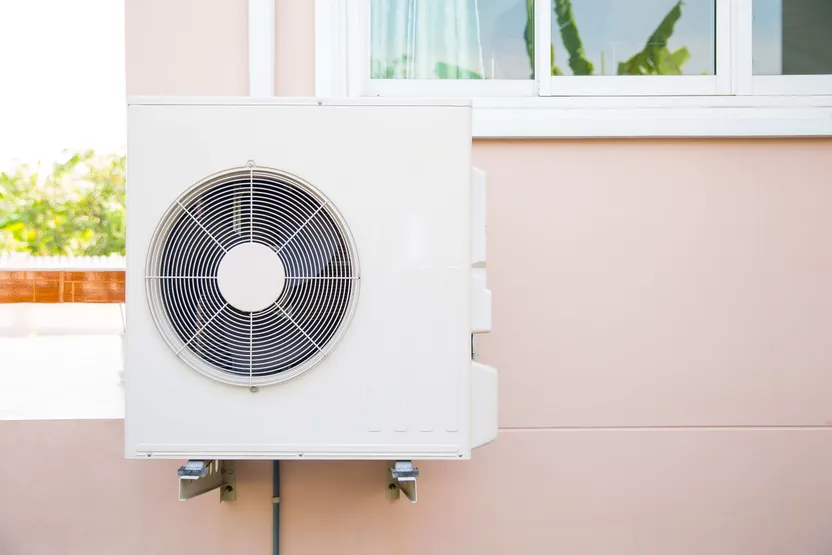
Heat pumps used in pools are air-to-water type pumps. They are designed to take naturally occurring heat from the outside air to inject it into the pool water. Once installed, they are very straightforward to use. You simply need to adjust the thermostat and the heat pump will regulate itself.
A pool heat pump is set up outdoors. It is positioned within the filtration system after the filter but before the pool treatment system (e.g. a chlorinator) if there is one in place.
The heat extracted from the outside air is transferred to a liquid refrigerant and this process causes the liquid to start to evaporate and turn into a gas. The gas is then fed into a compressor which rapidly increases its temperature. The hot air produced then passes through a condenser which transfers the heat to the water. The hot gas then passes through a condenser coil where it lowers in temperature and returns to a liquid state so the whole process can start again. This is actually the same process that a fridge uses to cool down – but in reverse!
Heat pumps work using highly efficient technology. Of course, some electricity is required to run the compressor but heat pumps can have energy efficiency ratings of over 600%. All the same, the process depends largely on the difference between air and water temperatures and this is why a heat pump must be sized very carefully.
It is possible to work out how much power you need by following a few basic rules.
Best sellers in this category
How to size a pool heat pump
Pool heat pumps must be correctly sized to ensure that they are able to heat up the pool in an acceptable amount of time at the start of the season.
Buying a heat pump that is more powerful than your pool requires means that it will heat up more quickly, but it will consume way too much energy to maintain temperatures.
Buying a heat pump that is not powerful enough means it will take too long to heat up the pool.
In order to stay within the right power range, consider that a rise in temperature of about 2 to 3°C per day is about right, especially considering that the more powerful the pump, the more expensive it is. Furthermore, given how a heat pump works, the size you require varies depending on where you live. Pool owners living in colder climates will need a much more powerful heat pump than those living in the south.
In order to work out the size of your heat pump, you'll need a few different pieces of information.
First of all, you need to find out the volume of your pool by multiplying the length, width and depth of the pool. If you have a deep end and a shallow end, work out the average depth of the pool and use that in your calculations.
Secondly, you'll need to work out what kind of temperature you are looking for. Most people enjoy a swimming temperature of about 26-29°C, but this can be higher or lower depending on your needs.
Finally, work out how many hours approximately you want to use the pool.
Bear in mind that the pool will be covered overnight to retain heat.
The longer you want to use the pool during the day – and therefore the amount of time the pool will be uncovered each day – the more power you'll need from the heat pump.
If you're not one for numbers, most manufacturers will provide a calculator tool to work out the right size of heat pump based on the volume of your pool. A power output of 3 kW should be considered the absolute minimum for a small pool in order to ensure an adequate pool temperature. Bear in mind that an above ground pool offers less insulation than an inground pool and will therefore cool down more quickly.
Here is a quick table to summarise the kind of power output you should be looking for:
Pool volume in m3 | < 30 m3 above ground | < 30 m3 inground | < 50 m3 | < 80 m3 | < 100 m3 | < 120 m3 |
Recommended power in kW | 6 - 9 kW | 5 - 7 kW | 7 - 10 kW | 9 - 15 kW | 11 - 18 kW | 16 - 22 kW |
You may need even more power for a pool in an area that doesn't get a lot of sun or in wind-exposed areas at high altitudes.
You may need a bit less power for sheltered pools in very sunny spots.
The quicker the heat pump warms up the pool, the more expensive it will be. A pool that will only be heated for the summer holidays will need a more powerful heat pump for quick results while a pool that will be used for a long period of time can be slightly less powerful since it will be heated earlier on in the season.
And that's where COP comes in!
Shop our above ground pools
What is the COP of a pool heat pump?
The coefficient of performance (COP) allows you to evaluate the efficiency of a heat pump and compare different models. The COP defines the difference between input and output power. The output power is the value measured in kW as detailed above.
COP doesn't mean anything unless it is applied to a specific temperature by which it is measured. COP is usually measured by a temperature of 15°C. The COP is even better if there is little difference between the air and water temperature.
If you are choosing between two heat pumps with the same output power, the one with the best COP at a given temperature will consume less electricity. The COP of a heat pump is the second most important criterion to consider once you have worked out the size of your heat pump.
Pool heat pump: technical features
Outdoor temperature limitations
Given that heat pumps extract warmth from the air, there is a limit beneath which the heat pump will cease to operate. When it comes to pool heat pumps, this threshold sits around 5°C. Generally speaking, at this temperature an outdoor pool with be closed for the winter. But for an enclosed or indoor pool, this won't always be the case so it's important to check this lower temperature limit when purchasing.
Noise level
Heat pumps can be noisy. Bearing in mind heat pumps are installed outdoors, you must position the unit carefully so as not to ruin the peace around the pool. And don't forget to think about your neighbours, too! Be sure to check the product specifications for noise level (measured in decibels or dB) and choose an appropriate level for the location of the heat pump. For a point of reference, a normal conversation has a level of about 60 dB, traffic noise is around 80 dB and a fridge emits 40 dB on average.
Reversible heat pumps
Some heat pumps are reversible which means they are also able to cool the water. However, this feature costs extra and rarely comes in use in the UK! If the water gets too warm for your liking, simply stop covering the pool overnight.
Flow rate
The optimum performance of a heat pump is indicated for a specific flow rate. You therefore need the filter pump to be able to provide at least this flow rate. It should also be mentioned that you'll need a bypass kit to install a pool heat pump. This allows you to both isolate the heat pump if it breaks down and to divert part of the flow in case the flow rate of the heat pump is too high. Remember that if the flow rate is too high, the water won't have the time to heat up correctly. A bypass kit may be supplied with the heat pump.
Heat pump controllers
Some heat pumps offer the option to install the controller in a different location to the unit itself. If your set-up means the heat pump is tricky to access, this option can allow you to keep the controller indoors within reach.
Technology
As is often the case, the type of technology used will have an impact on the reliability of the heat pump. Pay special attention to two parts: the heat exchanger and the compressor.
Heat exchanger
The heat exchanger can be made of stainless steel or titanium. If you use a salt chlorinator to treat your water or if you have a saltwater pool, titanium is an absolute must. And even if you don't, bear in mind that titanium will always last longer.
Compressor
There are three different types of compressor:
piston;
rotary;
scroll.
Avoid piston compressors if you can. Scroll compressors are more reliable and quieter. These compressors are essentially rotary compressors with a specially designed rotor.
Swimming pool heat pump accessories
How to choose a pool heat pump
Heat pumps can be horizontal or vertical depending on the position of the extractor fan. However, this generally does not affect performance. Vertical fan heat pumps are bulkier but less noisy since the fan is found near the top of the unit. However, they are more affected by outdoor pollution and debris like dry leaves. They are also more expensive than horizontal fan heat pumps.
For more information on pool accessories, check out our other guides:
You may be also interested in these guides
Guide written by:
Patrick, Handyman, Bath
There’s nothing I like quite as much as being in the weekend workshop with my mates. Everyone benefits from their experience. But that’s part of the charm of DIY, helping each other and completing a project. So, if I can help you, it would be a pleasure.
'/%3E%3C/svg%3E)