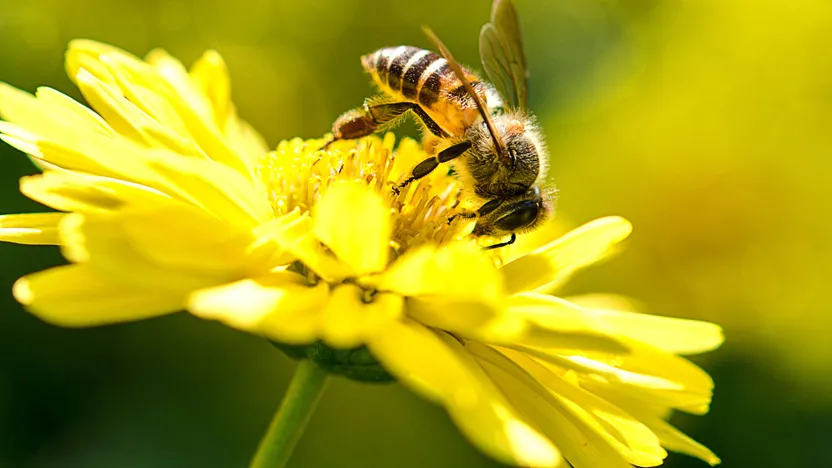
How to attract pollinators to your garden
'/%3E%3C/svg%3E)
Guide written on 6 February 2024 by:
John, DIYer & IT developer, Brighton
Important features
- Flowering period
- Advantage for bees
- Pollen and nectar
- Type of bee-friendly plant
Best sellers in this category
Bee-friendly plants: choosing the right varieties
When it comes to choosing plants, you need to think about the following criteria:
the amount of space you have for planting;
the time of year you plan to sow or plant;
the flowering period;
what the plant brings to the garden: e.g. fruits, vegetables, herbs, ornamental plants, etc.;
the growth cycle of the plants (i.e. annual, perennial, trees).
Like for any other type of plant, it's important to pick the right species for your local climate and the type of soil you have.
What are honey plants?
Honey plants are plants that contribute to the production of honey, either directly or indirectly, as a result of bees gathering pollen from their flowers. Bees gather four essential ingredients from these plants: nectar, pollen, propolis and honeydew. But the first two substances are by far the most important:
nectar is a raw material in honey production;
pollen is used to feed the bees.
But bees have a much more important job than producing honey. In order to accomplish this task, they must visit flowers one by one and each time they do so, they leave behind a bit of pollen from the previous flower. In this way, bees work to pollinate a wide variety of plants. Pollen gathering results in fertilisation and is the most important task carried out by bees. Other pollinators also contribute to the process, but to a lesser extent.
Pollinator populations in general are in decline. In England alone, almost one in five species has been assessed as threatened with many more species assessed as ‘near threatened’. Increasing the number of honey or bee-friendly plants in the garden can be hugely important step in providing sustenance to these populations.
Best sellers in this category
Flowering periods
Bees are active from about the end of February to the end of October and therefore require plants that bloom at staggered times throughout this period. At the end of winter, once outdoor temperatures exceed 10°C, bees will seek out pollen as a priority in order to feed larvae and get the queen to start laying.
This is a critical period as the insects are hungry after the winter and the plants producing enough to feed off during this time are few and far between. Luckily, hazel, willow and almond trees all blossom very early on in the season and will get a lot of activity.
As a general rule, bees tend to find enough nourishment from the beginning of May through to July. There is then a trickier period during the height of summer. During this time, drought-resistant plants like viper's bugloss and sedums provide a welcome source of pollen.
Bee-friendly plants in the vegetable garden
Vegetable crops and herbs
Relatively few crops in the vegetable garden are visited by bees (with the exception of herbs). However, specialist bees will carry out specific tasks. For example, squash bees will pollinate any members of the cucurbits or squash family. Herbs, on the other hand, attract a wide variety of pollinators. Fennel, sage, thyme, coriander and rosemary will all provide nutrition for bees.
Ornamental flowers
Some cut and ornamental flowers, like dahlias, zinnias, cosmos and crocuses get a lot of pollinator activity. However, it's important to choose single-flower varieties rather than double-flower varieties. While the latter provide more spectacular blooms, they also attract fewer insects. Wildflower meadows can be very beneficial for pollinators. Bear in mind that it is important to choose the right varieties for where you live.
Field crops
Some field crops, like rapeseed and sunflowers, are very popular with bees. However, it is extremely important not to use plant protection products (especially insecticides) on these plants while they are flowering.
Fruit trees
Some of the best fruit tree varieties for pollinators include wild cherry and apple trees. Chestnut trees are also known to contribute to excellent honey production.
Ornamental shrubs and trees
False acacia, or black locust, trees are used to provide the nectar for acacia honey. Cotoneaster, maple and linden are some of the most bee-friendly trees you can find.
40 of the best plants for pollinators
Plant type | Plant name | Flowering period | Use (N: nectar / P: pollen) |
Wildflowers and ornamental flowers | Cornflowers | May to July | N / P |
Borage | April to September | N | |
Heather | June to September | N | |
Cardoons (thistles) | June to September | N / P | |
Rapeseed | April to July | N / P | |
Common comfrey | June / July | N | |
Dahlia | June to October | P | |
Echinacea | June to August | N / P | |
Wallflowers | April to September | N / P | |
Alfalfa | June to September | N | |
Sweet clovers | May to September | N / P | |
Field mustard | April to September | N / P | |
Sedums | May to July | N | |
Phacelia | May to September | N | |
Dandelions | May | N / P | |
Sage | June to September | N / P | |
Clovers | April to August | N / P | |
Viper's bugloss | June to September | N | |
Vegetable crops and herbs | Coriander | June to September | N |
Squashes, courgettes | May to September | N | |
Parsnips | July to September | N / P | |
Rosemary | February / March | N | |
Sage | May / June | N / P | |
Thyme | April to June | N | |
Trees, shrubs and climbing plants | Alder buckthorn | June to August | N |
Honeysuckle | March to June | N | |
Cotoneaster | March to October | N | |
Maple | April / May | N | |
Eucalyptus | December / January | N | |
Cherry laurel | April to June | P | |
Climbing ivy | September / October | N / P | |
False acacia (black locust) | May / June | N / P | |
Linden | June | N / P | |
Grape vines | June / July | N | |
Wayfaring tree | May to October | P | |
Fruit trees and bushes | Sour cherry (Prunus cerasus) | April / May | N / P |
Chestnut | June / July | N / P | |
Raspberry (and blackberry) | May to August | N / P | |
Hazelnut | January to March | P | |
Apple tree | April / May | N / P | |
Plum tree | March / April | N / P |
More information
You may also be interested in these guides
You may be also interested in these guides
Guide written by:
John, DIYer & IT developer, Brighton
Since I was a child, I was always interested in manual and technical work. Always fascinated by woodworking, I took advantage of my first flat as a playground. On the cards: electricity (of course, safety first!) and some partition walls; but also decorating with the help of the missus, made-to-measure furniture and little tricks to optimise the space, all the while remaining as original as possible. When the little one arrived, I started building bits and pieces for him! Lacking space, I have not got a permanent workshop and certain tools I dream about are not part of my collection. Not to worry, I already know a lot about DIY and I have a high-tech profile that I hope will guide you in your decisions!
'/%3E%3C/svg%3E)