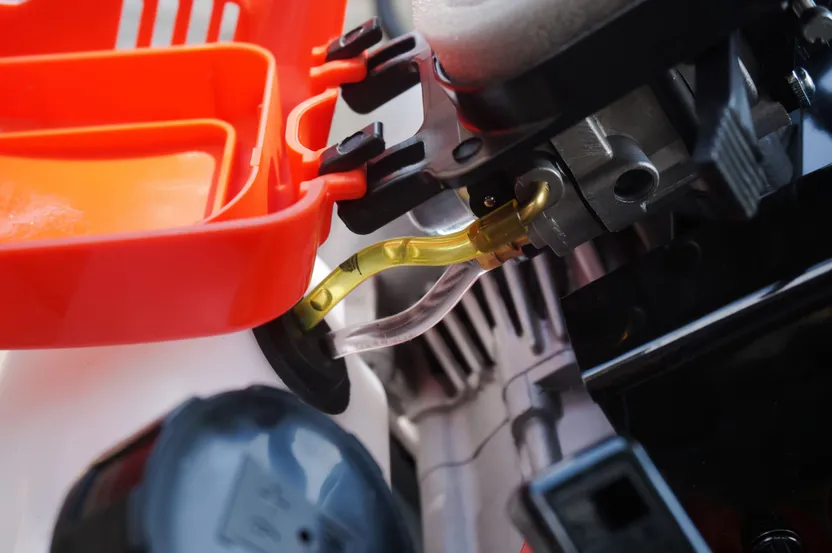
How to change the oil in a ride-on mower
'/%3E%3C/svg%3E)
Guide written on 6 February 2024 by:
Michael, Professional and passionate welder, Sheffield
Important features
- Drain the mower oil and replace the oil filter
- Replace the drain plug and top up the engine oil
- Check and adjust the oil level
- Grease the mower for winter storage
Best sellers in this category
Why do I need to change mower oil?
In order to keep the engine of a ride-on mower running smoothly, it needs to be properly lubricated. This is achieved by sending oil around all the mechanical components of the mower via an oil pump driven by the engine. Engine oil is a golden amber colour when new but becomes black and tacky after several hours of use.
Depending on the manufacturer's recommendations, it is generally necessary to replace this oil every 25-50 hours of operation after which point the oil loses its ability to coat and lubricate components correctly. The technique and process can vary between models, but let's take a look at the basic steps you need to follow to change mower oil the right way.
Quick tip: if you have to change the oil from above, invest in a manual or battery-powered oil transfer pump. A handy, low-cost accessory, a transfer pump is inserted into the filler hole to make the process of changing oil much easier. This type of tool is also ideal for preventing oil spills in the surroundng area.
Steps
Drain the mower oil and replace the oil filter
Replace the drain plug and top up the engine oil
Check and adjust the oil level
Grease the mower for winter storage
Dusters, microfibre cloths and wipes
1. Drain the mower oil and replace the oil filter
First of all, if you are changing the oil on a cold engine, it is best to run the engine for a few minutes to heat up and liquify the oil which will help it to flow better.
Next, take the ride-on mower to a clear area that is easy to clean up. You do not need to raise the mower; it must be sitting flat. If you have a bit of sand or sawdust lying around, spread a bit where you expect the oil to spill to make cleaning up much easier.
Identify the drain plug under the mower and place a container below the cap. Unscrew the cap using a suitable spanner.
Take the time to let the old oil drain out into the container.
Identify the oil filter and using an oil filter wrench to loosen it. Finish unscrewing the oil filter by hand. There may be a bit of old oil left in the filter. Use a small container to collect the remaining oil.
Best sellers in this category
2. Replace the drain plug and top up the engine oil
Fit a new oil filter taking care to oil the washer to prevent it from sticking to the surrounding surface.
Replace the drain plug. If the copper washer is worn or flattened, replace it.
Unscrew the fill cap and pour some new oil in according to the manufacturer's recommendations (SAE 30 4 stroke oil, for example).
3. Check and adjust the oil level
Extract the dipstick and clean it with a cloth, then use it to check the oil level. A dipstick has two lines: the minimum level and the maximum level. You should aim for the maximum level.
Turn on the engine for a few minutes.
Check the oil level again.
Adjust if nececesary since the oil filter will absorb a small amount of oil.
If you have put in too much oil, drain excess using a transfer pump. Putting too much oil in an engine will cause it to overheat while not putting enough will mean the moving parts won't be correctly lubricated and may break.
Replace the fill cap once you are done.
4. Grease the mower for winter storage
In addition to changing the oil regularly, it is recommended to grease any parts of the mower that are required to move a lot. This is especially important before winter storage. Generally speaking, the product manual should identify the locations of the parts that need to be greased.
Take a grease gun or pump filled with suitable grease cartridges.
Place the end of the gun onto the parts you want to grease and press the trigger until the part is greased.
Repeat the process for all parts that require greasing. Some machines do not require greasing since the joints have been coated with a long-lasting grease by the manufacturer.
Check that all stationary parts are clean. If you run into any issues, spray some penetrating oil to loosen any components that are stuck or causing friction.
All waste (old oil, clothes, dirty sand, containers) must be brought to the appropriate recycling facility.
Grease
How to change the oil in a ride-on mower
Required skills
No particular skills required beyond following the manufacturer's recommendations. The location of the parts required to change mower oil can differ depending on the ride-on mower. Most mowers feature a drain plug, fill cap and an oil filter.
Time required
Approx. 30 mins - 1 hour
Number of people required
1 person
Tools and equipment
Oil transfer pump (manual or powered)
Plastic funnel
Oil can
Set of spanners
Oil filter wrench
Oil filter with rubber washer
Container (with a spout to pour old oil into a suitable container for recycling)
Suitable container to hold oil for recycling
Copper drain plug washer
Grease cartridge
Mower oil as recommended by the mower manufacturer
Safety and workwear
Please note: this is a non-exhaustive list; be sure to match your personal protective equipment to the job at hand.
More information on lawnmowers
Dusters, microfibre cloths and wipes
You may be also interested in these guides
Guide written by:
Michael, Professional and passionate welder, Sheffield
I was trained as a pipe worker and a pipe-welder and after having travelled for 35 years working around the UK, I became the head of a metal shop, then a designer and in the end the head engineer. I have designed and built a workshop where I make metal sculptures: I managed to find a piece of paradise where I can let my imagination run wild. Auctions and garage sales are no secret to me. I find unusual objects and old tools there that I collect or transform into works of art. I also like decoration, painting on canvas, and gardening. I am developing new technologies concerning tools. To share my passion and advise you in your choice of materials is a real pleasure.
'/%3E%3C/svg%3E)