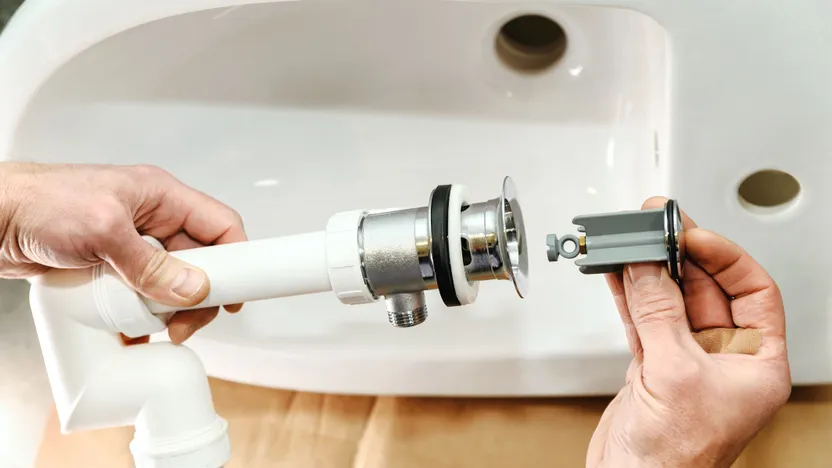
How to choose your bidet trap?
'/%3E%3C/svg%3E)
Guide written on 25 September 2026 by:
Sebastian, Self-taught DIY-er, Exeter
Important features
- Types of traps
- Primary materials
- Installation
Different types of bidet traps
Connected on one end by a screw to the bidet's drain, the trap is also linked to 32 mm PVC drain pipe via compression fittings. The trap is used to both facilitate the evacuation of wastewater and to limit agressive odors, using it's water reserve.
The trap is available in different models. Your choice will therefore be primarily based on the space you have available and your DIY skill level. Here are a few examples:
An extra-flat trap is designed for installations in a small space;
A curved, permanent trap, also referred to as a space saving or tilting trap;
A curved, removable trap, allowing the user to bypass the normal disassembling of the compression fittings and the drain in case of clogging;
An adjustable trap, generally used in a sanitary renovations and specific installations.
Bidet trap: primary building materials
Manufacturers employ different materials to make bidet traps:
Plastic, economical and lightweight but unsightly. A plastic trap is best suited for hidden installations;
Stainless steel, resistant and durable. Stainless steel traps feature impeccable finishes and add a touch of style to the installation;
Chrome-plated brass, greatly appreciated for its longevity and robustness.
Bidet traps, when they are visible, can have either a modern or rustic style and they are most often chosen to match the surrounding material.
Bidet
Install a bidet siphon in 4 steps
Easy to install, bidets does not even require any glue.
1. Clean the bidet's drain pipeand plug.
2. Tighten the nut to secure the trap to the drain pipe, making sure the rubber joint is properly placed.
3. Insert the PVC pipe intothe trap'scompression sleeve and tighten.
4. Check for leaks by running water through the bidet.
Bidet's
More information
For do-it-yourselfers preparing for full kitchen renovation or just curious as to what your options are, follow the links below for related accessories, advice from our editors and more helpful guides:
How to create an open kitchen?
How to choose your bathtub?
How to connect a washing machine or dishwasher?
You may be also interested in these guides
How to choose between having a wardrobe or a large bathroom?
Focus on Italian-style bathrooms: everything you need to know
Guide written by:
Sebastian, Self-taught DIY-er, Exeter
Redo a roof with wooden beams? Check. Advise everybody in the DIY shop? Check. Redo bathroom plumbing? Check. If it doesn't work, try again! I'll do my best to advise you in your projects.
'/%3E%3C/svg%3E)