How to insulate a ground floor
'/%3E%3C/svg%3E)
Guide written on 25 September 2026 by:
Sebastian, Self-taught DIY-er, Exeter
Insulating a floor: what are the options?
When it comes to adding insulation to an existing floor, the most common method is to insulate from below to prevent you having to rip up the floor already in place. The only condition here is that you have an accessible basement or crawl space. Insulating on top of a floor usually only happens in new builds or as part of a complete renovation project wherever the ceiling height and existing floor structure allows it. If your floor sits on joists, it is possible to use rolls of mineral insulation or even blow in insulation. If the height of the ceiling and floor structure allow it, it is also possible to create a suspended floor to fit a high efficiency thin layer of insulation such as polyurethane panels or foam.
Shop our insulation
Insulating a floor from below
Insulating a floor from below is usually the method of choice in an older building and can only work if the building has an accessible basement or crawl space. This solution basically involves adding insulation to the underside of your ground floor. Insulating panels are usually used in this case. Flexible panels can be used if the surface is uneven; rigid panels can be used if it is perfectly level.
Insulating a floor from above
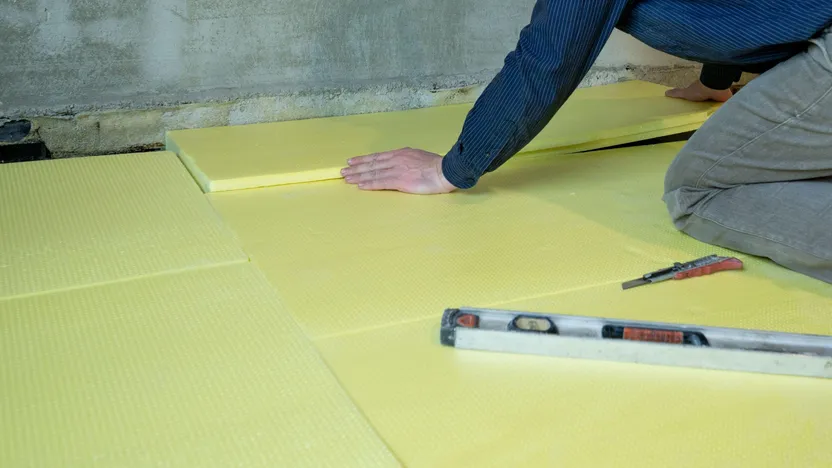
This process is the best solution for new buildings. In this case, insulating panels are laid directly over the sub floor. The surface must be perfectly healthy and level and the panels used must be compression-resistant. If you have an underfloor heating system, you'll need to ensure the insulation is compatible. Once the panels are in place, connect them to each other using tape to prevent any areas of heat loss. Alternatively, you can screed the floor to create a surface for your flooring to sit on.
Insulating a ground floor between joists
If your have a timber or metal structure in place, it is possible to install insulation directly between the joists. Suitable for both new builds and older properties, this method can make use of insulation made of materials like cork, expanded clay or any other type of naturally insulating materials. It's also possible to use an insulating mix based on materials like hemp to create a solid insulating layer.
What type of insulation is best for a floor?
Your choice of insulation depends on how you want to go about insulating the floor as well as the budget you have for the project.
Insulating properties | Minimum R value | ||||||
Glass wool | 0.030 - 0.046 | £13 - £18 per m² | Below sub floor | Semi-rigid and rigid panels | R ≥ 2.2 | R ≥ 3 | R ≥ 4 |
Mineral wool | 0.034 - 0.047 | £13 - £17 per m² | Below sub floor | ||||
Cellulose | 0.038 - 0.044 | £4.50 - £8 per m² | Below sub floor | ||||
Polyurethane (PUR) | 0.022 - 0.028 | £10 - £15 per m² | Below / above sub floor | ||||
Extruded polystyrene (EPS) | 0.027 - 0.040 | £10 | Below / above sub floor |
Insulating a ground floor for energy efficiency
Insulating a ground floor can make your home more energy efficient alongside measures such as improving your hot water system and insulation, and installing whole house ventilation and a high efficiency heating system. All together, these measures aim to lower energy consumption and reduce household greenhouse gas emissions.
You may be also interested in these guides
Guide written by:
Sebastian, Self-taught DIY-er, Exeter
Redo a roof with wooden beams? Check. Advise everybody in the DIY shop? Check. Redo bathroom plumbing? Check. If it doesn't work, try again! I'll do my best to advise you in your projects.
'/%3E%3C/svg%3E)