How to grow from seed
'/%3E%3C/svg%3E)
Guide written on 6 February 2024 by:
John, Passionate gardener, Cambridge
Important features
- Sowing methods
- Sowing under cover
- Sowing in seed trays
How to choose a sowing method
When choosing a sowing technique, you need to think about the sowing environment, the needs of the plant and the space you have available. The last factor is particularly important in determining whether your seeds should be direct sown outdoors or kept in a greenhouse.
What is direct sowing?
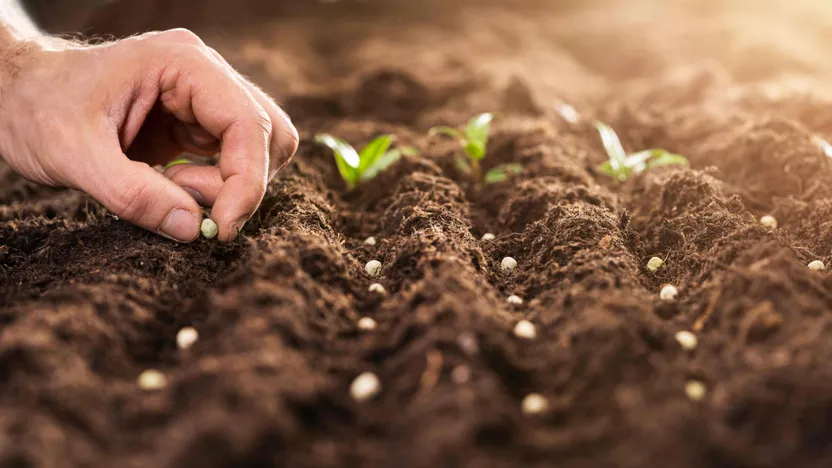
Direct sowing means that your plants will grow in the same spot where the seeds were sown until harvest. This method is used in the vegetable garden for crops with tap roots (such as carrots, radishes and turnips) and for legumes like peas and beans.
The advantages of direct sowing are as follows:
it saves you work since you won't have to transplant later on;
the plant doesn't suffer the stress of transplanting. Plants are therefore stronger and may germinate quicker.
The disadvantages of this method are that:
you do need to prepare the soil beforehand and thin out your plants as they grow;
the space in the garden is occupied for longer than it would be if you started your seeds in seed trays;
more space is required compared to other methods;
you cannot get your seeds started until the risk of frost has passed.
Seeds
Sowing in rows vs. broadcast sowing: which is better?
Broadcast sowing: not recommended for vegetable crops
As you may have guessed, broadcast sowing involves scattering seeds directly over the soil and covering them with soil using a rake. The soil should then be lightly tamped down using the back of the rake. This technique work best for growing annual or biennial flowers. It is not recommended for the vegetable garden.
Sowing in rows: optimise germination
In this case, the seeds are set out in furrows formed using a hoe. You can use a tool handle or piece of string to ensure your rows are straight. This technique is best for fine seed which must be buried at a precise depth at regular intervals. It can be put to practice in the vegetable garden, for things like carrots. Multisowing is a variant of row sowing. The only difference is that several seeds are sown in the same hole. This technique allows the seedlings to break through soil crust more easily to encourage faster germination. This technique can be used for beans, cucumbers and squashes.
Double headed hoes
Sowing under cover: 5 pros and 3 cons
Sowing under cover means you can sow more seeds in a smaller space.
The advantages of sowing under cover are that:
you don't need to work the soil or thin out seeds;
less space is required;
germination rate is increased and early germination is more likely;
harvests are more abundant and continue later in to the growing season;
plants are protected from inclement weather.
The disadvantages of sowing in a greenhouse are that:
disease can spread quickly if good growing practices are not followed;
the cost of purchasing a greenhouse can be prohibitive;
growing and watering must be carefully monitored and controlled.
Sowing seeds in pots and seed trays
Contrary to seeds sown directly or those sown under the protection of a polytunnel or cloche, seeds sown in pots are not sown in the ground.
Seed trays, or basically any other small container, can be filled with compost and used to start seeds. Planting pots and seed trays are lightweight, reusable and will help to keep the soil moist. After sowing, the pots can be covered with cling film or clear plastic that allows sunlight to reach the soil. The seeds will remain in their pot until they have germinated at which point they can be planted in the ground.
This technique is ideal for fragile plants that have trouble handling the stress of transplanting.
The advantages of sowing in pots or trays are as follows:
several seeds can be sown in the same pot;
there is less risk of the soil drying out as more compost is used.
The only downside of sowing in pots is the amount of space required.
Compost
How to get your seeds started earlier
Starting your seeds early means an earlier harvest. There are a few techniques to get your seeds going earlier including growing in a hot bed, in a greenhouse or under plastic.
Sowing seeds on a hot bed: pros and cons
Whether you are broadcast sowing, row sowing or sowing in containers, you can start your seeds on a bed made up of compost, manure (horse, goat or sheep), household food waste (such as peelings) and grass clippings. As these materials break down, they release heat which will speed up germination. To ensure that this heat lasts, you will have to add a mix of moist, broken down dry leaves every so often.
The temperature of the compost in a hot bed can reach up to 70°C. It is essential to have a thermometer on hand as seedlings mustn't be kept at temperatures of over 30°C. Hot bed sowing can be used for a wide variety of flowers and vegetable crops to start seeds as early as January.
Sowing in a greenhouse, cold frame or under plastic: which is most effective?
Sowing seeds under a polytunnel, cold frame or even clear plastic uses the greenhouse effect to accelerate seed germination. These methods are better suited to vegetable growing than flower growing.
Polytunnels can be used to protect seeds from weather conditions like wind, rain, hail and frost over the winter months. They are usually made up of clear plastic film held in place by rings. Sowing seeds in this way does require a bit more vigilance and some growing skill.
Clear plastic bags or film on their own can serve the same purpose. In this case holes are pierced through the film or bag before it is placed over crops. This will protect your crops from bad weather as well as pests and disease, and it will stop the soil from drying out.
Plant protection
More information
You may be also interested in these guides
Guide written by:
John, Passionate gardener, Cambridge
When I was young, I was already working in the family garden. Perhaps that is where my interest in plants and gardening came from. So, it was logical for me to study plant biology. At the request of various publishers I have, over twenty-five years, written many books on the subject of plants and mushrooms (a subject that is close to my heart). They were mostly identification guides at first, but shortly after they were about gardening, thus renewing the first passion of my childhood. I have also regularly collaborated with several magazines specialising in the field of gardening or more generally in nature. There is no gardener without a garden, I have cultivated mine in a small corner of Cambridge for the last thirty years and this is where I put into practice the methods of cultivation that will I advise you in as well.
'/%3E%3C/svg%3E)