Paint brush buying guide
'/%3E%3C/svg%3E)
Guide written on 6 February 2024 by:
Sebastian, Self-taught DIY-er, Exeter
Important features
- Flat
- Round
- Spalter
- Angled
- Bristles
Best sellers in this category
What are the different types of paint brush?
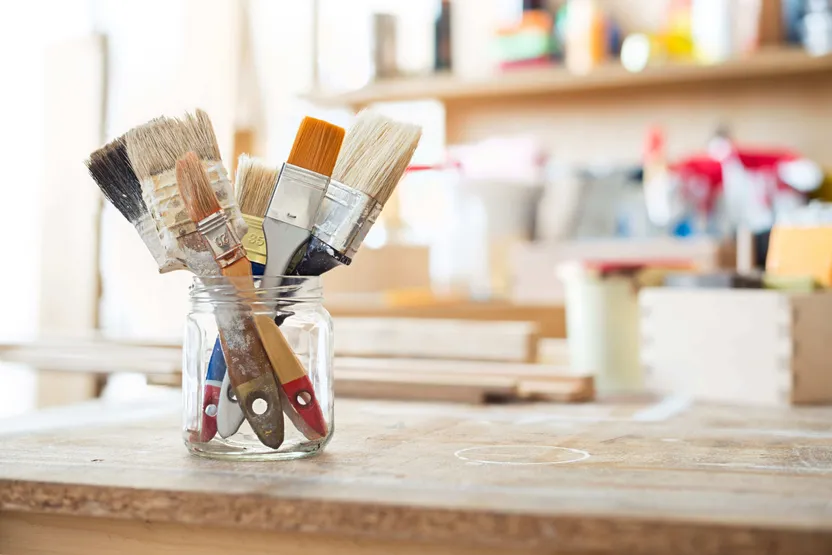
A paint brush should be selected depending on the surface it will be applied to: wood paint or stain, radiator and metal paint, etc. It should also be determined by the protection or treatment wanted; such as anti-rust paint, wood treatment etc. A high-quality paint brush can be recognized by its capacity to keep its bristles, which improves the finish. Its density, its basic function and the handle's quality and ergonomics are also factors. The size and shape of paint brushes vary, and depend on the type of work to be carried out. There are five types of paint brush:
Round paint brush
This brush is round in shape and is used for painting corners or surfaces such as mouldings.
Flat paint brush
The flat brush is rectangular in shape, with a high liquid absorption capacity. It is mainly used for painting flat surfaces and to add depth to medium surfaces.
Spalter brush
The spalter brush is a very wide, flat brush specially designed for large surfaces regardless of the product used.
Angled paint brush
The angled brush is also referred to as the long-reach brush or radiator paint brush. Its end is slightly angled to reach the furnishings of old warm water radiators (accordion type).
Stencil brush
The stencil paint brush is a small round brush. It is often used in highly decorative jobs, with stencils, for example.
Stencils
Natural or synthetic paint brush bristles
Regardless of their density, the choice of bristles is not to be neglected in order to get the best result.
Synthetic bristles
They are referred to as synthetics because they are composed of nylon, perlon or polyester. The fibres are soft, supple and resistant. Synthetic bristles are especially recommended for glycerophtalic paints, dyes and varnishes because they are more resistant to solvents, for dilution and cleaning.
Natural bristles
These bristles are composed of silk; they are more elastic and resistant and provide excellent grip and are less resistant to cleaning solvents. Natural bristles offer a better finish with an equally distributed and smooth effect when decorating.
Solvents
Best sellers in this category
Handle, ferrule and heel: what to look out for
The handle of the brush can be made of wood, plastic or synthetic- that last two being a lot easier to clean. The ferrule, or the metallic part that encircles the bristles, can be made of steel or stainless steel - this is preferred because it lasts longer. Some brushes offer a heel composed of silk and synthetic bristles. If you want your brushes to last longer, remember to clean them thoroughly and, above all, rinse them when using a solvent or paint remover!
Shop our paint brushes
More information
If DIY-lovers and novice or expert painters who want to know more, follow the links below for gardening-related accessories, advice from our editors and more helpful guides:
You may be also interested in these guides
Guide written by:
Sebastian, Self-taught DIY-er, Exeter
Redo a roof with wooden beams? Check. Advise everybody in the DIY shop? Check. Redo bathroom plumbing? Check. If it doesn't work, try again! I'll do my best to advise you in your projects.
'/%3E%3C/svg%3E)