Trellis buying guide
'/%3E%3C/svg%3E)
Guide written on 6 February 2024 by:
Albert, Manager of a gardening service, Leicester
Important features
- Shapes
- Materials
- Climbing plants
- Installation
Best sellers in this category
Garden trellis: privacy screen meets floral decoration
There is a wide variety of reasons for choosing to install a trellis:
to cover up a wall in order to hide flaws or to provide a support for plants;
to create a decorative space divider; for example between a garden and patio area or in a pergola;
to use as a privacy screen.
Depending on what you want the trellis for, you'll have to pay attention to different criteria when making your choice.
Trellis
How to choose the right trellis shape
Trellises are framed or unframed structures made up of a latticework with square- or diamond-shaped openings. The trellis itself can be square, rectangular or even fan-shaped. The latter option is perfect for plants that tend to grow wider at the top like roses.
Trellises with planters
Trellises can also be used in combination with a planter. This type of system works particularly well on patios, for example. Some planters even come on wheels for easy transportation.
Expanding trellises
Expanding trellises can be folded out to the length of your choice. These trellises are really easy to install making them ideal for supporting flowering plants on a balcony.
Trellis latticework
The very first trellises featured square-shaped latticework as this was the best shape for holding vines which is what these structures were traditionally designed for. The size of the gap between the lattice strips varies widely from about 1 cm to 15 cm. Large gaps (i.e. 8 to 15 cm) can look a bit unrefined but this option does work well for covering structures like pergolas.
Smaller latticework tends to provide a more sophisticated finish and is often used in urban patios and gardens. Diamond-shaped latticework tends to be the most common option as it feels less rigid and a little more fluid.
Trellises and arches
Best sellers in this category
Trellis materials
No matter which material you choose, it's important to note that your decision will affect the strength of the trellis. This is particularly important for certain plants – wisteria, for example, requires a really sturdy support. A trellis will generally be made of one of five materials.
Wooden trellises
Wood is the most traditional option for trellises. An excellent natural material, wood can make an outdoor space feel warmer and works well with all types of architecture and plants. It can be left bare or painted, and may or may not have to be treated. On the downside, wood does not age well despite the fact that some manufacturers provide warranties stretching up to 20 years for treated wood. Exotic wood can also be used to form a trellis. The least expensive wooden trellises on the market are made up of slats stapled together.
Wicker trellises
Wicker is lightweight and inexpensive but will only last 2 to 3 years. However, it can be a great temporary solution to help an unestablished plant gain a bit of height.
Bamboo trellises
Bamboo is rot-resistant and requires no maintenance, but it won't work for heavy plants. The green tones of bamboo help it to fade into the background once a plant is established. Alternatively, it can be painted in bright colours like white or red for a more decorative finish.
Plastic or resin trellises
Plastic and resin are rot-resistant, lightweight and maintenance-free materials. They are usually UV-treated but some plants will have trouble gripping to smooth plastic. It is best to go for solid plastic if you have heavy plants.
Metal trellises
Traditionally made of wrought iron, metal trellises these days are usually made of iron with an epoxy paint coating. Another more recent option is aluminium which is lightweight yet strong meaning it can support heavy plants.
Picking the right trellis colour
Trellises tend to come in natural tones but they can also be painted. It's also possible to paint some materials yourself. While white and green are the most traditional options trellises can be painted any colour and a red trellis won't shock anyone these days!
Resin
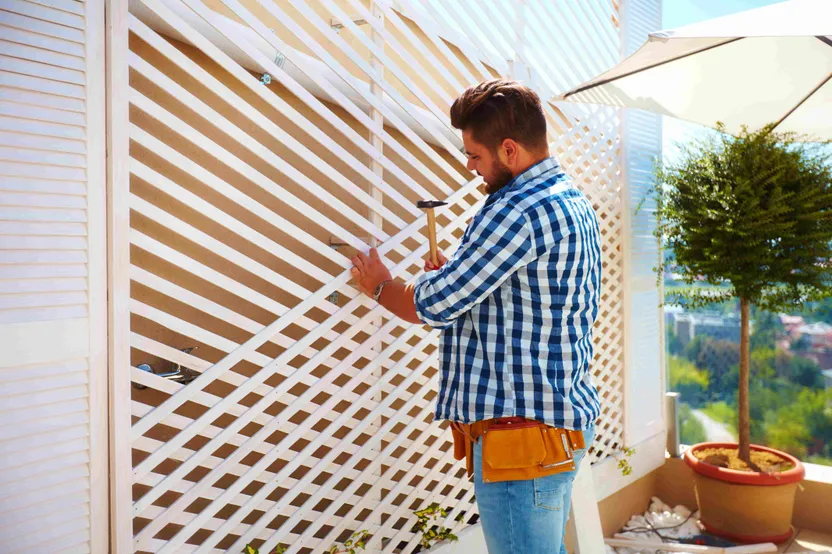
How to install a trellis
Tools and equipment
To attach a trellis to a wall, you will need:
Installation tips
Always leave a gap of at least 5 cm between the trellis and the wall to allow branches to curl around the latticework. This is essential for twining plants like honeysuckle, morning glory vines and jasmine.
This gap will also help to ensure healthier conditions and reduce moisture which is good news for your trellis and your plants!
Trellises sometimes come in kits that don't allow you to leave the right amount of space between the wall and the trellis itself. To get around the issue, you can place long screws inside 5cm hollow tubes (metal or PVC) and connect them between the trellis and the wall. It's also possible to use wooden spacers which you can screw through and secure with wall plugs.
Your trellis must be perfectly plumb. It's a good idea to use a spirit level to check that it is straight.
If you don't want to drill through the trellis (if it is made of metal, for example), you can always hold it in place using L hooks which can be screwed into the wall at the top and base of the trellis. This option also makes the trellis easy to remove for maintenance or if you have to paint the wall behind it.
How to install a trellis
Take your measurements using a tape measure and spirit level. Depending on the space you have available and the size of the trellis, decide how many anchor points you need.
Mark out your anchor points with crosses.
Drill holes in your chosen spots using a drill equipped with the right kind of drill bit for your surface and use wall plugs to match the diameter of your holes.
Insert the plugs into the holes.
Put the trellis into position.
Secure the trellis to the wall using the appropriate screws.
Once the trellis is installed, all that's left to do is to plant your climbing plants. Position the base of the stem around 25-30 cm from the wall and tilt the plant towards the trellis. You will have to guide the first stems around the trellis yourself.
Fixings and plugs
You may be also interested in these guides
Guide written by:
Albert, Manager of a gardening service, Leicester
For several years I have been running a garden service with a clientele of both individuals and companies. I manage a team of gardeners and ensure the creation and maintenance of green spaces. At the same time, I bring my expertise to my clients in terms of the maintenance and improvement of their gardens. In fact, as a trainee and working in the hospitality industry at the beginning of my career, I focused on landscaping in a local community where I acquired solid technical skills through in-house training and the follow-up of major projects in a rapidly changing town. On a personal level, I am equally oriented towards the art of gardening. With my wife, I created our garden from start to finish and I maintain it carefully, the same goes for the vegetable garden. As for DIYing, it’s not to be outdone. Yes, gardening is also tinkering: pergolas, huts, pavements, fences, and so on...There is always something to do in a garden. After working well together, my wife and I are proud of the result and delighted to be able to take full advantage of a friendly and warm environment. So, let us give you advice and help you in your choice of tools, maintenance, or the improvement of your garden, nothing could be simpler.
'/%3E%3C/svg%3E)