How to apply silicone sealant
'/%3E%3C/svg%3E)
Guide written on 6 February 2024 by:
Jérôme, Construction site supervisor, Cardiff
Important features
- Remove the old silicone and prepare your surface
- Apply the silicone sealant
- Smooth the silicone
- Tips for a finishing silicone sealant
Best sellers in this category
Silicone sealant: a bathroom sealing essential
There are a few different types of sealant on the market:
decorator's caulk is used to bond two surfaces together to create one smooth surface. It can be used for tasks such as filling gaps between a skirting board and wall or around a door frame;
silicone sealant creates a watertight seal between two elements.
Silicone sealant is used to protect against splashing water. If you want to create a watertight seal, it is imperative to use a silicone sealant.
Here are the most common uses for silicone sealant:
sealing between a shower tray and tiles;
sealing between a wash basin and tiles;
sealing between a wash basin and countertop;
sealing between a kitchen sink and worktop;
sealing between a worktop and splashback.
Silicone comes in a range of different colours to match your surfaces. The most traditional tones include white, clear, beige, brown or black but it is possible to find all shades so you're sure to find a colour to match your tiles or countertop.
Please note that for the above applications and for any tiled corners, it is much better to lay a silicone joint than to apply tile grout.
This is because these types of surfaces will expand and contract at different rates which would cause traditional grout to crack. Silicone, on the other hand, is flexible and will stay in place. With this in mind, manufacturers have developed special silicone colours to match all shades of grout.
Steps
Remove the old silicone and prepare your surface
Apply the silicone sealant
Smooth the silicone
Tips for a finishing silicone sealant
Required skills
No particular skills are required beyond a bit of concentration.
Time required
30 mins to an hour depending on your surface and the length of the silicone joint.
Number of people required
1 person
Tools and equipment
Dusters, microfibre cloths and wipes
How to apply silicone sealant
Best sellers in this category
1. Remove the old silicone and prepare your surface
To start, your surface must be:
free of any residue;
dry;
dust-free.
If you are replacing silicone sealant, the old silicone must be removed with a utility knife. You may also have to use a sealant remover to get rid of remaining residue.
The area surrounding the silicone sealant must be dust-free and completely dry. Silicone dries slowly meaning any water, sawdust, plasterboard dust or any other type of construction mess will get stuck to it. Please note: before purchasing your silicone, think carefully about the colour you want to use. It is recommended to use white silicone for white showers or wash basins. If you want to cover up the surface behind the joint, you should avoid using clear silicone.
2. Apply the silicone sealant
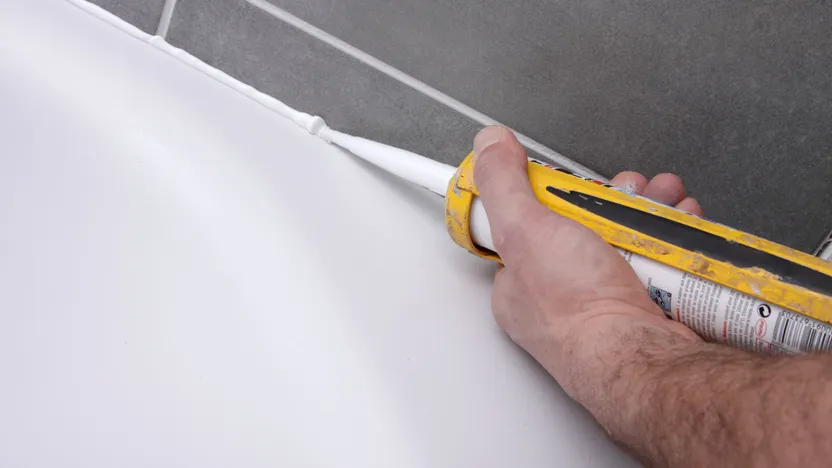
Cut the end of the silicone cartridge using a utility knife and screw on the nozzle. The nozzle should then be cut at a 45-degree angle. The nozzle itself is cone-shaped which allows you to adjust the width of the opening. Proceed as follows:
place the silicone cartridge in the sealant gun;
squeeze the sealant gun handle until the silicone comes to the end of the nozzle. Silicone beads are applied by dragging the gun backwards.
start in a corner and drag the sealant gun backwards over the surface at a 45-degree angle while squeezing the handle.
Take your time while applying the silicone. Silicone dries slowly so it's better to work slowly applying even and constant pressure. Once you've finished applying the silicone, release the pressure on the gun by squeezing on the handle behind the sealant gun. This should stop the flow of silicone.
It's worth noting that some silicone cartridges come with a built-in applicator which means you don't have to use a sealant gun. Follow the manufacturer's instructions carefully for application.
3. Smooth the silicone
How to smooth silicone
Wet your finger in soapy water and wipe it along the silicone bead. Don't wait for excess silicone to spread before wiping your finger. It's best to do this in several stages rather than spreading the silicone around the surrounding surface and ending up with an uneven result.
Alternatively, use a plastic or flexible rubber silicone smoother; a wooden block with a rounded edge can also work. Be sure to wet your tool in soapy water before use. The result will be usually be smoother compared to using your finger.
Tips for a finishing silicone sealant
If you want an even smoother finish, here's a quick tip:
before laying your silicone bead, apply masking tape on each side of the area you want to seal;
smooth down the silicone with the tape in place;
remove the masking tape with care once you're done.
The silicone won't spread and your result will be smoother and more even. All that's left to do then is to leave the silicone to dry for about six hours or overnight before exposing it to water. As always, check the manufacturer's instructions for drying times.
You may be also interested in these guides
Guide written by:
Jérôme, Construction site supervisor, Cardiff
Electrician by trade, I first worked in industrial estates where I installed, wired and fixed a large number of electrical installations. After this, I managed a team of electricians for this type of work. 10 years or so ago, I turned to building and construction. From the modest family home, to gyms and theatres, I have been able to coordinate, audit and organise all sorts of construction sites. For 4 years now, I am restoring and building an extension to a bungalow in the heart of the Welsh countryside. My experience in manual work and my knowledge means I am proud to be of service. Terraces, interior design, roofing, plumbing, electrics, anything goes! My wife, daughter and I, built almost everything we have from scratch! So to answer all of your questions and advise you on choosing your tools? Easy!
'/%3E%3C/svg%3E)