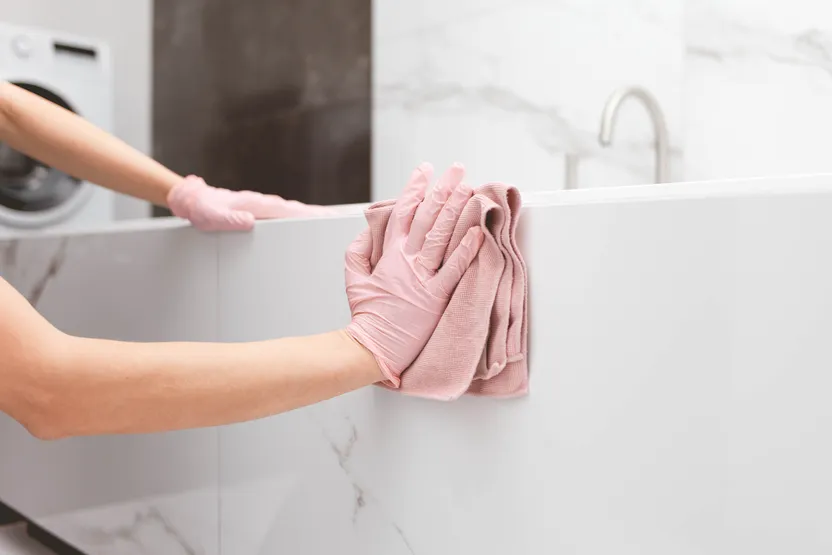
How to clean ceramic or marble bathroom tiles
'/%3E%3C/svg%3E)
Guide written on 6 February 2024 by:
Kate
Important features
- Regular care
- Bringing out shine
- Protecting surfaces
Caring for different materials
Each type of material has its own specific care needs and it's important to respect these requirements. Natural stone cannot be cleaned in the same way as tiles and cleaning products all differ to match the properties of each material. For example:
ceramic is fairly straightforward to clean;
stone requires a bit more care.
Lots of us tend to use multipurpose cleaning products to clean the wall and floors in the bathroom. This isn't necessarily a bad idea and these cleaners will get a range of surfaces clean.
However, using specially designed products will keep your materials looking new for longer.
Cleaning
How to care for ceramic tiles
Most bathroom tiles are made of ceramic or porcelain. These materials have the same care needs. When it comes to regular care, tiled walls and floors have fairly basic needs. For the floors, you just need to vacuum and mop and a sponge and basic cleaning product will do for the walls.
There is a multitude of cleaning products to choose from. Just like any cleaner, these products vary in efficacy. If you don't have particularly dirty tiles, a multipurpose cleaner will work well enough.
Tiles
How to care for marble tiles
When it comes to caring for marble, it's a whole different story. You can't use just any product as you risk altering the stone – which would be a shame given the price of marble! Ideally, you want to preserve the look of the marble for as long as possible.
Of course any product that is too acidic or anything containing bleach must absolutely not be used.
A natural cleaner or regular dish soap can be a good low-cost solution for routine marble care. Of course it is also possible to buy ready-mixed solutions. A microfibre mop and a spray-on product, for example, can be a really effective way to clean marble.
Whatever you choose, do no hesitate to ask advice from a marble specialist who should point you towards the right products. Bear in mind that these products may seem pricey but they should last a long time and will prove a good investment if they help your marble to last.
Do not forget to wipe away any water droplets after showering to prevent water from resting on the surface and forming water stains.
Protecting marble
Bathrooms are generally small rooms meaning a waterproof treatment can be really practical. These types of products can be used to help the marble retain its shine and prevent water marks which are commonplace in the bathroom.
Simply spray the product over the surface you want to treat and leave it to penetrate into the material. There's usually no need to rinse this type of product – simply wipe down with a microfibre cloth to get rid of any excess and the job is done!
If you want the product to be fully effective, it's best to leave the product to sink in for several days and avoid any water splashing during this time. Four to five days should be enough.
Mops and brooms
Tips and tricks for cleaning bathroom tiles
Regular care
Dish soap
Dish soap is a fantastic universal option when it comes to cleaning marble or any other type of bathroom tiles.
Inexpensive and versatile, dish soap can be used for much more than just washing the dishes!
How to make tiles shine
Tiles tend to lose their shine over the years. But there are a few natural methods to make them look brand new again:
White vinegar solutions.
Dish soap and water: ideal for paler tiles.
Milk: requires a bit more work as it should be applied neat to the tiles. You will therefore have to wait for it to dry before rinsing and buffing with a soft cloth.
Cleaning clay: apply to the whole surface and rinse.
How to make marble shine
To give marble back its shine, simply mix together a bit of olive oil and bicarbonate of soda.
Apply the mixture thinly over the surface using a soft cloth and rub it in using small circular movements for another easy, low-cost solution!
Tiles
How to remove limescale from tiles
Limescale is caused when water splashes onto surfaces and is left to stagnate. In short, it is the number one enemy of bathrooms! A wide range of special limescale removers is available but be careful as these products can be extremely harsh.
Removing limescale from ceramic tiles
White vinegar works really well for removing limescale from ceramic and porcelain. It can be diluted or used neat on very stubborn limescale. Rub down the surface thoroughly, especially around the grout. Leave the vinegar to work for about an hour. Do not forget to rinse.
Removing limescale from marble
White vinegar also works for marble. Dilute in water or lemon juice and rub over the surface. However, do not leave the vinegar on the marble for too long at the risk of it altering the material.
Tiles
You may be also interested in these guides
Guide written by:
Kate
Flooring is my life. I love what I do, and I've been doing it for as long as I can remember. So, I'm not bragging when I tell you I know all there is to know about every flooring product. From laminate, parquet and linoleum to PVC, carpeting and tiling, my workdays are spent learning about manufacturing processes, composition, performance, laying techniques and maintenance methods. I've certainly seen my share of mistakes made on construction sites because of what was essentially a lack of information or understanding of the product. Flooring elements are constantly evolving and being improved upon - even us pros can find it hard to keep up! Some of us in the industry use language that is overly technical or loaded with jargon you'd have to be an expert to understand. What's more, flooring salespeople are often so focused on closing the sale that they don't take the time to explain the products in any detail. That's why I want to pass on my knowledge in a way that's clear and accessible, and maybe a bit fun too. Because flooring shouldn't be a chore!
'/%3E%3C/svg%3E)