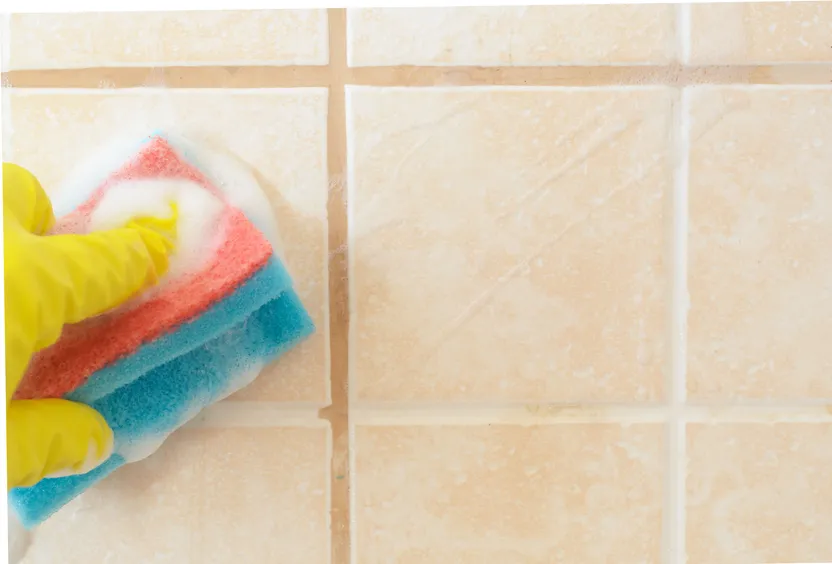
How to remove limescale from bathroom tiles
'/%3E%3C/svg%3E)
Guide written on 6 February 2024 by:
Anne, Painter
Important features
- Natural limescale removers
- Chemical limescale removers
- Application
Best sellers in this category
Limescale vs. tiles
Tiling is generally the best material for bathroom floors and walls. In terms of decoration, you can choose from a wide range of shapes, colours and finishes. What's more, its waterproof properties mean it handles water spray very well and it is also able to withstand the harsher types of cleaning products used in bathrooms and kitchens.
However, tiles can fall victim to limescale marks, especially in walk-in showers. Running water often leads to white scale stains which are, of course, more noticeable on darker tiles. This white coating can really get stuck on and can be difficult to remove.
A good way to prevent the problem before it starts is to invest in a water softener. While this is the most effective solution it may not always be technically or even financially feasible. In this case, you'll have to find ways to remove limescale build-up from your bathroom tiles.
Limescale
Depending on where the water comes from where you live, it will contain different levels of calcium and magnesium carbonates. The amount of mineral salts in your water will determine on how soft or hard it is. Water with small concentrations of salts is considered soft while water with a high mineral content is said to be hard.
The white marks that show up on surfaces are the result of a build-up of the salts contained in your water. In addition to staining your tiles, shower screens, sink, wash basin or taps, excessive amounts of limescale can also affect your household appliances.
The most effective limescale removers
Before handling cleaning products, make sure you are wearing adequate protection; your hands and eyes should be protected as a minimum precaution. Chemical descalers are harsh products so you will need gloves and safety goggles! Even if you choose to use natural products such as vinegar, you will still have to wear protective gear. Keep in mind that your skin is a lot more sensitive than your tiles!
Different methods for removing limescale from tiles
Always start with the most basic and natural solutions before progressing to more corrosive products. As you'll see in this guide, there are a few different methods to remove limescale from tiles.
3 traditional ways to descale tiles
Chemical limescale removers
Using citric acid as a descaler
If you want to remove limescale from your tiles properly, you'll need a few tools and pieces of equipment.
An scouring sponge
An old toothbrush
Cleaning gloves
Old clothes or work clothes
Safety goggles
Best sellers in this category
3 traditional ways to descale tiles
Ideally, you should try out a few traditional methods using natural products before you proceed to more corrosive products.
1. Lemon juice
Lemon juice should be your first port of call! Easy to get hold of and very cost-effective, you simply need to spray down your surfaces with a lemon solution and leave it to work for at least 10 minutes. Don't hesitate to leave it on for longer if your tiles have a thicker limescale coating. That said, don't leave the solution on for too long as the natural citric acid contained in lemons can end up damaging tiled and glazed surfaces. Finish by rubbing down the surface with an scouring sponge and you're done!
2. White vinegar
White vinegar is an excellent product for fighting limescale. It is very cheap and effective, and can be used on your tiles as well as your tap fittings. Quick tip: buy white vinegar from the food aisle as it tends to be cheaper than household vinegar! Just like you did with the lemon, leave the vinegar to settle for about ten minutes before rubbing with a sponge. The only downside to this method is that it doesn't smell as good as lemons and the odour can linger!
3. Bicarbonate of soda
Bicarbonate of soda is a product that can be used for just about anything, including removing limescale! You'll need to make a kind of paste by mixing the bicarbonate of soda with water (using one part water to three parts bicarb). Apply this paste to any affected areas and allow it to dry. You then just need to scrub the surface with a sponge or small brush.
Tap fittings
Chemical limescale removers
Scan any supermarket for household cleaning products and you'll be sure to find a multitude of different descalers. It can be tricky to know which product to choose!
These chemicals are generally pretty effective but be careful when using them as they are often very corrosive and it's hard to know exactly what they contain. The advantage of using specialist products, however, is that they often come in a spray bottle which makes them easier to apply.
Cover up your hands properly by wearing gloves to protect your skin.
Just like the options detailed above, you simply need to apply the product and let it rest before scrubbing! And don't believe the ads for so-called spray and rinse products – they simply don't work. You will always have to scrub in the product!
Using citric acid as a descaler
Any acid-based product is going to be corrosive. If none of the other methods have worked, use some citric acid by all means, but handle this product with great care.
Wear gloves and protect your eyes from any potential splashback (preferably with a mask and safety goggles for increased protection).
Citric acid usually comes in crystal form and, despite what you might think, is a completely natural product. Citric acid is contained in many fruits and can also be used in the kitchen. It is a very effective and non-toxic cleaning product, but it can cause extreme skin irritation so be sure to protect your skin at all times!
You must also dilute it correctly so as not to damage your tap fittings. The same goes for glazed tiles.
Please note: hydrochloric acid must never be used on tiles, floors or walls. This chemical is extremely dangerous to handle and you are sure to damage your tiles in the process. Hydrochloric acid can be used for toilets but you will still have to be very careful!
You may be also interested in these guides
Guide written by:
Anne, Painter
After 8 years of trade, I turned professional: I trained myself to be a painter and carpet fitter, either on my own or with 16 year old comrades. 9 months later, following vocational training, I created my company. I’m a self-taught DIYer and decoration enthusiast, I love to find and restore furniture and to create unique decoration pieces. I completed the renovation of my sister’s house with my niece: electrics, tiling, plasterboard...we did it all. And today, if I can share my experience I'm happy to do it. Good Luck.
'/%3E%3C/svg%3E)