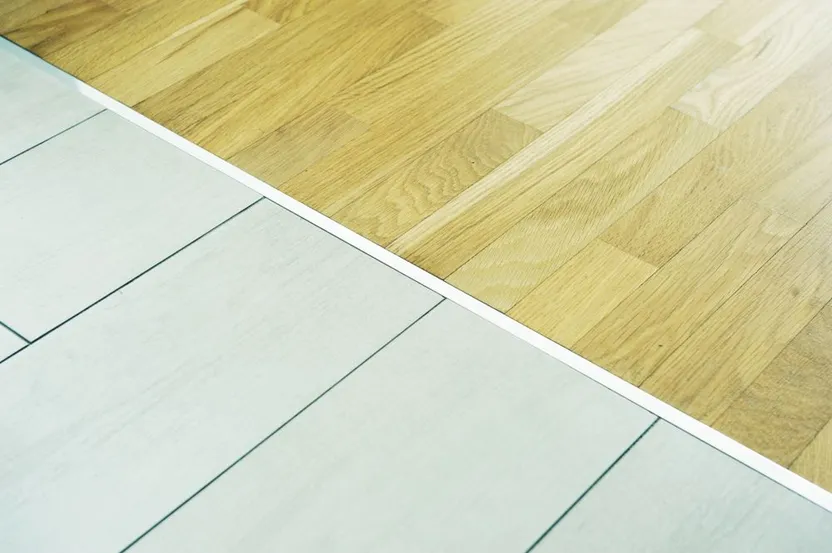
Wood flooring vs. tiles: which is right for you?
'/%3E%3C/svg%3E)
Guide written on 6 February 2024 by:
Kate, Flooring Expert, Swansea
Important features
- Features
- Applications
- Maintenance
- Installation
- Advantages
- Disadvantages
Wood floors vs. tiles: a question of taste and lifestyle
The most important factor when choosing a floor is to pick a material that works with how you want to use the space. If you have toddlers who like to use a baby walker, tiles will be your best option. Want to create a warm and cosy space for guests? Go for a beautiful solid wood floor.
Each option has its pros and cons, but your choice should primarily be driven by how you plan to use the floor. Your lifestyle will therefore be the deciding factor. It's important to take the time to weigh up any current requirements – as well as any future demands – you may have.
Wood flooring: advantages and disadvantages
Wood flooring refers to any wood-based floor from solid wood to engineered hardwood (which features a 2.5mm minimum wood top layer). Wood floors are warm surfaces and can be renovated over the years.
Advantages of wood floors
A natural and timeless product, a wood floor offers many advantages:
Wood floors are the best option when it comes to the environment.
Wood is a raw material that lasts a very long time and can be refinished.
Simply sand down the floor and apply a new coat of varnish or oil and you should be good for another ten years.
Wood floors are primarily chosen by those looking for a bit of traditional style. In fact, wood flooring can last hundreds of years if cared for properly.
When it comes to picking wood, there is a vast array of choice. Wood dyes offer a wide range of colours and there are lots of different formats and finishes.
Engineered wood floors can be installed as floating floors. This type of installation is very straightforward and can be tackled by any good DIYer. Solid wood floors, on the other hand, require a bit more skill when it comes to installation.
A wood floor can be installed in any room as long as you take care to choose the correct type. Pay special attention if you are installing in a room with moisture, such as a bathroom, as the care and usage requirements are more complex.
Disadvantages of wood flooring
Like any natural product, wood floors require regular care. Here are a few other disadvantages you have to consider:
While finishes such as varnish and oil have come a long way over the years, it is still imperative to maintain a wooden floor if you want to keep it in good condition.
Try not to drop anything on the floor as stains can sink into the material and you may end up have to sand the surface sooner than you'd like.
Wood floors can be delicate if used intensely (such as the area around doorways). The finish must be suitable for the type of usage the floor has to withstand.
Nailing or gluing down a solid wood floor is a fairly technical process.
Wood floors are not moisture-resistant meaning they cannot be used in certain rooms or else special care must be taken.
Wood floors are fairly limited in terms of format, especially when it comes to solid wood as it is important to respect the natural properties of the wood.
Wood floors can move over time. This can represent an advantage as well as a disadvantage since it does add a certain charm to the floor. Remember – wood is a 'living' material.
Wood floors can be expensive. It is possible to find budget options but nothing that compares to the lower price ranges that tiles can offer.
Laminate: an alternative to wood flooring
There is another solution which can help you to avoid the downsides of wood floors: laminate flooring. These floors are often fairly similar in appearance to wood floors even if they do not actually contain any wood.
Laminate floors are easy to fit and can be installed as floating floors. They are wear-resistant and can made to resemble wood and the structure of the material fairly well. They are stable and can sometimes be used in rooms with moisture. Above all, they are very easy to care for. The downside is that they cannot be refinished.
Wood dye
Tile: advantages and disadvantages
Tiles are made using different types of clay and may be covered with an enamel coating. They are very strong and tend to be heavy.
Advantages of tile
Extremely versatile, tiles boast a number of advantages:
Tiles can work in any room of the home, even in garages!
They are very easy to clean and do not usually have any special care requirements. They won't alter over time and are even flame-resistant.
Tiled floors are extremely strong. Some tiles can be used outdoors. They are impact-resistant (though heavy objects will damage the enamel coating).
Stains will not penetrate into the tile.
Tiles come in all shapes and format from small tiles to very large tiles.
Tiles can be budget-friendly but beware that cheaper tiles won't be as hardwearing.
Tile can also be made to imitate all sorts of materials including concrete, stone, wood, and so on.
In fact, if you really can't choose between a wood floor and tiles, it's worth noting that wood-look tiles are increasingly common and can offer a great compromise between the two materials.
Disadvantages of tile
Tiles are solid and strong. However, their strength also represents two disadvantages that you should be aware of before making your choice.
Difficult to change
Want to change up your flooring? Bad news – once tiles are in place, they are hard to change!
It's therefore important to be sure that your tiles are timeless and that you're not simply following trends. Tiles don't just take five minutes to remove!
If you want to change the tiles for another type of flooring – or even lay new tiles – you will usually just have to cover up the old tiles. In this case, pay special attention around doorways to ensure the flooring is not prohibitively thick.
Special tools and skills
Laying tiles is not something just anyone can do. It is a fairly technical process and physically demanding. It also takes a long time. You will have to mix tile adhesive to lay the floor and you often need to double bond tiles.
Cutting tiles requires the use of a special tool. Tiles can be tricky to handle and can be very heavy (approx. 20 kg per square metre). If you do decide to go for tiles and you aren't a very skilled DIYer, it's probably best to call in the professionals.
You may be also interested in these guides
Guide written by:
Kate, Flooring Expert, Swansea
Flooring is my life. I love what I do, and I've been doing it for as long as I can remember. So, I'm not bragging when I tell you I know all there is to know about every flooring product. From laminate, parquet and linoleum to PVC, carpeting and tiling, my workdays are spent learning about manufacturing processes, composition, performance, laying techniques and maintenance methods. I've certainly seen my share of mistakes made on construction sites because of what was essentially a lack of information or understanding of the product. Flooring elements are constantly evolving and being improved upon - even us pros can find it hard to keep up! Some of us in the industry use language that is overly technical or loaded with jargon you'd have to be an expert to understand. What's more, flooring salespeople are often so focused on closing the sale that they don't take the time to explain the products in any detail. That's why I want to pass on my knowledge in a way that's clear and accessible, and maybe a bit fun too. Because flooring shouldn't be a chore!
'/%3E%3C/svg%3E)