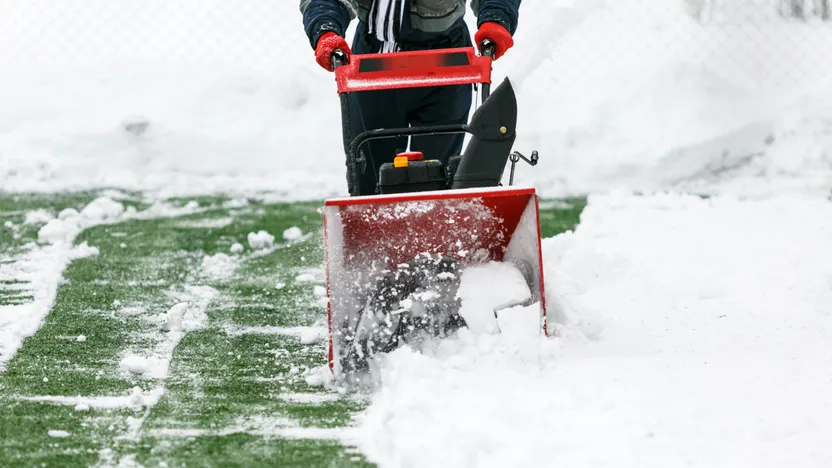
Snow blower buying guide
'/%3E%3C/svg%3E)
Guide written on 6 February 2024 by:
Albert, Manager of a gardening service
Important features
- Clearing capacity
- Snow throw
- Engine size
Best sellers in this category
Snow blowers for speed and efficiency
Snow blowers can be used to quickly and efficiently clear snow from pathways, driveways, gardens and any other area around the house.
These snow clearing machines all differ in terms of performance and it's important to choose the right model depending on the size of the area that needs to be cleared, how often you plan to use the machine and whether or not you can connect it to mains electricity.
Main features of a snow blower
Snow blowers, or throwers, all feature different designs to meet different needs. When purchasing one of these machines, you'll need to pay attention to the following factors:
Electric snow blowers: best for smaller areas and occasional use, and will require an extension cord.
Petrol-powered snow blowers: ideal for larger areas, thicker snow and frequent or even intensive use. However, they will require regular maintenance.
Engine size: engine capacity is indicated in cubic centimetres and generally ranges from 200 to 400 cc. The bigger the engine, the more powerful the machine.
Start-up: you can choose between a recoil starter (for petrol-powered models) and electric start.
Snow height: indicates the maximum level of snow that your snow blower can cope with and is given in centimetres or millimetres.
Clearing width: determines how many times you'll have to go back and forth with the snow blower.
Snow throw distance: dictates how far your snow blower can eject the snow it collects. This is given in metres.
Number of gear speeds: snow blowers can offer one to four gear speeds, which gives the machine the ability to modify its speed in relation to the type of snow.
Auger size: comes in different sizes and determines how efficient the snow blower is.
Type of chute: the chute is the part of the blower where the snow is ejected. It is possible to change the direction of the chute on some models.
Wheel size and weight: determines how easy the machine is to manoeuvre and can be very important if you have large amounts of snow to shift.
Best sellers in this category
When to use electric snow blowers?
If you're only looking to remove snow from small areas around the house such as driveways or the pavement in front of your house, an electric snow blower will be ideal. These machines are comfortable to handle and can be started up without any preparation saving you a fair bit of trouble!
Electric snow blowers
An electric snow blower is composed of a tube frame with controls at the top. The engine unit and blades are at the base of the machine and the chute sits on top of the engine.
Power output and snow throw
Electric snow throwers generally have a power output of around 1200 W which is more than enough to clear 20 to 30 cm of snow. Equipped with an ergonomic handle, they are easy to handle and will glide seamlessly across the ground expelling snow at a distance of up to six metres.
Clearing width
Some electric snow blowers are equipped with wheels and inner tubes for a larger clearing width. Extremely lightweight, electric models are pleasant enough to use as long as you don't have too big an area to clear.
Safety tips
It's important to take note of some safety advice before using an electric snow blower. Firstly, you will have to wear ear defenders as these machines tend to be noisy. Furthermore, you need to be absolutely aware of where your cable is at all times to ensure you don't run over it. You should also avoid any steeply sloping terrain and any object that could hit the blade.
While electric snow throwers are practical, they are not suitable for larger areas, sloping terrain, heavy or compact snow or any area that with frequent snowfall. In these circumstances, a petrol-powered snow blower is your best bet.
Electric snow blowers
Petrol snow blowers
Petrol-powered snow blower performance
A petrol snow blower is designed to clear larger areas. Offering anything from 6 and 14 hp, petrol-powered snow blowers are extremely efficient. They are also bigger than their electric counterparts; the width of their auger can range from 51 to 105 cm depending on the model.
If you want a top-end model, you can find snow blowers easily able to clear a surface of up to 2,400 m² per hour. If you have a smaller surface area to clear, a capacity of 1,700 m²/hr is normally more than sufficient.
For any sloped surfaces or areas that require you to make a lot of turns, it's best to go with a two-stage snowblower. These powerful machines often feature both forward and reverse gears to make your job much easier. What's more, these snow blowers usually offer around 5 forward gears and 2 reverse gears which will be an enormous advantage for large-scale tasks.
Petrol snow blower equipment and add-ons
Snow blowers can come with a range of equipment designed to make your life easier.
a light is a particularly practical addition for poorly lit areas.
Ergonomic or even heated grips will offer easier and more comfortable handling.
An electric start will also enhance user comfort, as will a chute that can be swivelled.
Petrol snow blowers
Safety equipment for snow blowers
Please note that the use of appropriate safety and workwear is strongly recommended; this includes protective gloves, safety shoes, safety glasses and ear defenders.
It's very important to read the manufacturer's instructions and follow all advice to the letter. Remember: snow blowers are powerful machines and can quickly turn any object into a flying hazard. It's therefore crucial to remove pebbles, pieces of glass or any other objects from your ground before going over it with the snow blower.
For sloping ground, the use of snow chains is strongly recommended or even mandatory, depending on how steep the slope is.
Shop our safety and workwear
You may be also interested in these guides
Guide written by:
Albert, Manager of a gardening service
For several years I have been running a garden service with a clientele of both individuals and companies. I manage a team of gardeners and ensure the creation and maintenance of green spaces. At the same time, I bring my expertise to my clients in terms of the maintenance and improvement of their gardens. In fact, as a trainee and working in the hospitality industry at the beginning of my career, I focused on landscaping in a local community where I acquired solid technical skills through in-house training and the follow-up of major projects in a rapidly changing town. On a personal level, I am equally oriented towards the art of gardening. With my wife, I created our garden from start to finish and I maintain it carefully, the same goes for the vegetable garden. As for DIYing, it’s not to be outdone. Yes, gardening is also tinkering: pergolas, huts, pavements, fences, and so on...There is always something to do in a garden. After working well together, my wife and I are proud of the result and delighted to be able to take full advantage of a friendly and warm environment. So, let us give you advice and help you in your choice of tools, maintenance, or the improvement of your garden, nothing could be simpler.
'/%3E%3C/svg%3E)