Snow removal tools buying guide
'/%3E%3C/svg%3E)
Guide written on 25 September 2026 by:
Sebastian, Self-taught DIY-er, Exeter
Important features
- Snow shovel
- Sleigh-style snow shovel
- Roof snow rake
- De-icing salt
- Snow blower
Best sellers in this category
Clearing a pathway or pavement
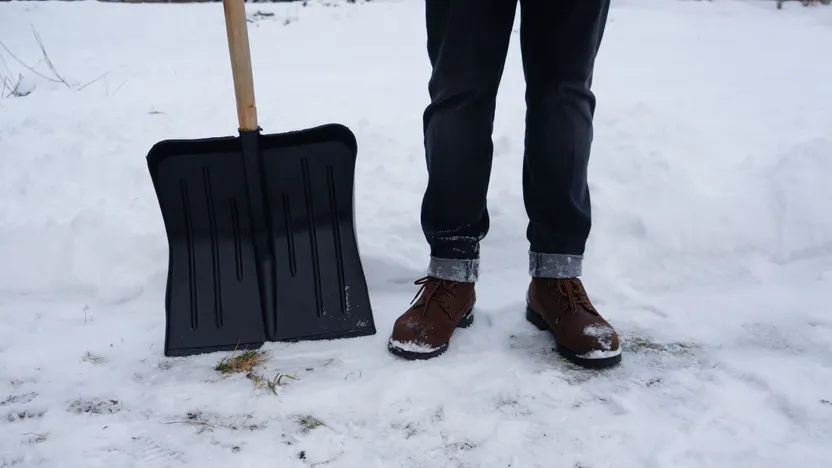
Used to clear snow from pathways pavements or shop fronts, snow shovels are to snowy regions what parasols are to coastal towns! These essential seasonal tools feature a handle measuring about 1.3 metres and a wide curved blade that may or may not have edges. Snow shovels also come in several materials including metal, plastic and wood.
Metal snow shovels
Metal snow shovels are usually made of galvanised steel or aluminium and are so strong that they can easily damage any materials they come into contact with. The main advantage of these tools is that they are virtually unbreakable and can be used to cut through ice.
Plastic snow shovels
Plastic snow shovels are made mainly of polypropylene or fibreglass. The blades of these shovels are lighter and won't scratch any materials they touch. They may, however, be equipped with aluminium edging along the end of the blade. The downside: these tools are breakable.
Wooden snow shovels
Wooden snow shovels are generally made of plywood. The curve of the blade is somewhat limited by the wood and while they might be a good alternative to plastic shovels, they can still break when faced with dense snow.
Snow shovels
How to choose the right snow shovel
Snow density and shovel capacity
Bear in mind that the wider and deeper the blade, the more snow the shovel can hold and the heavier it'll be. The density of snow does vary but is generally somewhere between 20 to 300 kg / m3. This means that if you have a blade measuring 50 x 30 cm, a shovelful of snow can weigh anywhere from 500 g to 7 kg. The load capacity of the shovel must therefore match your strength level and your willingness to take up a new winter sport!
Snow shovel handles
The handle of a snow shovel can be made of wood, for a lightweight and natural option, or fibreglass if you're looking for a denser and stronger material. Less commonly, the handle might be made of aluminium with a hand grip to make the shovel easier to handle under the weight of the snow. Handle too short or too long? A telescopic handle will put an end to any excuses from snow-shovelling slackers!
Roof snow rakes and snow brooms
These tools are different to shovels in that the blade is set at a 90° angle to the handle in order to drag snow rather than lift it up. Easy to handle, these tools are mainly used to clear snow off roofs. The blade and handle materials are the same as those used to make snow shovels.
Sleigh-style snow shovels
Sleigh-style snow shovels feature a wide blade which is particularly handy for clearing snow from pathways. Made from the same materials as the other tools, the blade of a sleigh-style snow shovel looks a bit like a snow plough. These tools can be used to shift large volumes of snow but will require more strength to use. Their main benefit is that they are very efficient. On the other hand, they are very heavy when filled with snow. The blade will usually take on the following dimensions:
40 x 80 cm
60 x 60 cm
60 x 70 cm
60 x 80 cm
70 x 80 cm
Just like regular snow shovels, the handle can be telescopic and the blade can be edged with metal.
Ice breakers
Ice breaker tools feature a long handle topped with a strong metal blade. These tools are designed to remove solid ice from pathways or even decks by force.
The blade may be reinforced with ribs for greater strength and while these tools are not generally used to clear snow, they can if the blade is large enough.
Shop our snow shovels
Best sellers in this category
De-icing salt: a must-have for pavements
We all know the effect salt has on snow. Usually sold in 25 kg bags, de-icing salt allows you to melt snow that has gathered on pavements, roads, pathways, stairs, decks, garage stairways and so on.
De-icing salt
Snow blowers: for heavy and regular snow fall
Snow blowers are the best solution for regions that often have heavy snow fall. They allow you to remove the snow quickly and effectively. To choose the right model, pay attention to the following factors:
power source: electric or petrol-powered depending on the size of the surface you want to clear;
how far you want to move your snow;
the width of the blade: meaning the amount of times you'll have to go back and forth;
the clearing power: how much snow the blower can cut through;
speeds: type and number to match the density of the snow;
brush size: will determine how quickly you can clear the snow;
blade settings: 'plough' mode, for example;
chute rotation;
wheel type: for easier steering.
To find the right snow blower, the main features to pay attention to are clearing width, ejection distance and clearing capacity.
Snow blowers
Clearing snow from the pavement
Salt is primarily used in cities and on hard surfaces like roads and pavements. It is not a good idea to use it on any permeable surface as salt is a natural herbicide. As such, it's best to use a snow shovel to clear snow in rural areas. There is no law saying that you should clear the snow in front of your home. However, it is strongly advisable if you don't want passers-by slipping around on the pavement!
You may be also interested in these guides
Guide written by:
Sebastian, Self-taught DIY-er, Exeter
Redo a roof with wooden beams? Check. Advise everybody in the DIY shop? Check. Redo bathroom plumbing? Check. If it doesn't work, try again! I'll do my best to advise you in your projects.
'/%3E%3C/svg%3E)