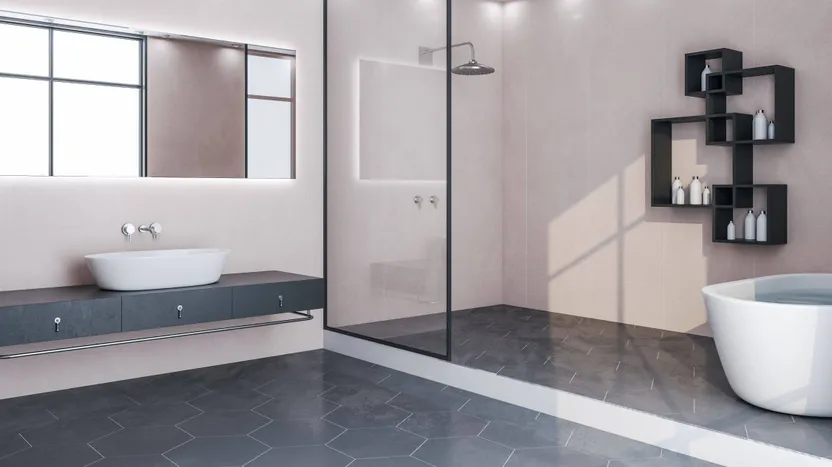
How to install a wetroom shower
'/%3E%3C/svg%3E)
Guide written on 6 February 2024 by:
Sebastian, Self-taught DIY-er, Exeter
Important features
- Excavate for the shower tray
- Install the shower substrate
- Install the shower tray
- Seal the shower walls
- Lay the tiles
- Install the shower valve
Best sellers in this category
Wetroom showers: what are they and how to install them
What is a wetroom shower?
A wetroom shower is a shower that is level with the rest of your bathroom floor featuring tiled walls and a fully tiled over shower tray. The number of shower walls can vary and this all depends on the layout of your bathroom.
Bathroom layout
The feasibility and complexity of installing a wetroom shower all depends on your bathroom in terms of the sanitaryware already in place and the location of your pipes. If you have a wood floor and your waste outlet is inaccessible or runs through a wall, the easiest option would be to go for a traditional shower tray.
In this guide, we'll take you through the steps to installing a wetroom shower in a corner with water-resistant plasterboard walls and a concrete floor. In terms of shower valves, we've gone for a wall-mounted shower valve and riser rail.
Wetroom shower flooring
For the floor of the wetroom shower, we will show you how to install a tile over shower tray. While this type of pre formed tray is more expensive, it is the simplest solution and repairs will be less disruptive in case of leaks.
Shower walls
For the walls of the shower we will show you how to install a waterproofing membrane and tanking system to seal the walls.
Steps
Excavate a hole for the wetroom shower tray
Install the shower substrate
Fit the wetroom shower tray
Prep and waterproof the shower walls
Tile the shower floor and walls
Install the shower valve
Shop our shower trays
1. Prepare a base for the shower tray
If you are replacing an old shower tray, you don't necessarily have to install the new one in exactly the same spot, but you do need to think about the location of your pipes.
Mark out the area you need to dig out on the ground. You can use the shower tray to trace around its future location or you can measure the tray and mark out the dimensions on the ground.
Think carefully about how far you need to dig down. The surface you dig out must allow you to place the shower tray perfectly flat and level and slightly below the level of the rest of the finished level of the floor in the bathroom. When excavating the area, be sure to account for the depth of the mortar, the shower substrate and the tiles (including the tile adhesive) to ensure that the shower will be level with the rest of the tiled floor.
Proceed to digging out the floor using an angle grinder, rotary hammer, club hammer and bolster or cold chisel. Be careful not to damage the waste pipe.
Remove the debris as you work with a bucket.
Once you're done check the depth of the hole with a tape measure and check that the surface is level and flat using a spirit level.
Clean the area by removing all remaining debris and dust and check all dimensions once again.
Bolsters and cold chisels
Best sellers in this category
2. Fit a shower substrate beneath the tiles
Mark out where the waste pipe runs to the shower waste directly on the foam shower substrate.
Cut the substrate along the length of the waste pipe using your marks.
Put the substrate in place and dry fit the shower trap to ensure everything is in order. The waste pipe should have a minimum of 10mm fall for every 4 metres of pipe.
Once you are satisfied, glue all parts of the waste system together. The PVC fittings should be sanded and dusted down before adhesive is applied. The types of fittings you need to use depend on the position of your waste pipe. Check the shower trap instructions for more details
Once the adhesive is dry, check the trap for leaks.
Prepare your mortar. Once you have an even mixture, apply dabs of mortar over the entire surface of floor where the substrate will sit. You can use this step to make up for any unevenness by adding more or less mortar where needed.
Place the substrate over your mortar and check it is level using a spirit level.
Leave the mortar to cure according to the manufacturer's instructions.
Filling the gap with mortar
You can choose to fill the gap with mortar rather than using a shower substrate.
In this case, you simply need to fill the excavated hole with mortar to the correct thickness covering the lower part of the shower trap and waste pipe with mortar.
If you follow this method, be sure to position your shower waste properly and lock it into position depending on the position of the plug hole in the shower tray.
Mortar
3. Install the shower tray
By this point, your shower substrate should be secured to the ground and the waste pipe in position.
Place the plug seal in the shower tray.
Cover the entire underside of the wetroom shower tray with mortar as well as the substrate if required. Once the wetroom shower tray is in place, you should be able to tile over the top to reach the same level as the rest of the bathroom floor tiles.
Put the wetroom shower tray into position making sure the plug hole and seal sit over the shower trap.
Connect the shower tray to the trap by fastening the securing ring using the stainless steel screws provided.
Apply the waterproof sealing tape all around the perimeter of the shower tray. Ensure it sits flat in the corners and around the contours of the tray.
4. Prep and waterproof the shower walls
Apply a bonding primer to the walls
Before you start prepping the shower walls, you must ensure that the hot and cold water feeds are in position for the installation of the shower valve and riser rail later on.
Sand down the surfaces and apply a bonding primer. Depending on the manufacturer, the primer may take the form of a gel or a resin which should be applied using a decorating knife or a roller.
Fitting the waterproofing membrane
The role of a waterproofing membrane is to protect the surface beneath by stopping any moisture from infiltrating through.
Once the primer is dry, dry fit the membrane. Cut the membrane down to the correct dimensions then fit it starting at the base of the shower.
Apply the adhesive according to the manufacturer's instructions then apply all the pre-cut parts of the membrane.
It is recommended to fit a waterproofing membrane under tiles for an upstairs bathroom. A tanking system is usually fine for a ground-floor bathroom.
Waterproofing with a tanking solution
A liquid tanking solution can be used instead of a waterproofing membrane. This type of solution is a sealing undercoat which should be applied to the shower walls using a roller.
Apply the tanking solution to the walls using a cheap roller.
The corners between the walls should be protected by a tanking tape. Ideally, you should apply a first coat of tanking solution to the corners first before applying the tanking tape up to around 2 metres from the floor. You should then coat the tanking tape with the solution to ensure it is surrounded by the product.
Leave the first coat to dry.
Apply a second coat of tanking solution all over the shower walls around 3 hours after applying the first.
5. Tile the shower floor and walls
When it comes to laying tiles, start with the floor tiles. It is best if the wall tiles overlap the tiles or mosaic tiles on the floor as this will provide the best finish.
Tiling a wetroom shower
Mosaic tiles work really well for wetroom shower trays as they mould perfectly to the slope required for the waste in the middle of the shower. These tiles are also easy to cut to size with pliers. If you are laying traditional tiles, you will have to take special care to cut your tiles so that they align perfectly with each side of the slope that surrounds the waste.
However, if your waste is located close to the wall – meaning there is just one slope for the water to drain – you shouldn't have any major issues laying normal tiles.
Dry fit the tiles first. The aim is to make all of your cuts before any tiles are glued down.
Apply a special flexible wetroom tile adhesive over the whole shower tray using a notched trowel.
You can then lay your tiles or mosaic tiles.
Check that the tiles are level whilst respecting the fall for drainage.
Tiling the wetroom shower walls
Once your shower walls are sealed and dry, you can move on to tiling them. Bear in mind that while ceramic tiles can be used, porcelain is more waterproof and therefore better suited to wetroom showers.
Use a special tile adhesive designed for moisture-exposed areas and double bond larger tiles where required. This means applying adhesive to both the shower walls and the tiles.
Before laying your first tile, try to map out the surface and plan for any cuts. Lay the cut tiles in the least visible areas.
Use a diamond hole saw to drill through the tiles around the water pipes.
Check the tiles are absolutely level and plumb using a spirit level. Ensure that the tiles are lined up perfectly using a metal straight edge.
Grouting the tiles
Both floor tiles and wall tiles should be grouted 24 hours after installation.
Prepare your tile grout according to the ratios set out by the manufacturer.
Apply the mixture using a trowel taking care to fill the gaps between the tiles properly. Do not hesitate to use more product than required as you can always remove excess grout later on.
Once the grout is in place, wipe a wet sponge over the entire surface to remove surplus grout from the tiles.
Apply a grout haze remover to ensure you are not left with a white haze of adhesive over the tiles.
Shop our tile adhesive
6. Install the shower valve and riser rail
Once your tiles are in place and grouted, and you've cleaned up the surface, all that's left to do is to install the shower valve and riser rail.
Installing the shower valve
Installing a shower valve is similar to fitting any other type of tap.
Fit the pipe collars and fit the shower valve to the water pipes (which should feature male connections. Be sure to apply PTFE tape, pipe sealing cord or even hemp to the threads. If the gap between the pipes doesn't match up with the shower valve, you can install dog leg connectors to make up the difference.
After screwing the nuts onto the shower valve by hand, finish off with a spanner or water pump pliers.
Fitting the riser rail
To fit a basic shower rail, proceed as follows:
Position the riser rail on the wall and check it is plumb using a spirit level.
Mark out the position of the fixings on the wall, or else take measurements and transfer these to the wall.
Drill through your marks and insert the wall plugs ensuring they are suitable for your surface.
Screw the riser rail into place.
Installing the shower head and hose
Check that the washers are fitted to each end of the shower hose and start by connecting the hose to the shower valve by hand.
Next, screw the shower head onto the shower hose. After fastening by hand, tighten both connections (on the shower head side and valve side) using water pump pliers. Take care not to overtighten.
Finish by fitting the plughole cover over the plug. Apply transparent silicone around the edge of the shower where the floor meets the wall and leave to cure. You can then test the shower for leaks and proceed to laying the rest of your bathroom floor tiles.
See all shower kits
How to install a wetroom shower
Required skills
Excavating and marking out measurements; fitting a shower trap and gluing PVC pipe; applying adhesive and waterproofing membrane; cutting, mapping out and laying tiles; basic plumbing skills to apply PTFE tape and recognise thread types; taking accurate measurements; applying a silicone seal.
Time required
3 to 5 days (including drying time)
Number of people required
1 or 2 people
Tools and equipment
Wet room shower tray
Shower substrate or mortar with trowel
Rotary hammer with chisel bit
Waterproofing membrane or tanking system (waterproofing solution)
Shower kit with shower head and hose
Shower valve with pipe collars (dog leg connectors if required)
Drill with drill bits for tiles and diamond hole saw
Wall plugs (suitable for surface)
Sandpaper and cloth
Decorating knife and tile adhesive spreader
Tiles or mosaic tiles
Grout
Mixing paddle (fitted to drill)
Safety and workwear
Ear defenders
Please note: this is a non-exhaustive list; Be sure to match your personal protective equipment to the job at hand.
Silicone
You may be also interested in these guides
Guide written by:
Sebastian, Self-taught DIY-er, Exeter
Redo a roof with wooden beams? Check. Advise everybody in the DIY shop? Check. Redo bathroom plumbing? Check. If it doesn't work, try again! I'll do my best to advise you in your projects.
'/%3E%3C/svg%3E)