How to install interior wall cladding
'/%3E%3C/svg%3E)
Guide written on 6 February 2024 by:
Tess, Painting & decorating consultant, Brighton
Important features
- Prepare the surface and the wall cladding
- Adhere the cladding to your surface
- Cut the cladding to size
- Installation finishes
Best sellers in this category
Interior wall cladding: create a decorative focal point
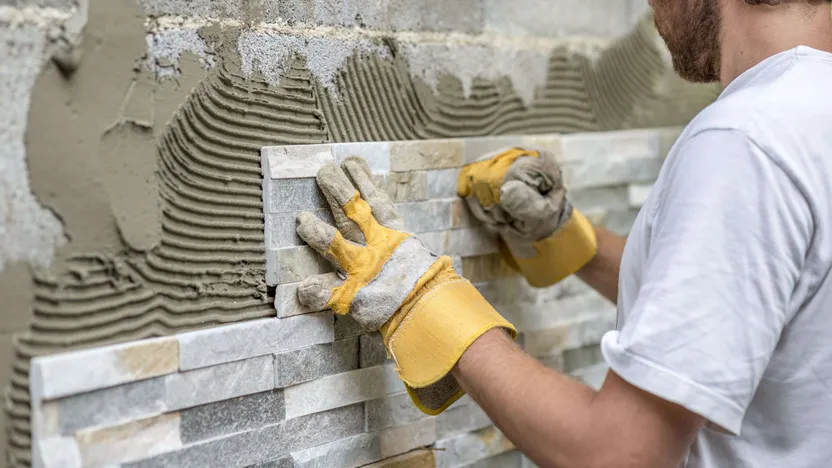
Interior wall cladding is made up of thin planks or panels that can be fitted directly to interior walls just like wall tiles. It comes in all different colours and styles including faux brick, stone, concrete, wood, plaster or even quartz, and can be used to transform a wall in a matter of hours. Able to cover up minor surface imperfections, internal wall cladding is easy to install, resistant and straightforward to clean.
Some types of cladding are completely self-adhesive while others will require grouting for an extremely realistic effect. It's up to you to choose the type you want according to your preferences and the location of the cladding – for example, you'll need moisture-resistant cladding for a bathroom or kitchen, and fireproof cladding for use around a fireplace.
Steps
Prepare the surface and the wall cladding
Adhere the cladding to your surface
Cut the cladding to size
Installation finishes
Fireplace inserts
Prepare the surface and the wall cladding
To ensure that the cladding adheres perfectly to your wall, you need start with a clean, dry and healthy surface. Do not hesitate to sand down the surface if required. If you are applying plaster first, you may want to apply a grooved coat to help the glue to adhere properly. You might also want to lightly roughen the underside of the cladding using a file or rasp for the same reason.
You can then use a wire brush to brush down the back of the cladding for an even more secure bond.
If you have opted for a ready-mixed adhesive, prepare the mixture carefully in a mixing tub according to the manufacturer's instructions. For this step, you can fit your drill with a paint mixer attachment.
Paint mixers
Best sellers in this category
Adhere the cladding to your surface
Use a spirit level to check your floor – or the point you are starting from – is level.
If your surface is not entirely level, it's best to start by fitting the second row of cladding. Mark out a line in pencil on the wall – making sure to account for the spacers – and secure a timber batten to the wall to act as a horizontal guide.
Apply adhesive to the back of the cladding using a notched trowel. If you have chosen large cladding panels, you will have to double bond the cladding. This means you will have to apply adhesive to both the wall and the back of the cladding.
In order to install the first row, you will have to lay out small spacers along the length of the wall so that your cladding is not sitting directly on the floor.
Start in one corner of the room and fit your first cladding panel by firmly pressing it against the surface.
You might also want to tap on the surface gently using a rubber mallet to encourage adhesion.
Continue laying the cladding panels side by side then move on to the next row.
Please note: it's important to glue each piece of cladding as you go along as the adhesive tends to dry quite quickly.
If you are not applying grout, be sure to leave a slight gap between rows for a more realistic finish.
Mallets
Cut the cladding to size
If you need to make any cuts, mark out the cutting line on the cladding directly in pencil. Place the cladding flat and use a handsaw to cut the material.
Depending on the type of cladding you have chosen, you may need to use a tile cutter or angle grinder instead.
Installation finishes
Leave to dry for at least 24 hours or according to the manufacturer's instructions.
Once the adhesive has cured, remove the spacers from the base of the wall.
How to install interior wall cladding
Required skills
Taking measurements
Using a spirit level
Sanding/filing
Using a handsaw
Cleaning a surface
Laying tiles
Working on a ladder
Required time
2 days including drying time
Number of people required
1 person
Tools and equipment
Interior wall cladding adhesive
Spacers
Personal protective equipment
Protective clothing
Please note: this is a non-exhaustive list; be sure to match your personal protective equipment to the job at hand.
Shop our workwear
More information on wall coverings
More information on interior paint
More information on decorating
More information on wall tiles
More information on plaster
Shop our safety and workwear
You may be also interested in these guides
Guide written by:
Tess, Painting & decorating consultant, Brighton
'/%3E%3C/svg%3E)