How to recycle household waste
'/%3E%3C/svg%3E)
Guide written on 6 February 2024 by:
Jennifer, Self-taught DIY enthusiast, Manchester
Important features
- Recyclable waste
- Pollutants
- Recycling
Best sellers in this category
Why is recycling so important?
Each year, the average UK household produces over a tonne of rubbish according to a Department for Environment, Food & Rural Affairs (DEFRA) report from March 2020. In total, this equates to
packaging;
food waste;
bulky household goods (mattresses, appliances, furniture, etc.);
clothing and textiles;
garden waste.
According to the same report, recycling rates across the country were down in 2020 compared to previous years. A total of 44% households recycled in England, 49.1% in Northern Ireland and 41% in Scotland. The highest rate recorded in the UK was Wales at 56%.
Shop our mattresses
How to reduce household waste production
Cutting consumption
Organisation is key if you're hoping to consume less and 'homemade' is really the name of the game. There's no denying that supermarket products are handy, but they are often also bad for your health and/or the environment. Making your own cleaning products and cosmetics can considerably limit the amount of waste you produce and the containers used to hold these DIY products can be used time and time again.
Other ways to cut down on waste include:
repairing your home appliances instead of replacing them;
donating clothes you no longer wear;
giving away or reselling furniture you no longer have a use for.
Refill shops: eliminate overpackaging
Packaging is just about everywhere, even down to the fruit and veg aisle. If you're hoping to reduce household waste, try to avoid excessive packaging wherever possible. Luckily, an increasing number of refill or zero waste shops mean you can refill and reuse old containers. These retailers usually bulk sell dry goods like nuts, pulses (like lentils and beans), pasta, quinoa, rice and other grains.
You simply need to bring along your own container (such as a glass jar or tupperware) and fill it as much as you need. This also helps to prevent waste and overconsumption. It may also be possible to bring your own containers along to the butcher, fishmonger or cheese shop.
Avoid single-use products
Single use products have been in usage for a long time. From cotton buds to straws, cling film to plastic stirrers, all of these products are used for a matter of seconds before they are thrown in the bin.
Single use plastics will be banned in England from October 2023 following the nation-wide move to charge for plastic bags. There is therefore plenty of time to prepare. Here are few alternatives to single use items:
The Oriculi is a bamboo-based ear tool. Designed to prevent blockages, this is a great zero waste alternative to cotton buds.
Metal, bamboo and silicone straws are all good alternatives to plastic straws. They can be cleaned using a specially designed cleaning brush.
Wax wrap is an eco-friendly alternative to cling film which essentially consists of pieces of cotton covered with beeswax. It is also possible to make your own.
Plastic water bottles can easily be replaced by reusable bottles.
Rechargeable batteries can be used to replace batteries used to power small appliances.
Best sellers in this category
How to sort your waste for recycling
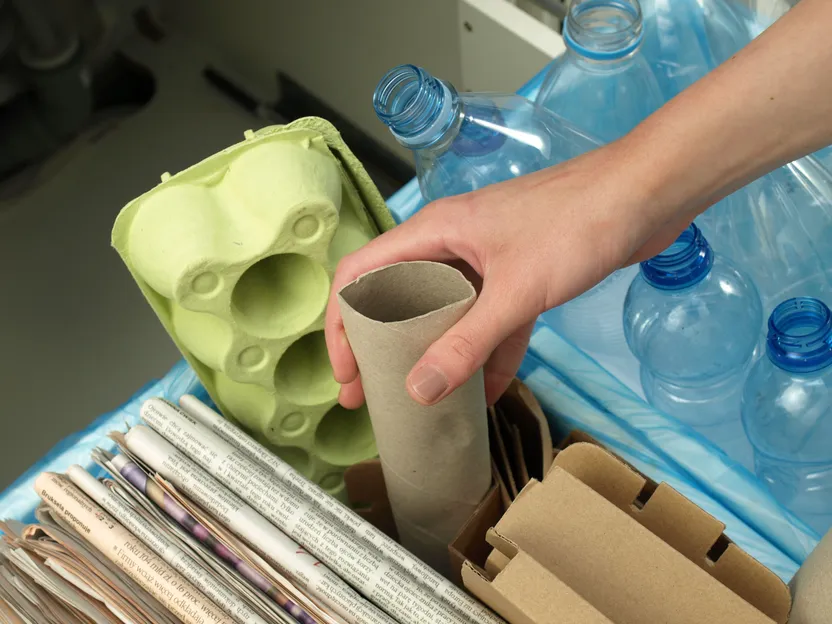
Recycling has a positive impact on the environment and sorting household waste makes it easier for it to be recycled. By recycling, we help to save raw materials that would be used to make new products. Depending on your local council, you may have to separate your recycling into different materials. A recycling bin with several compartments will make this task simpler.
Different types of plastic
Some plastics can be recycled. To ensure that your packaging can be recycled, look out for the triangular logo with three arrows. This indicates that a product is suitable for recycling. However, not all councils recycle the same types of plastic. Be sure to check which plastics are accepted. Bear in mind that recycling centres will often accept plastics that your local council will not. Here is a quick guide to the most common types of plastic found in packaging.
Plastic type | What does it look like? | Types of products |
PET or PETE (polyethylene terephtalate) | Flexible, lightweight and transparent | Bottles of water or oil |
PEHD (high-density polyethylene) | Opaque, strong and impermeable | Laundry detergents, milk bottles, shower gel |
PP (polypropylene) | Rigid, heat-resistant | Reusable plastic plates, car bumpers, rugs, etc. |
What can I put in mixed recycling?
Mixed recycling bins are usually used for all recyclable materials excluding glass (though some are also used for glass). In these bins, you can put:
plastic bottles and caps;
beauty and cleaning product containers;
cardboard and Tetrapak (check with your local council);
paper and newspapers;
metallic packaging like cans or aerosols.
Be careful: cardboard and paper must be clean and dry or it cannot be recycled.
Glass
Glass can be recycled forever. All glass containers can go in your glass recycling bin. This includes things like wine bottles, jars and perfume bottles. While all glass is recyclable, some local authorities will ask you to separate colours. Please also note that broken glass like bulbs, glazing or mirrors must be thrown in your regular bin and must be clearly marked for safety reasons.
What can I put in my regular bin?
All products that cannot be recycled must be put in your landfill bin. Here are a few examples:
plastic wrapping;
nappies and period products;
yoghurt pots (check with your local authority);
metallic cardboard;
kitchen foil;
food waste if you do not have food waste collection or a compost bin.
Mirrors
Compost your food waste
About 30 to 40% of what is thrown in an ordinary bin can be composted. Almost all councils in the UK offer a food waste collection service. However, you can cut down on the environmental impact of food waste even further by composting your own. Compost bins are used to rot down organic waste. They are installed outdoors in a spot sheltered from the sun, rain and wind. The compost produced can then be used around the garden as a mulch or fertiliser. It can be used to help plants, trees and shrubs like roses to grow, just like a shop-bought compost.
High-quality compost should be uniform in texture, crumbly and dark in colour. It should have a natural, earthy smell. To get to this stage, you will have to turn the compost regularly to aerate it, add a careful balance of waste to the pile and water it when required.
What can I put in a compost bin?
Not all food or garden waste can be put in a composter. Bear in mind that high-quality compost is made up of about 60% nitrogen-rich (or green) materials and 40% carbon-rich (or brown) materials.
Food waste
Fruit and vegetables cut into small pieces.
Peelings (though it's best to avoid citrus).
Pieces of bread.
Unseasoned pasta and rice.
Egg shells.
Nut shells.
Coffee grounds.
Staple-free tea bags.
Garden waste
Lawn clippings.
Branches from pruning broken down in a garden shredder.
Weeds with no seeds (should be dried first).
Leaves.
Wilted flowers.
Shop our composters
Household waste that cannot easily be recycled
Not all household waste can go in the landfill or recycling bins. Some products contain dangerous components and require special treatment.
Batteries and lightbulbs can sometimes be recycled in special bags in your normal recycling bin, but you must check with your local authority.
Printer cartridges should be sent back to the manufacturer.
Small and bulky household appliances can sometimes be picked up by the council by special arrangement. Otherwise, they must be taken to the appropriate recycling centre.
Engine oil should be taken to a garage or recycling centre.
Medicine should be brought to a pharmacy.
X-rays can sometimes be recycled by hospitals.
Shop our standard batteries
More information
You may be also interested in these guides
Guide written by:
Jennifer, Self-taught DIY enthusiast, Manchester
I didn’t receive any special training, I learned everything on the job. And what a joy it is to be able to do little jobs around the house that we love so much. That is, until the moment we decided to move and had to do everything; from the floor to the ceiling, from the kitchen to the bathroom...In short, you become as good as a pro. So today, my friends don’t hesitate to call me when they need help. And when you dip your toe in, there’s no turning back. It’s a true passion that drives us to take on the challenges, to have an idea in mind and see it come alive with just a few tools. And a passion is even better when you can share it. So, whenever I can give you a little advice, it’s with great pleasure.
'/%3E%3C/svg%3E)