PE pipe buying guide
'/%3E%3C/svg%3E)
Guide written on 6 February 2024 by:
Jérôme, Construction site supervisor, Cardiff
Important features
- Type
- Diameter
- Packaging
Best sellers in this category
Polyethylene pipe: the basics
The use of polyethylene pipe, or PE pipe, for water supply systems has become widespread over the past few decades.
Mainly used to carry potable water, PE can also be used to form waste or gas pipes. It can even be used in the food industry and to carry hydrocarbons.
When buried, PE pipe is highly resistant to deformation and ground movements and there is little risk of it breaking or cracking (unlike old-fashioned cast iron or lead pipes).
When installed correctly, PE pipe fittings are more or less infallible which massively limits the risk of leaks and improves distribution performance.
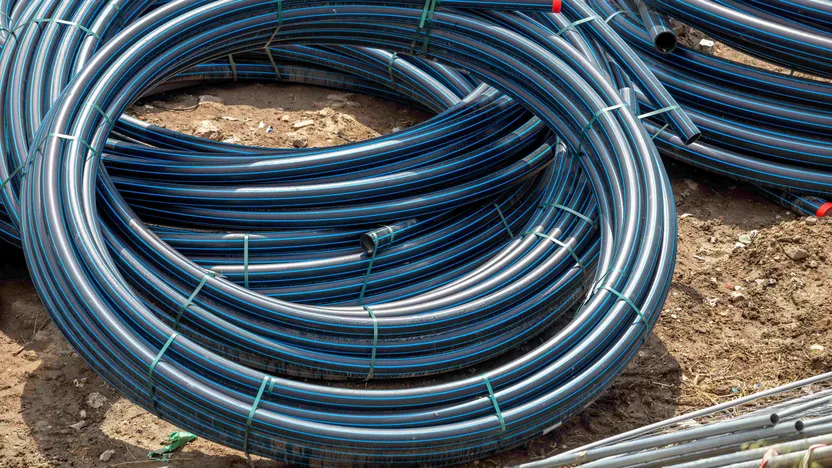
PE pipe comes in individual lengths, coils or on reels, and offers huge range of sizes from 16mm to over 1,000mm.
Galvanised and malleable iron fittings
Three characteristics of PE pipe
Polythylene pipe comes in a variety of different types. Each type of PE pipe has special features making it suited to a specific application.
To choose the right type of PE pipe for your needs, keep the following criteria in mind:
type of polyethylene: i.e. the type of resin used which determines pressure rating, and so on ;
diameter: from 16 to 1200mm;
format: lengths, coil or reel.
1. Type of polyethylene
Here's a quick table summarising the main types of PE pipe along with their uses and characteristics:
Use | PE pipe features | Standards |
Drinking water | One or several blue bands | BS EN 12201 |
Gas | One or several yellow bands | BS EN 1555 |
Waste water | One or several brown bands | BS EN 12201 |
Combustible fluids | Black | BS EN 15494 |
Different types of PE pipe
Polyethylene pipe differs depending on the type of resin used to make it. For instance:
PEBD or low-density polyethylene: PE 40;
PEHD or high-density polyethylene: PE 64, PE 80 or PE 100;
PERT or Polyethylene of Raised Temperature resistance: designed specifically to transport fluids over 60°.
Decoding PE pipe markings
2. Diameter
PE pipe designed for domestic use can range from 16 to 63mm.
Generally speaking, home water supplies will use 32 or 40mm pipe while 16 or 20mm pipe tends to be used for gas. Larger PE pipes tend to be used in shared buildings or for specific installations.
The outer diameter of the PE pipe (or DN) does not change depending on the type of polyethylene used. However, the inner diameter will vary since the thickness of the material will change depending on the density of the polyethylene.
The thicker the PE pipe, the better it can withstand water pressure. This factor is what is referred to as SDR (Standard Dimension Ratio).
Each type of PE pipe – in terms of polyethylene density and material – is defined by its SDR (or its diameter/thickness ratio).
Let's take a look at the example above. The pipe is marked '16 SDR 11'. This means that this PE 100 pipe in question has an operating pressure of 16 bar and its thickness corresponds to 1/11th of its diameter.
To help you understand the system better and ensure you pick the right pipe, take a look at the following table which sets out the most common PE 100 diameters along with their SDR and thickness.
DN (mm) | SDR | Thickness (mm) |
32 | 11 | 3 |
40 | 11 | 3.7 |
50 | 11 | 4.6 |
2. Packaging
Depending on the type of system you are installing, there are a few different formats to choose from:
lengths: 3, 6 or 12 m;
coils: 10 to 100 m;
reels: can measure up to 500 m; depends on the diameter of the PE pipe.
To be certain you are making the right choice, here is a table comparing common pipe diameters and formats.
DN (mm) | Length (m) | Coil (m) | Reel (m) |
32 | 3 or 6 | 25, 50 or 100 | > 100 |
40 | 6 | 25, 50 or 100 | > 100 |
50 | 6 | 50 or 100 | > 100 |
63 | 6 or 12 | 50 | > 50 |
75 | 6 or 12 | 50 | > 50 |
Shop our PE pipe
Best sellers in this category
More information on plumbing
You may be also interested in these guides
Guide written by:
Jérôme, Construction site supervisor, Cardiff
Electrician by trade, I first worked in industrial estates where I installed, wired and fixed a large number of electrical installations. After this, I managed a team of electricians for this type of work. 10 years or so ago, I turned to building and construction. From the modest family home, to gyms and theatres, I have been able to coordinate, audit and organise all sorts of construction sites. For 4 years now, I am restoring and building an extension to a bungalow in the heart of the Welsh countryside. My experience in manual work and my knowledge means I am proud to be of service. Terraces, interior design, roofing, plumbing, electrics, anything goes! My wife, daughter and I, built almost everything we have from scratch! So to answer all of your questions and advise you on choosing your tools? Easy!
'/%3E%3C/svg%3E)