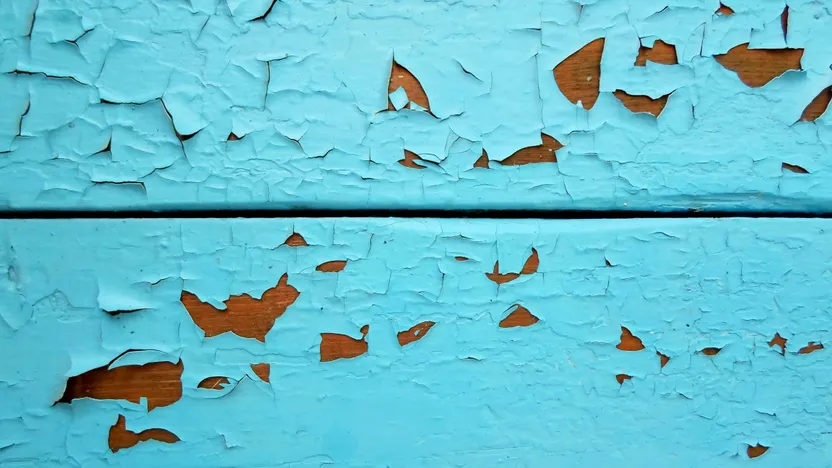
How to deal with lead paint
'/%3E%3C/svg%3E)
Guide written on 6 February 2024 by:
Tess, painting & decorating consultant, Brighton
Important features
- Origins and use
- Regulations and bans
- Exposure and risk prevention
- Homeowner obligations
- Lead testing
- Lead removal and encapsulating
Best sellers in this category
The history and uses of lead
Lead (Pb) is a so-called poor metal that occurs naturally in the earth's crust. Grey-blue in colour, this element is malleable yet strong. Historically, it was used by the Romans to make things like plates, glasses and pitchers. But it was also a source of fascination for the alchemists of the 16th and 7th centuries who dreamed of transmuting it into gold. More recently, lead played a crucial role in the industrial revolution during which time it found its way into a multitude of items including petrol, water pipes, gutters, cans, batteries and even tubes of toothpaste and toys – the most famous of which being lead soldiers. In fact, there was a time in history when it was easier to find a product containing lead than it was to find a lead-free equivalent.
The role of lead in paint
Not even paint was spared from lead's storied history and mineral compounds of lead were widely used as pigments. Grey minium was used for radiators, molybdenum red and orange for rust-proof paint and white lead was used as whitewash to give paint anti-fungal properties for bathroom use.
In short, lead paint was found in almost all buildings dating up to 1915 and remains in many millions of homes today under layers of newer paint. Kitchens, living rooms and exposed beams of houses from the 70s and 80s all commonly have a coat of lead paint hidden behind modern paints.
Best sellers in this category
Lead: a toxic metal
The toxic properties of lead have been recognised since ancient times. While occupational medicine further exposed the issue in 1713, it would be centuries before any laws banning lead-based paint would be passed in the UK. While much of Europe started to ban the use of lead paints throughout the 19th century, the concentration of white lead in paint reached its highest levels in the UK between 1930 and 1955.
Restrictions gradually tightened over the years but it wasn't until 1992 that European Union legislation was finally implemented within the UK by Environmental Protection (Controls on Injurious Substances) Regulations.
However, red lead was not included under the regulations and is technically still available to purchase today by special license.
Interior paint
Lead exposure: prevention and health risks
How can you be exposed to lead?
Lead can be ingested in dust form which usually results from tasks like sanding paint while renovating old buildings. But you can also be exposed to lead through old flaking paint, in water from old lead pipes or even via soil. It can also be inhaled either as dust or from the fumes released while stripping old paint.
Health risks of lead exposure
Lead absorption in the body can take place in the respiratory or digestive systems or even through the skin, and can result in the following:
anaemia and kidney damage;
abdominal pain and neurological issues;
high blood pressure and paralysis;
blood infections;
sleep and memory problems, and mood disturbances in children.
However, lead exposure is difficult to detect as all symptoms can be linked to other causes. Any conditions caused by lead exposure can only be diagnosed by a medical professional through blood tests. The conditions resulting from this type of exposure are grouped together under the generic term lead poisoning.
Who is at risk from lead exposure?
Lead poisoning can affect anyone but children are generally considered the most at-risk group. Children under six are particularly vulnerable as they are more likely to put their hands in their mouths. Children also absorb lead much more readily in the digestive tract compared to adults. Lead exposure in children is also considered more dangerous since their nervous systems are still developing.
Lead-based paint and pregnancy
Pregnant women are also considered a high-risk group along with developing fetuses as lead can readily pass through the placenta. If there is any risk of lead exposure, a blood lead test must be carried out. Older people have a higher risk of being exposed due to the amount of lead used in homes in the past.
How to live with lead in the home
While you wait for lead to be removed safely from your home, try to prevent any damage to paint, keep on top of humidity, air out the house daily and keep the home warm in winter wherever possible to prevent further damage. Remove rugs and carpets where dust can easily accumulate.
Protecting children from lead
Households with children should ensure that their hands are kept clean and toys are washed regularly. The effects of lead toxicity can be aggravated by iron and calcium deficiencies so keep an eye on diet if possible. It's also a good idea to take regular outings and walks outside of the home to limit the amount of time you are exposed.
As lead is being removed or renovations are being carried out be extra careful to ensure dust is cleaned up at the end of each day. All dust should be vacuumed using a dust extractor or industrial strength vacuum fitted with a fine particle filter. Air out your home as much as possible following work. Ideally, children and pregnant women should stay away from the home while the work is being carried out.
Dangers of asbestos
Unfortunately, lead is not the only dangerous substance present in older homes. Before its full ban in 1999, asbestos was contained in a range of building materials. The asbestos fibres in these materials are incredibly harmful for health and can be released as materials age or get damaged. Products containing asbestos include ducting, corrugated sheets, and binders used in glue and paint. Asbestos fibres were also used in different types of insulation including loose and board insulation.
Any disturbance of asbestos is regulated by strict protocol in order to prevent inhalation of asbestos particles which can cause serious respiratory illnesses such as pulmonary fibrosis, pleural plaques and lung cancer.
Decorative paint
Lead paint: regulations and homeowner responsibility
Landlord disclosure
Unfortunately, landlords in the UK are not legally required to disclose whether lead paint has been used in rented properties. That said, landlords do have a moral obligation to ensure that their tenants are not exposed to hazardous materials that could cause serious health issues. Damaged or deteriorating lead paint should be dealt with as a matter of urgency.
Seller's disclosure
Home sellers are obligated to disclose any defects in the house they are selling and this includes the presence of lead paint. That said, the UK Health & Safety Executive (HSE) advises that all painted material should be assumed to contain lead unless there is good evidence to prove otherwise. The seller is not obligated to deal with lead paint prior to selling. If you are looking to buy a home that is known to contain lead paint, the best thing to do is to contact the non-profit Lead Paint Safety Association (LiPSA) for advice on best practices involving lead paint.
How to detect lead paint in the home
There is no miracle solution here and you cannot detect lead paint just by looking at it. If you know for sure that your home contains paintwork that is over 30 years old, the chances are it contains lead.
The best solution in this case is to call on the help of professionals to provide lead paint removal services.
How to test for lead paint
It is possible to detect the presence of lead paint using a lead paint test kit. It is strongly recommended to trust this service to professionals. However, it is possible to buy a test to perform yourself.
Basic precautions for decorating
Removing lead paint from the home is a very hazardous procedure and requires proper precautions. Whether or not you choose to use an encapsulant, it's always best to use products with low levels of Volatile Organic Compounds and to air out your home adequately.
How to maintain high-quality air at home
Living in a healthy environment is essential for your well being and that of those around you. The most important step to achieving that is to ensure your home is free from hazardous products like lead and asbestos. From there, you can take steps to improve air quality such as installing an HVAC system, using dehumidifiers or air ionisers or even investing in air purifying plants.
How to get rid of lead paint
Remember that the safest way to deal with lead paint is to use professional lead paint removal services. That said, it is still important to take a few precautions:
if possible, stay elsewhere while the work is being carried out;
ensure a deep clean is carried out before moving back in.
Sanding lead paint
Sanding lead paint should be limited as far as possible as the process releases fine particles that can easily be inhaled. It goes without saying that full safety wear should be used including coveralls, an FFP3 mask, safety goggles, protective gloves and a suitable dust extraction system.
The British Coating Federation advises using wet abrasive paper to keep dust to a minimum. It is best to sand manually using a sanding block rather than using a wall and ceiling sander or orbital sander. The process will be longer than using a power sander, but will be much safer. Most importantly, sanding can only be performed on very small surfaces.
Vacuum blasting
If you decide to call in the professionals, they will probably perform abrasive media shot blasting to remove lead paint from surfaces like beams or joists. An air compressor is used to power an abrasive blaster which works to remove paint from any type of surface while a vacuum system prevents dust from escaping.
The use of extensive PPE is, of course, essential when carrying out this type of task.
Stripping lead paint
Lead paint is often chemically stripped, but don't forget that chemical strippers come with their own risks. Strippers can be used in combination with waterproof abrasive paper or wire wool.
Getting rid of lead paint waste
No matter how you go about getting rid of the lead paint, it is essential to place any waste in sealed bags and take it to a hazardous waste disposal site where it can be disposed of safely.
Sanding blocks and sponges
How to cover up lead paint
While the ideal option is usually to get rid of lead paint altogether, there are alternative solutions. In fact, if lead paint is covered correctly, it shouldn't pose any dangers to health. This is often the easiest way to deal with lead-based paint.
Covering up lead paint
Lead paint can be covered up in several ways depending on the condition of your surface. The process is similar to painting any other wall or trim, but it's important to prepare the surface correctly. Painted surfaces in good condition
In this case, simply wash the surface, apply a suitable, high-quality undercoat and apply your paint.
Painting a damaged or deteriorating surface
Taking care to wear the appropriate safety and workwear, sand the surface lightly using wet abrasive paper before washing the surface and applying an undercoat. Leave the undercoat to dry then use filler to smooth out the surface where needed. Wet sand lightly and apply a second coat of undercoat before finishing with a top coat of paint.
Lead paint covered by wallpaper
In this case, you may choose to remove the wallpaper to check the condition of the paint below wearing a dust mask, protective clothing, safety goggles and protective gloves. Depending on the type of lead paint used, it may be tricky to get an undercoat to adhere directly to the surface. With this in mind, you may find it easier to simply cover up the old wallpaper or use a different method.
Alternative wall coverings
After applying a primer, you might want to want to try a different type of wall covering such as a glass fibre wall covering. These types of coverings provide a good protective barrier but need to be painted using a water-based paint. Please note that this type of covering does not eliminate the lead paint so you still need to be careful if you want to drill through the surface. It is possible to cover lead paint with wallpaper but it's best to choose a glass fibre wall covering or a high-quality woven paper as they tend to be much thicker than the average wallpaper.
Covering lead paint with encapsulants
Once again, the lead paint will still be present. However, if you decide not to remove the paint, this option provides you with better protection. Once covered with a special encapsulant paint designed to seal the lead paint, your surface can even be covered with 13mm plasterboard, wood panelling or materials like plywood.
Please note: you can either glue or screw these materials into place but take special care if drilling through the surface. To finish off, you just need to paint the surface for a neat finish, apply a glass fibre wall covering, or hang woven or non-woven wallpaper. If you follow all these steps, your lead paint should be fully encapsulated.
Protective gloves
You may be also interested in these guides
Guide written by:
Tess, painting & decorating consultant, Brighton
'/%3E%3C/svg%3E)